
If you have ever stared at your target IB score and thought, “Okay… but where do those points actually come from?”, you are not alone. The IB Diploma feels like a single number out of 45, but it is really a story made of smaller chapters: six subjects, two core assessments, and one requirement that can quietly decide whether you earn the Diploma at all.
This guide breaks down the final IB grade components in a way that helps you plan revision, protect easy points, and avoid the most common surprises.
The IB final score at a glance (quick checklist)
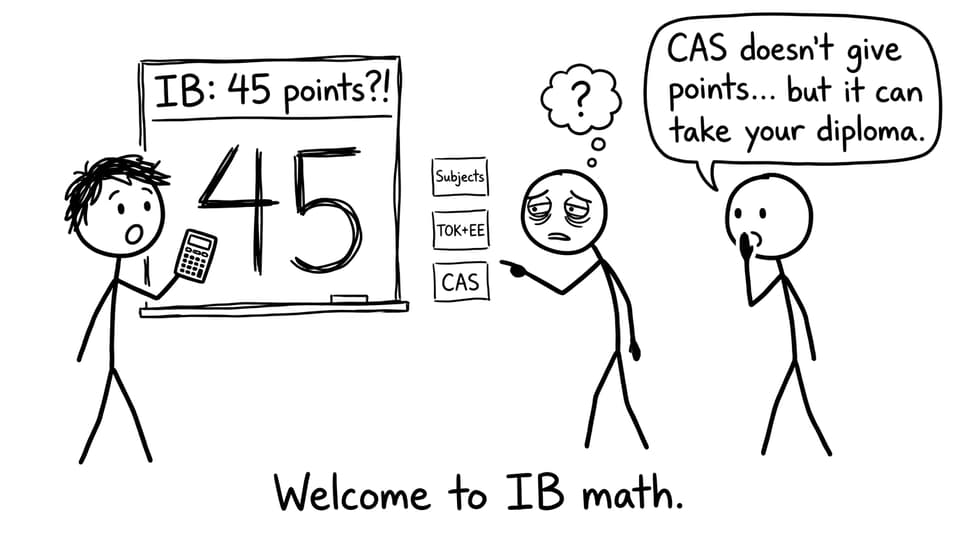
Your final IB Diploma result is out of 45 points, built from:
-
Six subject grades (up to 42 points)
-
Core bonus points from TOK + Extended Essay (up to 3 points)
-
CAS completion (required to earn the Diploma, but no points)
If you want a fast way to estimate your total, use the IB Grade Calculator to convert marks into a realistic points picture.
Six IB subjects (maximum 42 points)
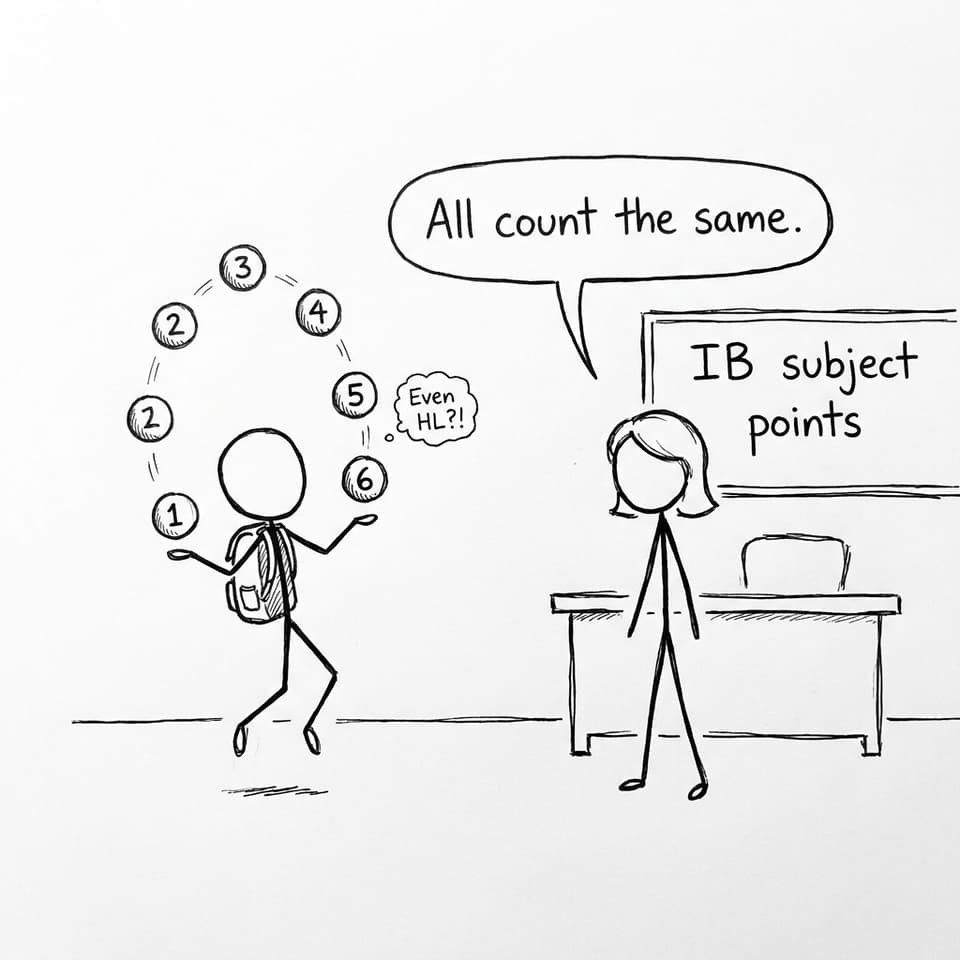
Every IB Diploma student takes six subjects, each graded from 1 to 7. Add them together and you get up to 42 points.
Here is the key idea that makes planning easier: HL and SL contribute the same maximum points. A 7 in HL and a 7 in SL are both worth 7 points in the final total. HL is typically harder and may matter more for university requirements, but the IB points math is equal.
What creates each subject grade?
In most subjects, your final IB subject grade comes from a mix of:
-
External assessment (usually exams) often around 70-80%
-
Internal Assessment (IA) (coursework like investigations, essays, labs, or orals) often around 20-30%
Because the IA is part of your final grade, it is not “extra.” It is literally part of your points.
To tighten your coursework marks with rubric-level feedback, RevisionDojo’s IB Coursework Grader helps you see what is missing before your teacher finalizes internal marks. Pair that with targeted practice from the Questionbank to turn weak topics into reliable marks.
TOK + Extended Essay (up to 3 bonus IB points)
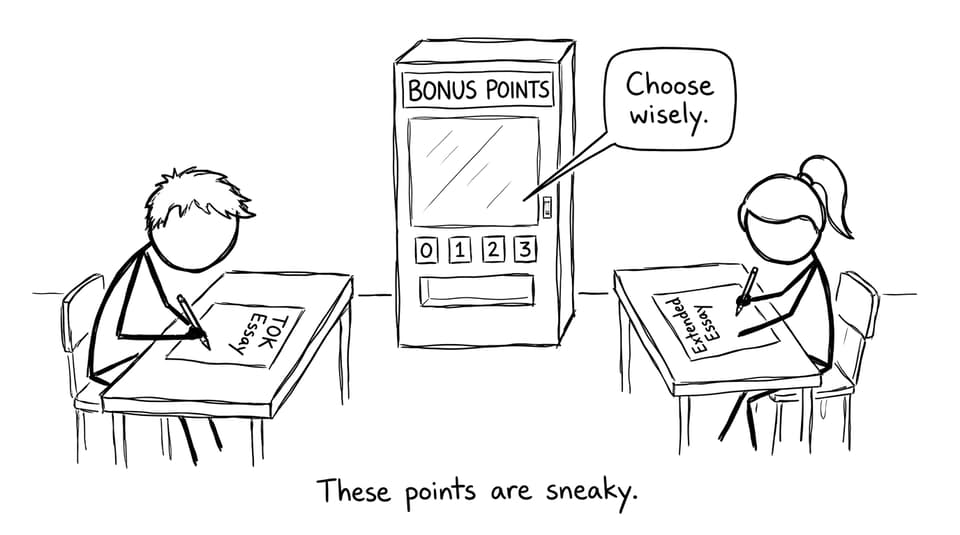
The IB core can add up to 3 bonus points through the combination of:
-
Theory of Knowledge (TOK) (essay + exhibition)
-
Extended Essay (EE) (4,000-word independent research paper)
Each is graded A to E, and the grades combine using an official matrix to award 0-3 points. These points can feel small until you realize how often they separate common outcomes: 38 vs 40, or “meets offer” vs “misses by one.”
If you are building your TOK or EE strategy, start with the IB Extended Essay Guides and browse All IB Extended Essay Posts. For TOK structure help, see Structuring for Success in IB TOK Essays and the RevisionDojo Ultimate TOK May 2026 Essay Guide.
CAS: required, not point-scoring
CAS (Creativity, Activity, Service) is compulsory for the IB Diploma, but it does not add points.
This is the part students underestimate: you can do brilliantly in exams and still lose the Diploma if CAS is incomplete.
If you want CAS to feel manageable, use How to Excel in the IBDP CAS Program and Using RevisionDojo to Strengthen IB CAS Reflection and Documentation to keep reflections small, consistent, and verifiable.
How to use this breakdown for smarter IB revision
Once you understand the IB grade components, your planning becomes calmer:
-
Protect your IA marks early with feedback loops (RevisionDojo Grading tools + Coursework Library)
-
Build exam performance with repetition (Study Notes, Flashcards, Questionbank)
-
Simulate pressure weekly with Mock Exams and Predicted Papers inside RevisionDojo’s exam workflow (see How to Study for IB Mocks (Without Burning Out))
-
Use the Predict Your IB Score Before Exams (Without Guessing) method to turn practice into realistic targets
Final takeaway: know the IB components, then build your points
The IB score is not mysterious once you see the components: 42 points from six subjects, up to 3 points from TOK + EE, and CAS as the non-negotiable requirement.
If you want a single place to manage that whole system, RevisionDojo brings it together: Study Notes, Flashcards, Questionbank, AI Chat, Grading tools, Predicted Papers, Mock Exams, a Coursework Library, and Tutors. Start by checking your current total in the IB Grade Calculator, then turn that number into a weekly plan you can actually repeat; the most underrated skill in IB success.