
Your first MYP on-screen exam rarely feels hard because of the content. It feels hard because the screen makes everything louder: the timer, the scrolling, the files, the tiny decisions you normally make quietly on paper.
That’s why “using technology effectively” for MYP eAssessments isn’t a last-minute IT checklist. It’s a training mindset. The best students treat the laptop like a pencil: familiar, boring, reliable. They practise the interface, the workflow, and the discipline of staying focused when the exam tries to pull their attention in five directions.
RevisionDojo (yes, dojo) is built for that kind of calm practice loop: Questionbank for repetition, Study Notes for quick clarity, Flashcards for recall, AI Chat when you’re stuck, Grading tools for feedback, plus Predicted Papers, Mock Exams, a Coursework Library, and Tutors when you want a human plan.
Quick tech checklist for MYP eAssessments
Use this the week you start serious MYP prep (not the night before):
-
One reliable device you’ll practise on repeatedly (same keyboard, same trackpad feel)
-
Stable internet for practice sessions and submissions
-
A simple folder system for drafts and exports
-
Keyboard fluency for short and extended responses
-
A repeatable “practice loop”: learn, attempt, check, fix, retest
If you need a structured plan to pair with the checklist, borrow the rhythm from MYP eAssessments: 30-Day Study Plan That Works.
What MYP eAssessments actually test (and why tech matters)
MYP eAssessments happen at the end of MYP Year 5 and include two main formats: on-screen exams (common in subjects like Sciences, Mathematics, Language and Literature, and Individuals and Societies) and ePortfolios (common in subjects like Design, Arts, and Physical and Health Education). They’re designed to reward application, reasoning, and communication.
Technology changes the surface of those skills:
-
Application becomes interactive (stimuli, sources, drag-and-drop, data sets)
-
Reasoning must stay structured while you scroll, annotate, and navigate
-
Communication must be clear even when typing fast under time pressure
A good technology routine doesn’t replace understanding. It protects it. For a broader strategy view, keep Tips for Success in MYP eAssessments open as your north star.
Build “exam-interface fluency” for MYP
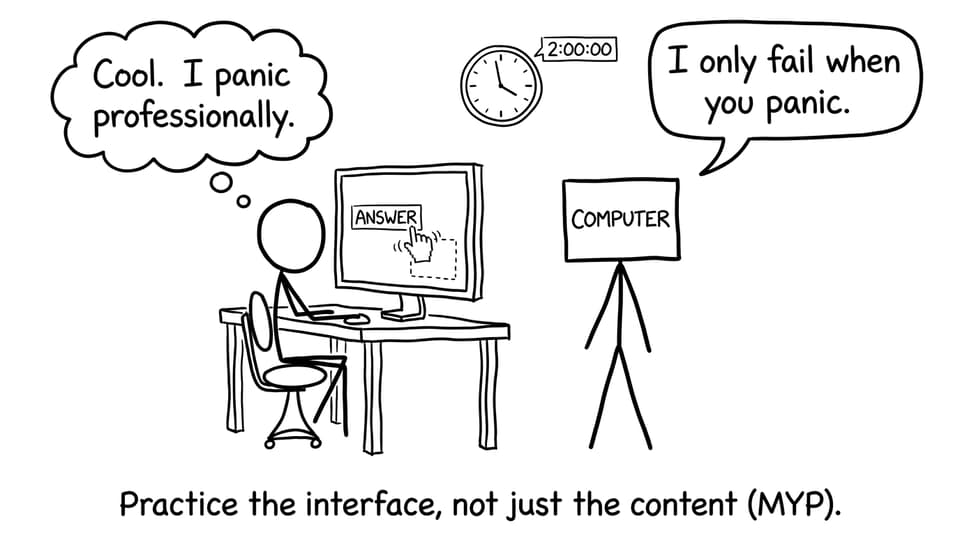
The most underestimated MYP skill is moving through an on-screen exam without wasting mental energy.
Train the boring actions until they’re automatic
Boring actions include scrolling back to a source, highlighting key lines, switching between question parts, and checking that you answered what was asked. When those actions cost you attention, you start making avoidable mistakes: misreading command terms, skipping a unit, forgetting to justify.
A simple routine:
-
Do short timed sets in the Questionbank
-
Review immediately and write a one-line “error rule” (what you’ll do next time)
-
Retest the same skill within 48 hours
If you want a deeper view of how practice loops create real results, MYP Revision Guide: Study Tips for Success pairs nicely with this.
Use notes like a pit stop, not a home
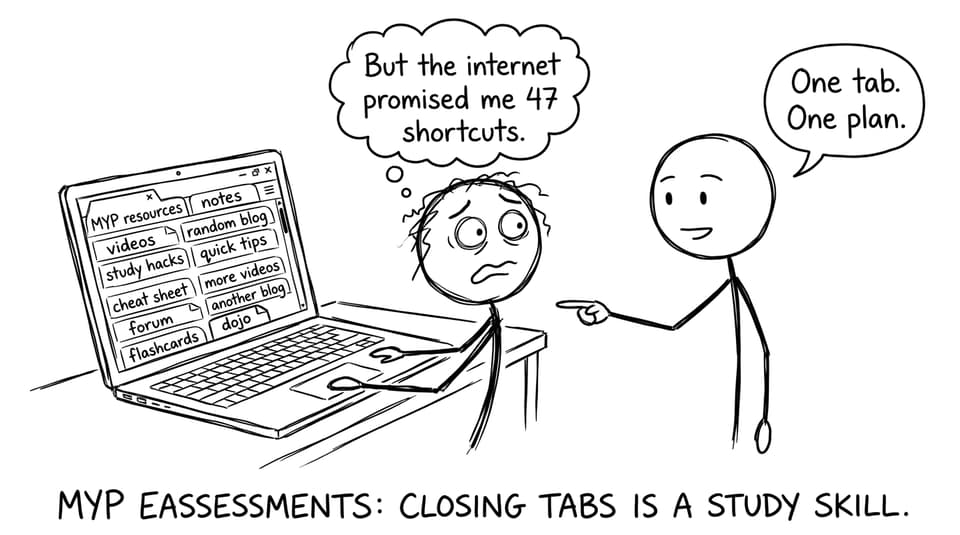
When you miss a question, don’t wander across the internet. Make one clean stop, fix the concept, and go back to practice.
RevisionDojo’s Study Notes work well for this because they’re built to be scanned quickly: definitions, examples, and the exact idea you need to re-enter the question.
If you want an example of what “quick clarity” looks like in a real MYP topic, see how the notes are structured in Homeostasis Notes (MYP Biology).
Organise your digital life like it’s part of the markscheme
In MYP ePortfolios and extended tasks, your ideas can be strong but your workflow can still sabotage you.
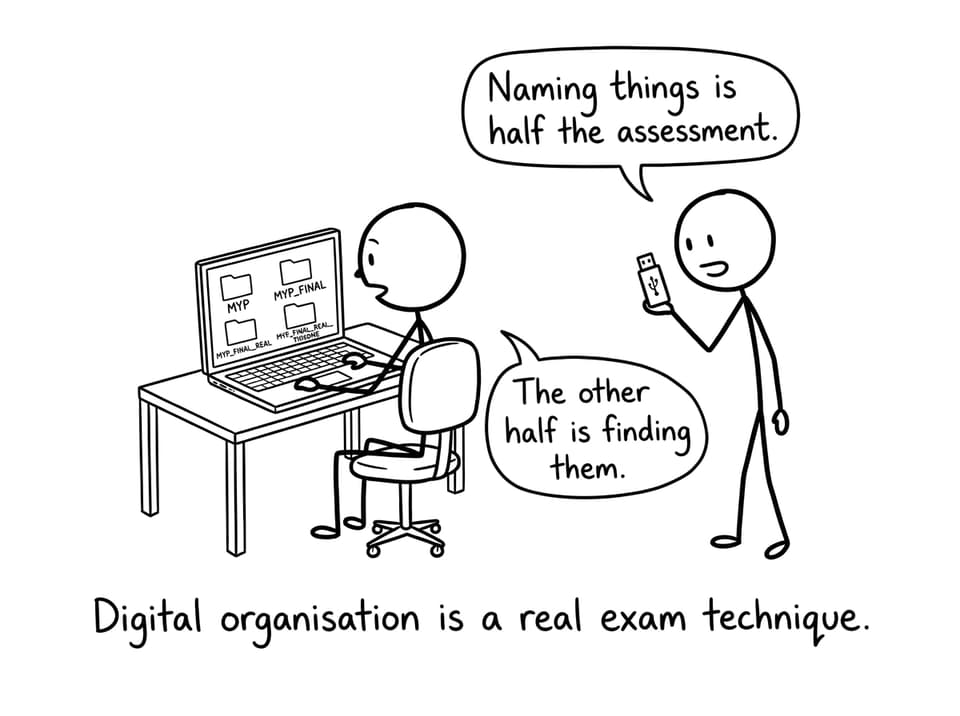
A folder system you can explain in one sentence
Make it boring:
-
One main folder per subject
-
One folder per unit/project
-
One folder called “SUBMIT” with only the final versions
Then practise exporting and saving with the same naming rules every time.
Practise typing like it’s a physical skill
On-screen exams reward students who can type steadily without panic-editing. A small habit helps: write your first sentence fast and plain, then improve it. The point is to avoid staring at a blank box waiting for perfection.
If Language and Literature is part of your MYP set, build your structure using MYP English Lang & Lit and then practise under time.
Equity, accessibility, and calm tech rehearsal
Not every student has identical access to devices or ideal internet. If that’s you, your goal is not “perfect setup.” Your goal is predictable setup.
-
Practise on the same device you’ll use as often as possible
-
Do at least a few sessions in a school-like environment (desk, silence, no music)
-
If you use accommodations, rehearse them early so they feel normal
Even one predictable weekly timed session reduces exam-day shock.
Academic integrity in digital MYP assessments
Digital assessments can tempt students into risky shortcuts. But the deeper reason to care is simpler: shortcuts make you fragile. The exam always finds the gaps.
Build integrity as a study strategy:
-
Keep an “explain it back” rule: if you can’t explain the answer without looking, you don’t own it
-
Use AI tools to clarify misconceptions, not to generate final responses
-
Practise citation and sourcing habits in ePortfolio drafts
If you want a clear ethical framing of this in the MYP context, read How to Cheat in the IB MYP eAssessments? Here's Why ....
A simple RevisionDojo tech routine for MYP eAssessments
Here’s a realistic weekly loop many students can sustain:
-
2 sessions: learn weak points fast using Study Notes + quick self-explanations
-
3 sessions: targeted practice in the Questionbank
-
1 session: timed rehearsal using a mock-style set and careful review
Start from the Middle Years Program (MYP) hub so your practice stays organised by subject.
Conclusion: make tech feel boring before MYP makes it loud
MYP eAssessments reward students who can think clearly inside a digital environment. The trick is to remove the novelty: practise the interface, organise your files, rehearse timing, and build a feedback loop that turns mistakes into rules.
If you want that loop in one place, start at the RevisionDojo home and build your MYP routine with Study Notes, Flashcards, the Questionbank, AI Chat, Grading tools, Predicted Papers, Mock Exams, the Coursework Library, and Tutors when you need extra guidance. In the dojo mindset, the goal is simple: fewer surprises, calmer decisions, and a stronger MYP performance when it counts.
