
The quiet truth about Spanish grade boundaries
The night before results, most IB students don’t worry about verbs or accents. They worry about a number they never saw during the exam: Spanish grade boundaries.
That anxiety is understandable. Grade boundaries feel like a hidden lever that decides whether your hard work becomes a 5, a 6, or the 7 you were chasing. But here’s the calmer reality: you can’t control the boundary. You can control the marks that meet it. Understanding how Spanish boundaries work helps you set targets that are realistic, flexible, and much less stressful.
What IB grade boundaries actually are
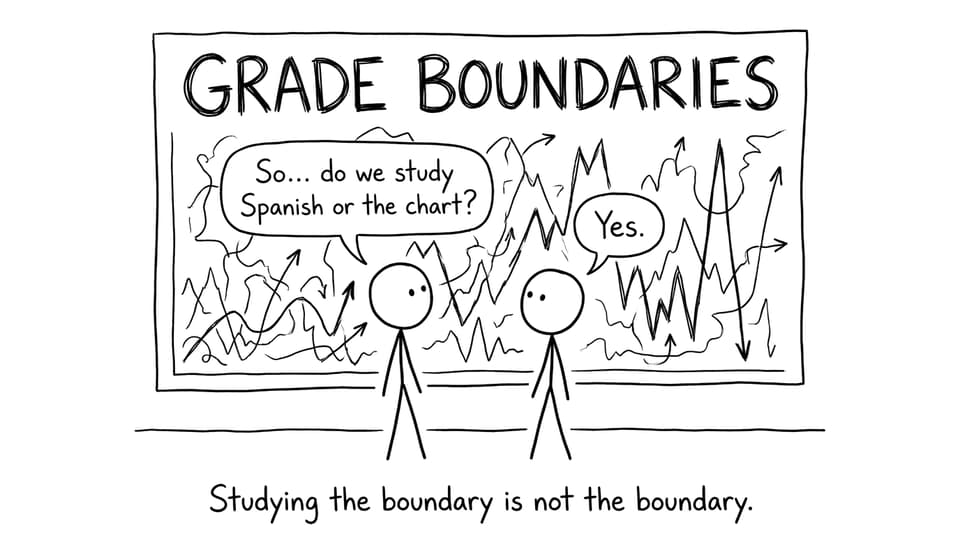
Grade boundaries are the minimum marks needed to earn each final grade (1 to 7). They’re set after marking, not before exams. The IB uses statistical evidence and examiner judgement to keep grading consistent from one session to the next.
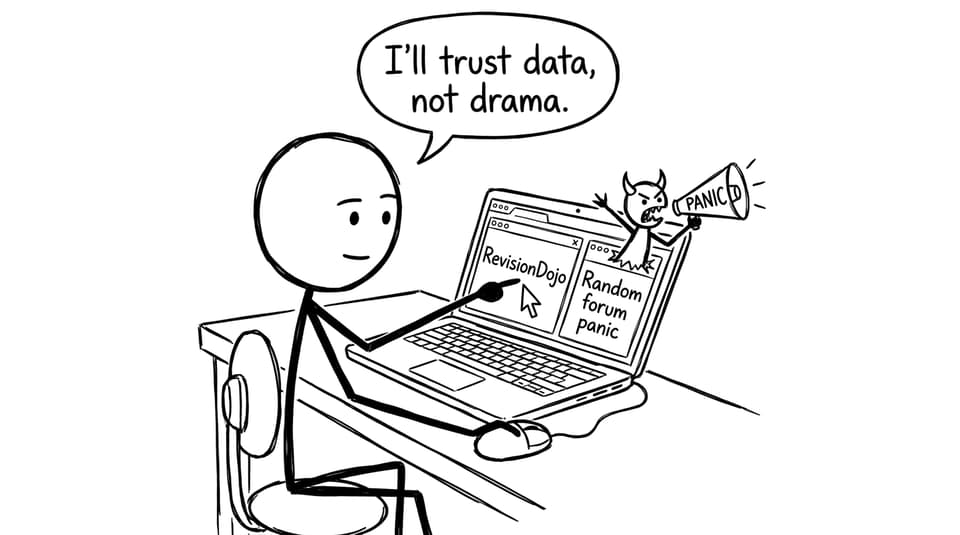
If you want to see how boundaries change across subjects and sessions, start with RevisionDojo’s IB Grade Boundaries tool. To estimate outcomes quickly, use the IB Grade Calculator.
Why Spanish boundaries move each year
Even in the same course, Spanish grade boundaries can shift. Common reasons include:
-
Exam difficulty: if tasks are tougher, boundaries often drift down.
-
Global cohort performance: if students score higher overall, boundaries can rise.
-
Session differences: May and November can produce different cut scores.
-
Component balance: the weighting across writing, receptive skills, and the oral changes how totals land.
For a deeper explanation (without the panic), read IB Grade Boundaries: How They’re Actually Calculated.
A simple checklist to use Spanish grade boundaries wisely
Use this quick approach when revising Spanish:
-
Treat boundaries as ranges, not a prophecy.
-
Set a target that is slightly above the most recent boundary you’ve seen.
-
Track your performance by component (writing vs listening/reading vs oral), not just totals.
-
Build skill before speed, then add timing.
If you want a reference point for one recent session, RevisionDojo also has IB Spanish B SL Grade Boundaries 2025.
How to turn boundaries into better Spanish exam prep
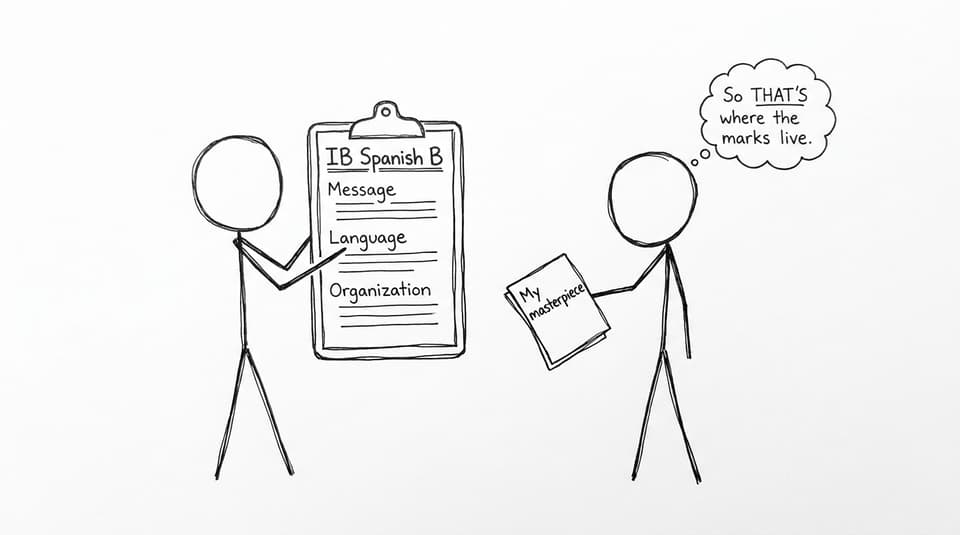
The best use of Spanish grade boundaries is to turn them into a training plan:
Build marks with the right resources
On RevisionDojo’s IB Spanish B hub, you can move through the same loop high scorers use:
-
Study Notes to clarify what the syllabus is really testing
-
Flashcards to keep vocabulary and structures alive daily
-
Questionbank to practice exam-style tasks with feedback
-
AI Chat to unblock confusion instantly (without losing an hour)
-
Grading tools to learn how marks are awarded in writing and coursework-style tasks
-
Mock Exams and Predicted Papers to rehearse timing and pressure
-
Coursework Library and Tutors when you need examples or human diagnosis
Train each component, not just “Spanish overall”
For writing, start with Paper 1 - IB Spanish B and the companion Paper 1 notes. For reading practice, use Paper 2 Reading - IB Spanish B.
When your revision starts feeling repetitive, refresh it by revising through themes using IB Spanish B Topics: Your Complete Guide for SL and HL.
Conclusion: focus on Spanish marks you control
Spanish grade boundaries are real, and they do move. But they’re not a trap door under your feet. They’re a line on a chart that your preparation can cross.
If you want the simplest next step, bookmark IB Grade Boundaries, then build your weekly plan inside RevisionDojo’s IB Spanish B resources: learn with Notes, drill with the Questionbank, lock in recall with Flashcards, and rehearse under pressure with Predicted Papers and Mock Exams. That’s how you stop watching the boundary and start beating it.