


The first week after PYP can feel like someone quietly turned the volume up on school.
Not in a dramatic way. Just… more. More subjects. More teachers. More deadlines. More moments where you realize nobody is going to remind you three times.
That is the point of the MYP. It is still inquiry-driven and concept-based, but it adds structure and expectation so you can build the habits that eventually make IB exams feel manageable. If you understand what changes early, the MYP stops feeling like a surprise and starts feeling like a training plan.
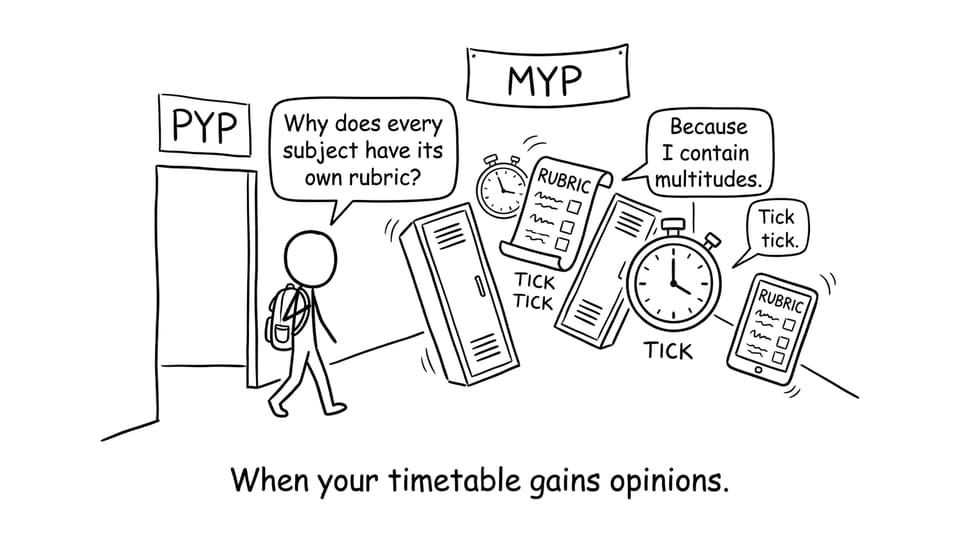
Quick checklist for a smoother MYP start
Use this as your first-month reset. It is simple on purpose.
-
Learn the MYP subject groups and what each teacher expects
-
Ask: “Which criteria am I being assessed on?” before starting tasks
-
Set one system for organization (folders, planner, or both)
-
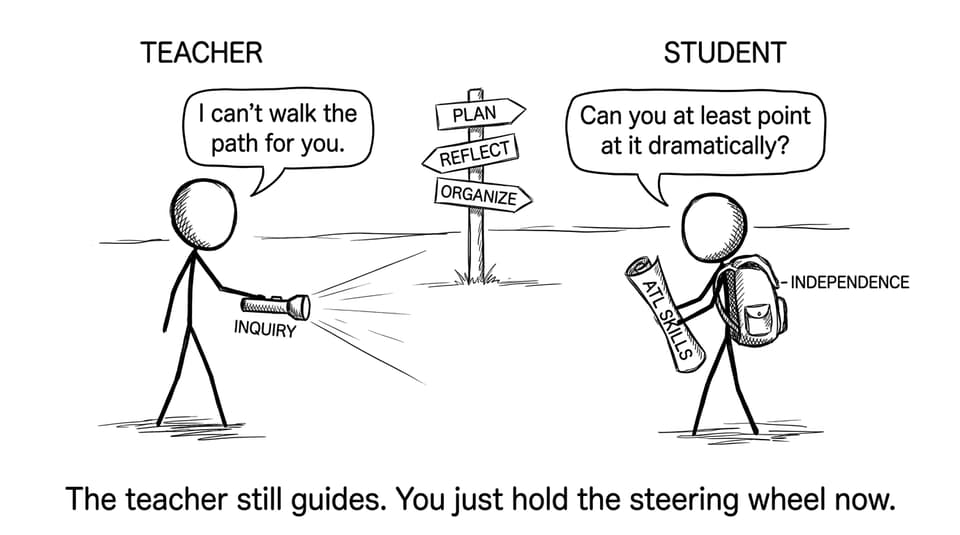
Build small independence habits (start tasks, track deadlines, reflect)
-
Keep curiosity alive: inquiry does not disappear in the MYP
If you want a clear overview of how RevisionDojo supports students at this stage, start with the Middle Years Programme (MYP) hub.
From transdisciplinary learning to subject-based learning in the MYP
In PYP, learning often lives inside big themes, and subjects blend together naturally. In the MYP, the walls between subjects become more visible: Mathematics is Mathematics, Sciences is Sciences, Individuals and Societies has its own way of thinking, and so on.
This shift is not meant to reduce creativity. It is meant to give you disciplinary tools. The MYP still values connections, but now you are expected to show them with clearer evidence and stronger thinking.
If you are trying to understand how this looks across the programme, browse all MYP articles and pick the subject that feels most unfamiliar.
Independence grows fast (and that is normal)
One of the most surprising parts of the MYP is not the content. It is the silence.
Teachers still guide learning, but the programme assumes you can manage time, break tasks into steps, and ask for help at the right moment. Students who were very supported in PYP sometimes interpret that as “I’m doing something wrong.” Usually, they are not. They are simply meeting a new expectation.
A practical way to adjust is to build one reliable planning habit. If you need ideas, use bullet journals or digital planners in IB or borrow a simple structure from organization hacks for IB notes and materials.
The biggest grading change: criteria-based assessment in the MYP
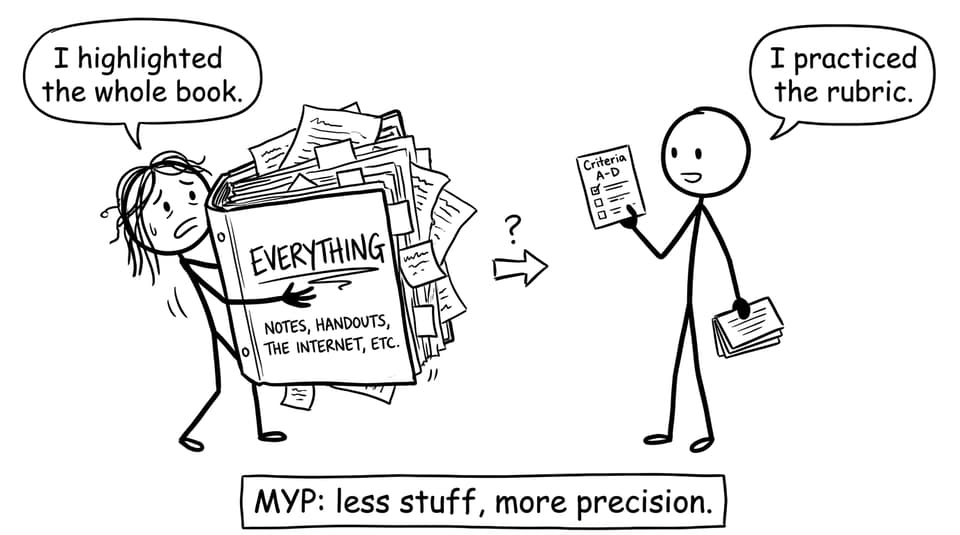
The MYP does not reward “I did a lot.” It rewards “I hit the criteria.”
Instead of percentage scores feeling like a mystery, each subject uses four criteria (A, B, C, D). You are marked against descriptors, not against other students. At first, this can feel like learning a new language. But once you understand it, it becomes a study advantage, because you can revise with precision.
To get clear on the system, read How Are IB MYP Students Graded? Criteria Explained. Then, when you want to write and revise more strategically, use Creating Rubrics Aligned with IB Criteria in the MYP.
How the MYP quietly prepares you for exams
Even if your exams are still a while away, the MYP is building the habits that later determine performance: organizing knowledge, using command terms, practicing under constraints, and responding to feedback.
Here is a simple routine that works across subjects:
-
Use Study Notes to understand a concept once
-
Convert key ideas into Flashcards for recall
-
Use targeted practice questions (by topic and skill)
-
Review mistakes and retest them
RevisionDojo is designed to make that loop easier: Questionbank for focused practice, Study Notes for clarity, Flashcards for daily recall, AI Chat for quick explanations, Grading tools for feedback, Predicted Papers and Mock Exams for timed training, plus a Coursework Library and Tutors when you need deeper support.
If you are already thinking like an exam student, the structure in How to Study for IB Exams: Step-by-Step Guide translates well into MYP routines.
Closing: make the MYP your advantage
The PYP to MYP transition is not a leap away from the IB philosophy. It is the same direction, just with more responsibility placed in your hands.
If you treat the MYP as practice for the student you want to be later, you will feel the difference fast. Build a simple system. Learn the criteria. Practice in small loops. And when you want everything in one place, RevisionDojo gives you the tools to study smarter: Questionbank, Study Notes, Flashcards, AI Chat, Grading tools, Predicted Papers, Mock Exams, Coursework Library, and Tutors, all designed to turn effort into exam-ready skill.