


The night before an IA checkpoint, a certain kind of panic appears. Not the loud, obvious kind. The quiet kind that whispers, “If I just polish the introduction, it’ll all come together.”
That’s the trap. Most IA stress isn’t caused by a lack of effort. It’s caused by planning effort in the wrong order.
This guide walks through the biggest IA planning mistakes IB students make, why they happen, and how to fix them before they cost you time (and marks).
Quick IA planning checklist (save this)
Before you write another page of your IA, check:
-
Is your IA focus locked (research question/aim is specific and answerable)?
-
Do you have stage deadlines (focus, evidence, analysis, evaluation, polish)?
-
Are you planning time for thinking, not just typing?
-
Do you understand the criteria for your subject?
-
Have you built feedback time into your plan?
If you need a clear structure across subjects, start with the Coursework Guides hub and the subject-specific IA Guides.
Starting an IA without a clear focus
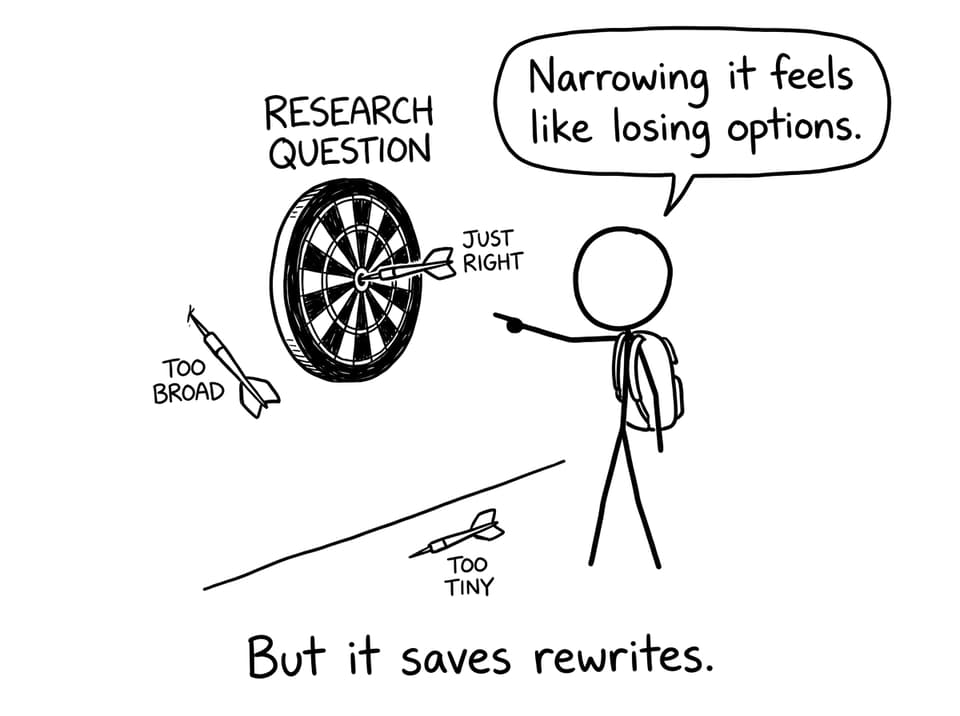
The first IA planning mistake is doing “work” before deciding what the work is for. Students often collect sources, write background, or run an experiment while the research question is still changing.
The cost is brutal: once the focus shifts, your earlier pages become unusable.
Fix it by spending a short, protected session narrowing the question. This is where a targeted guide like Refine Your IA Research Question for Clarity and Focus saves you from rewriting later.
Treating the IA like a weekend homework task
An IA isn’t something you “finish soon.” It’s a mini research project that rewards momentum.
If your plan sounds like “work on it this weekend,” you’re planning activities, not outcomes. A better IA plan ends each session with something measurable: a finalized method, one graph with commentary, two evaluation bullets tied to your data.
For a stage-based workflow, see How to Plan an IB IA Without Falling Behind and Time Management Strategies for Completing Your IA on Schedule.
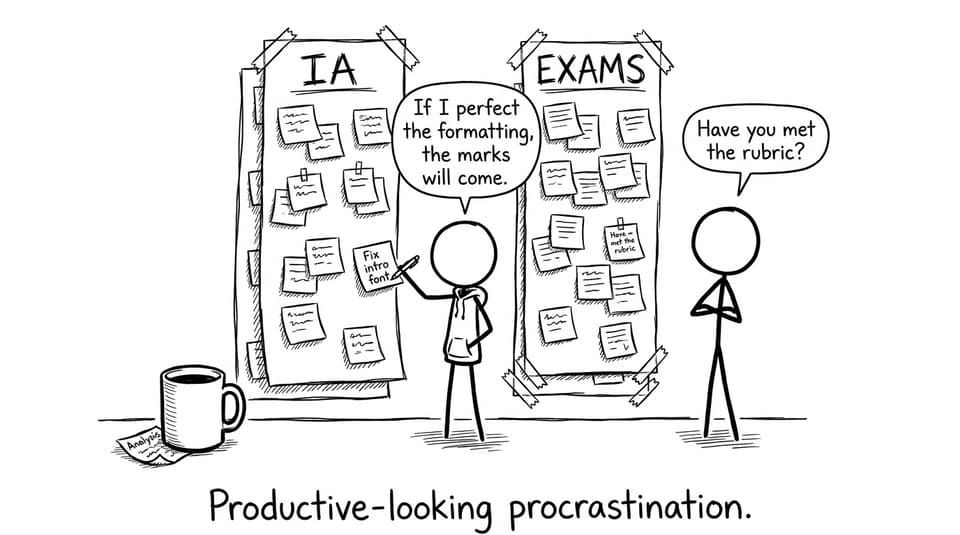
Overplanning the easy parts (and avoiding analysis)
Introductions and formatting feel safe. Analysis feels like risk.
So many IB students spend hours perfecting the “front” of the IA, then rush the part that actually earns marks: interpretation, justification, evaluation.
A practical rule: if a section doesn’t change your conclusion, it shouldn’t dominate your schedule.
When you want a broader error radar, read Common Mistakes Students Make in Their IA and How to Avoid Them. For subject-specific examples, the Top IB Science IA Mistakes post is a helpful mirror.
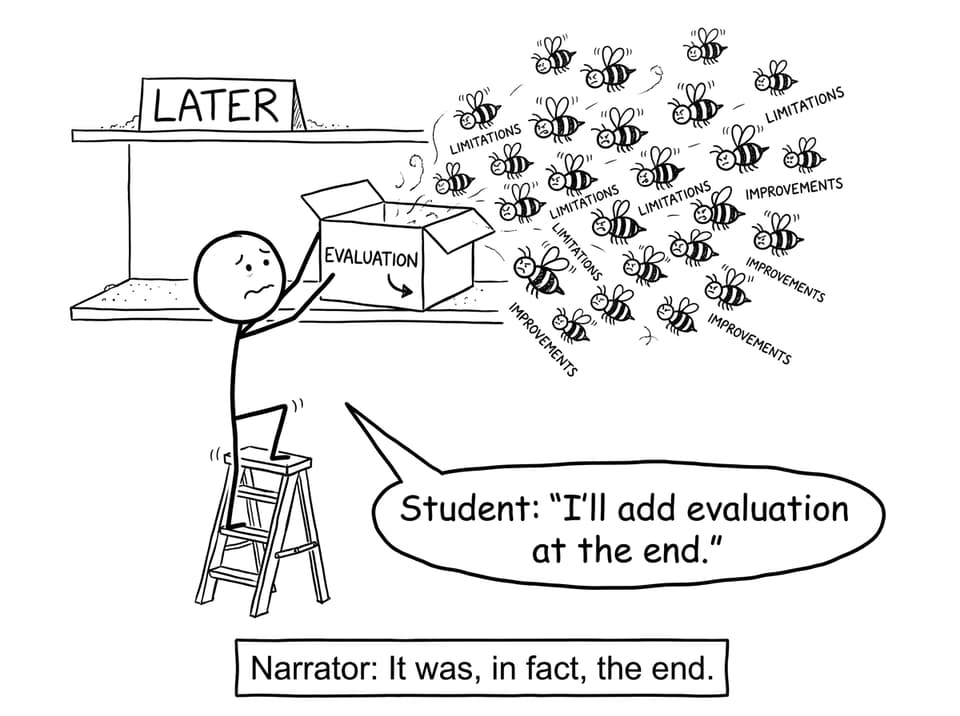
Leaving evaluation until the end
Evaluation isn’t an “add-on.” In a strong IA, evaluation grows alongside your results.
If you leave it to the last week, you’ll default to vague lines like “human error” or “more trials,” and your examiner has nothing precise to reward.
Plan evaluation early: as soon as you have preliminary results, write three bullets: one limitation caused by your method, one realistic improvement, one implication for the research question.
Ignoring feedback (or restarting because of it)
Feedback should guide the next step, not trigger a total reset.
Two extremes hurt your IA: pretending feedback doesn’t exist, or rewriting everything and losing your original progress.
A better approach is surgical: ask, “Which stage is the feedback about?” If it’s focus, tighten the question. If it’s analysis, rewrite only the paragraphs that interpret results. If it’s structure, adjust headings and signposting.
RevisionDojo’s IA feedback and moderation tools overview is useful if you want criterion-aligned feedback loops that don’t derail your schedule.
Underestimating how long thinking takes
Most students plan writing time and forget thinking time. But the IA grade often lives in decisions: what to include, what to cut, what your results mean, what your limitations actually are.
So build “blank time” into your IA plan. A walk. A 30-minute no-typing session. A single page where you explain your logic in plain language.
A calmer plan for your IA (and a higher ceiling)
If you want your IA to feel manageable, plan it like a sequence of outputs, not a cloud of tasks. Lock focus first. Then gather evidence. Then protect time for analysis and evaluation. Then polish.
And if you want one home base while you do it, RevisionDojo connects the pieces: coursework support through the IA Guides and Coursework Library, rubric-aligned Grading tools, and exam prep through Study Notes, Flashcards, Questionbank, AI Chat, Mock Exams, Predicted Papers, and Tutors.
The best time to fix IA planning mistakes is before they become pages you have to delete. Start your next session by choosing one stage and one measurable outcome. Your future self will notice.