


The most dangerous thing about a busy season isn’t the workload.
It’s the quiet belief that there’s no room left to be yourself.
If you’re an IB student preparing for exams, you might recognize the moment: you sit down to revise, open one more checklist, and realize your creativity has become something you “used to do.” For parents, it’s equally unsettling. Your child isn’t lazy. They’re not unmotivated. They’re just living inside a system where deadlines feel louder than ideas.
The truth is calmer than it looks: IB structure can feel restrictive, but it doesn’t have to erase creativity. With a few small shifts, creativity can become part of your exam preparation rather than a rival to it.
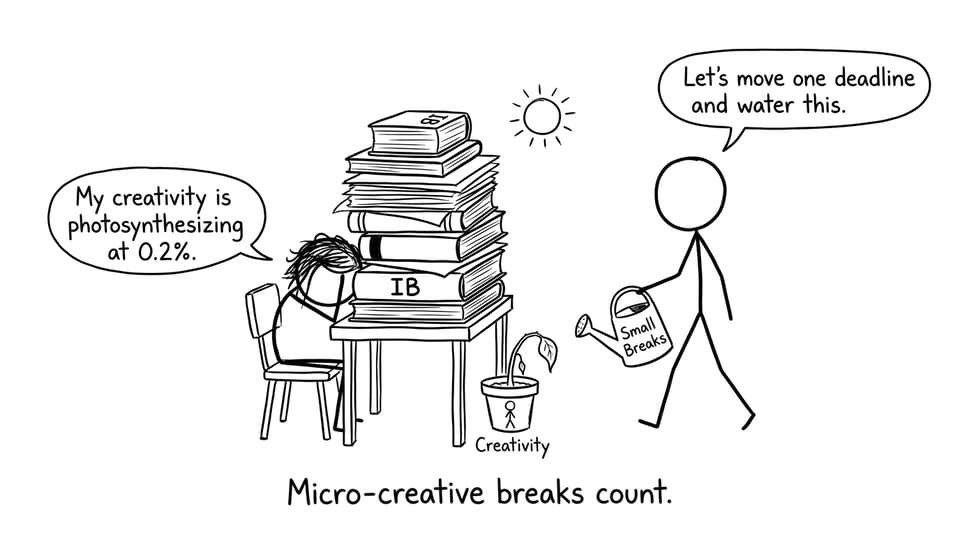
A quick checklist for protecting creativity in IB
Use this as a “don’t overthink it” reset for any IB week:
-
Keep one tiny creative habit (10-20 minutes) on most days
-
Turn at least one study task into an output (explain, sketch, teach, design)
-
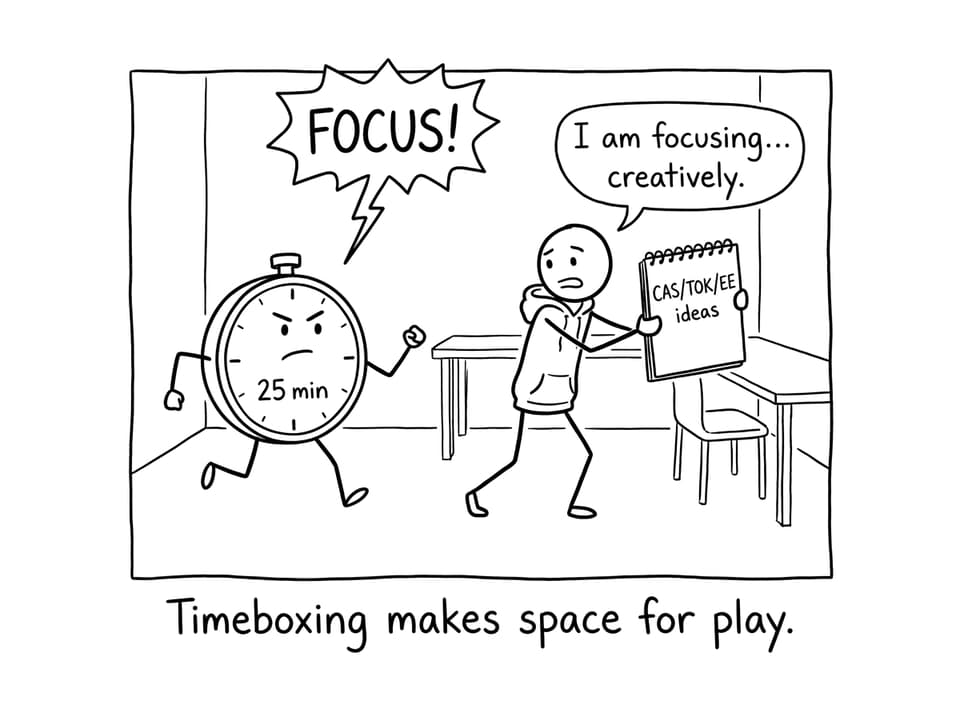
Use timeboxing: short sprints, then a deliberate creative break
-
Build exam confidence with practice, not extra perfection
-
Track stress signals early (sleep, irritability, avoidance)
-
Use tools that reduce friction, like RevisionDojo’s Notes, Flashcards, and Questionbank
Why IB students feel their creativity is stifled
Most IB students don’t lose creativity because they “stop caring.” They lose it because the programme trains a specific survival skill: doing what earns marks under time pressure.
Common reasons it feels like creativity disappears:
-
The workload is constant. When every day has a deadline, hobbies get treated like luxuries.
-
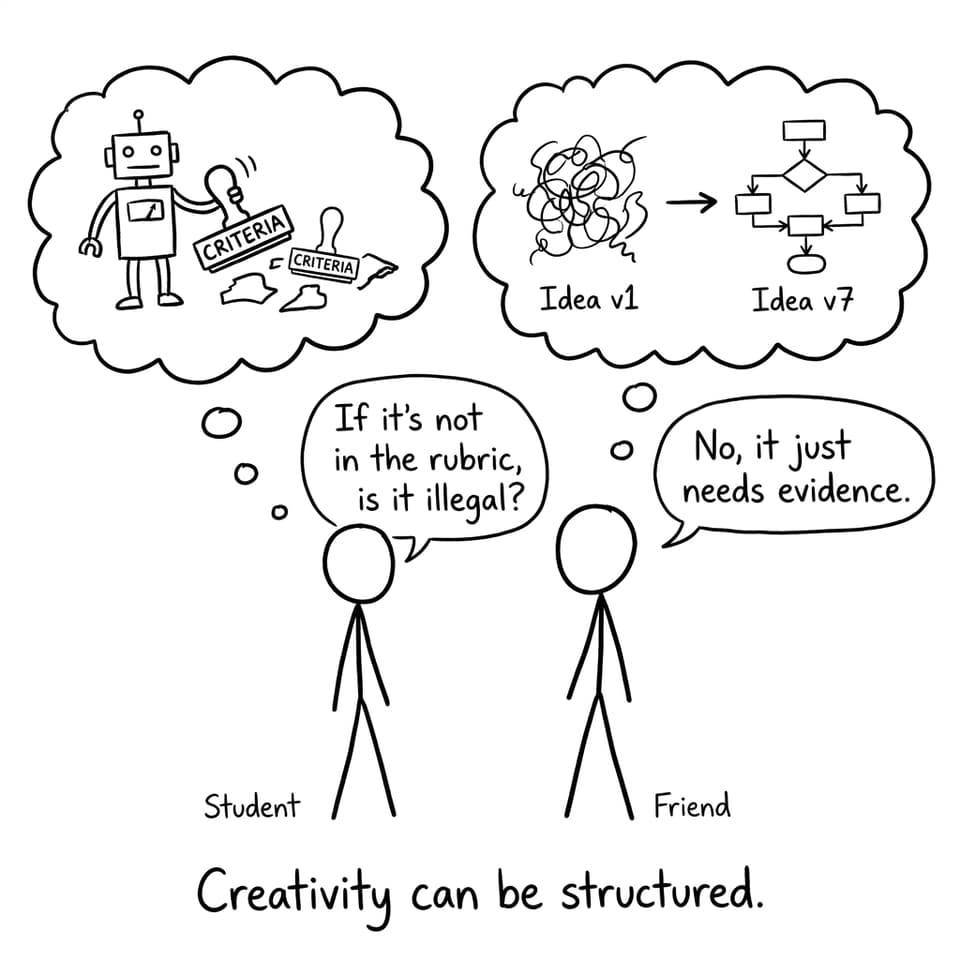
Criteria feel like a cage. Rubrics can sound like: “Do it this one correct way.”
-
Perfectionism crowds out play. Students start asking “what’s safe?” instead of “what’s interesting?”
-
Creative identity gets postponed. Music, art, writing, coding-for-fun, designing things, all pushed into “after exams.”
-
Comparison makes it worse. If peers look productive 24/7, creative students can feel like their strengths don’t count.
Here’s the subtle twist: the IB doesn’t actually reward robotic thinking. It rewards clear thinking. That distinction matters.
Creativity still matters (especially when exams are close)
Creativity isn’t just painting or poetry. In IB terms, it’s the ability to connect ideas, choose examples, design explanations, and adapt when you get stuck.
It also protects performance:
-
Creativity reduces stress. A short creative outlet tells your brain it’s safe to relax.
-
Creativity improves memory. When you transform a concept into your own words or visuals, it sticks.
-
Creativity strengthens exam technique. Great responses often come from flexible thinking: picking the right method, framing an argument, using a smart diagram.
RevisionDojo’s ecosystem supports that “create to learn” approach: start with Study Notes, turn ideas into Flashcards, and prove them with the Questionbank. That loop is structured, but it’s not soulless.
Parent moves that help (without turning into “the creativity police”)
Parents can’t remove the IB workload. But you can change the emotional weather around it.
Validate the feeling, then name the pattern
If your child says, “I can’t be creative anymore,” avoid arguing with it. Treat it like data.
Try something like:
-
“That makes sense. Your brain has been in performance mode for months.”
-
“When did you first notice it?”
-
“What part feels most boxed in: time, rules, or pressure?”
This helps them separate the programme from their identity. The IB is a context. It’s not who they are.
Show them where creativity already exists inside IB
A lot of creativity in IB is hidden because it looks academic:
-
CAS projects that are genuinely student-shaped
-
TOK prompts that reward original examples and careful nuance
-
The Extended Essay, where curiosity matters more than “safe” topics
-
Subject-specific tasks that require design choices (diagrams, structure, evaluation)
Even exam prep can be creative when students build outputs: mind maps, one-page concept sketches, “teach it back” recordings, or their own question sets.
For exam-focused creativity, the simplest path is guided practice. RevisionDojo articles like Use RevisionDojo Notes to Boost IB Retention and Digital IB Study Notes You Can Access Anywhere show how to convert content into active recall rather than passive rereading.
Protect creative time the way you protect revision time
Students often wait for a free afternoon that never arrives.
Instead, make it small and scheduled:
-
15 minutes of sketching between study blocks
-
20 minutes of guitar after dinner
-
a weekly club or rehearsal that becomes non-negotiable
This is where timeboxing helps. A timer can be a boundary, not a threat.
Reframe practice as freedom, not punishment
A big reason creativity feels stifled is uncertainty. If you don’t know what the exam wants, you cling to “safe” templates.
Targeted practice reduces that fear.
Point them toward clear tools and repeatable routines: RevisionDojo’s IB Question Bank | How to Use It Effectively and Making the Most of IB Question Banks and Practice Papers are designed to make exam expectations feel readable. And if they need stamina, Online IB Mock Exams: Practice Anywhere, Anytime and How to Study for IB Mocks (Without Burning Out) help them train under pressure without panic.
Add support when the load gets heavy
Sometimes “more balance” requires help, not motivation.
RevisionDojo’s Tutoring can be a pressure-release valve: a tutor can clarify content, sharpen technique, and reduce the endless self-teaching spiral. If your student wants to understand how to choose someone well, this guide is practical: IB Tutor Selection Guide.
Common parent mistakes that quietly worsen the problem
-
Treating creativity as a reward (“after you finish everything”)
-
Over-praising only grades, not process and ideas
-
Assuming structure kills creativity (so the student stops looking for creative options)
-
Comparing them to peers who seem “more academic”
In IB, the goal is not to remove structure. It’s to use structure to protect what matters.
Closing: make space for the student, not just the syllabus
If you’re an IB student preparing for exams, creativity can feel like the first thing you sacrifice to stay afloat. But creativity isn’t a side hobby you earn back later. It’s a stress buffer, a thinking tool, and a reminder that you’re still you.
And if you’re a parent, your role is powerful in a simple way: help your teen keep one small creative thread alive while they build exam skill.
When the workload gets loud, RevisionDojo can make the process quieter: focused Study Notes, daily Flashcards, targeted Questionbank practice, AI Chat support, Grading tools, Predicted Papers, Mock Exams, a Coursework Library, and Tutors when they need a human guide.
The goal isn’t to “beat” the IB. It’s to finish it with your curiosity still intact.