

Studying the IB online feels a bit like moving house mid-semester.
Not because the work changes. The standards stay stubbornly the same. But because everything around the work changes: your classroom becomes a screen, your classmates live in different time zones, and the line between “school” and “life” blurs until it becomes a smudge.
If you are preparing for IB exams, that blur matters. It can either become your advantage (flexibility, focus, independence) or your quiet weakness (drift, distraction, isolation). This guide breaks down what studying the IB online actually looks like, what to expect from classes and assessment, and how to build a routine that holds up under exam pressure.
A quick checklist for studying the IB online
Use this as your weekly reset. Online success in the IB is less about “working harder” and more about removing friction.
-
Know your live lesson times (and the time zone they are in).
-
Plan asynchronous work in short blocks (45-75 minutes).
-
Use active recall daily (Flashcards or self-quizzing).
-
Do exam-style practice every week (timed, reviewed, retested).
-
Keep coursework moving with tiny steps (IA/EE/TOK/CAS).
-
Protect sleep, because memory consolidation is part of the IB.
If you want a structured home base for this, RevisionDojo is built as an all-in-one loop: Study Notes, Flashcards, Questionbank, AI Chat, Grading tools, Predicted Papers, Mock Exams, Coursework Library, and Tutors.
How the IB online learning model actually works
Most online IB Diploma setups use a blend of:
Live (synchronous) lessons
These are real-time classes where the teacher leads discussion, introduces concepts, cold-calls (yes, still), and runs guided practice. The best live online lessons feel surprisingly normal: structured, interactive, and fast.
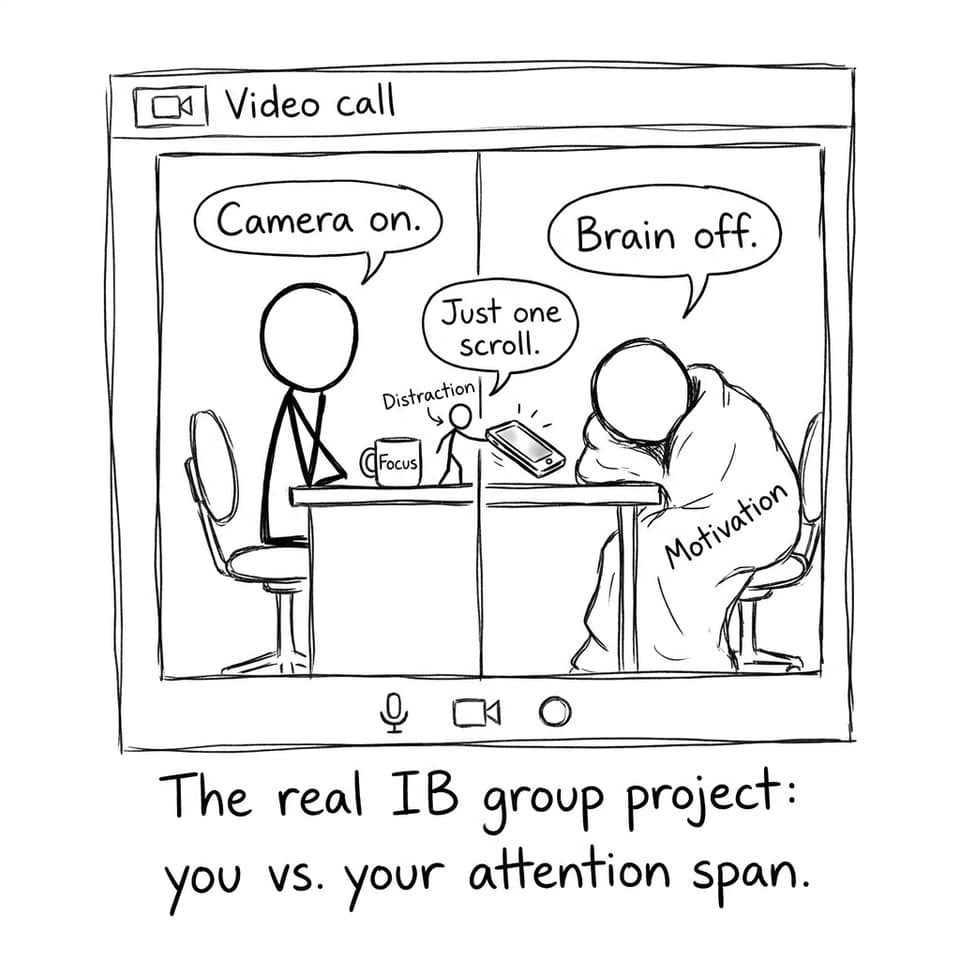
The hidden skill here is not “being smart.” It is being present. Camera fatigue is real, and your attention will wander unless you treat the live lesson like a one-shot opportunity to notice what confuses you.
Self-paced (asynchronous) learning
This is where online IB students either thrive or slowly sink.
Asynchronous learning includes recorded lessons, readings, assigned practice, forum responses, and independent tasks. It gives you flexibility, but also asks you to become your own manager.
A practical way to handle it: don’t schedule “revise Chemistry.” Schedule “40 minutes: acids and bases questions, then 10 minutes: error log.” Online learning rewards specificity.
For exam prep, pair your self-paced blocks with targeted practice. A disciplined method is outlined in How to Study for IB Exams: Step-by-Step Guide, and it maps cleanly onto online life.
What a typical day looks like for an online IB student
Online IB timetables vary by school and region, but many students experience something like this:
Morning: live instruction
Often 2-4 live sessions (with breaks) for your most demanding subjects: Mathematics, Sciences, Language A, or Language B.
Afternoon: independent work + collaboration
This is the “real school day” for many online IB students: homework, reading, practice questions, group planning, and coursework writing.
Evening: review or catch-up (optional)
Short recall sessions, a quick timed set, or a teacher support call. Not always necessary, but useful in exam season.
The key pattern: online IB students usually do 4-6 hours of structured learning, then independent work. If you do not protect independent time, it will get eaten by small distractions that feel harmless in the moment.
A helpful structure for protecting time is the weekly strategy in What’s a Realistic IB Study Plan for a 6 in Each Subject?.
Collaboration and community: online does not have to mean isolated
A common fear is that online IB is lonely. It can be. But it does not have to be.
Online programs typically build connection through discussion boards, shared documents, group projects, clubs, and advisory check-ins. The best students treat community like a study tool, not a social bonus.
Try this mindset shift:
-
You are not “bothering” classmates when you ask a question.
-
You are creating shared clarity.
You can also create your own structure using RevisionDojo tools: form a small weekly routine where your group does a timed set from the Questionbank, then compares mistakes and uses AI Chat to clarify confusing markscheme logic.
Support and mentorship: what you should expect
Online IB students should still receive high-quality support. In good programs, teachers will:
-
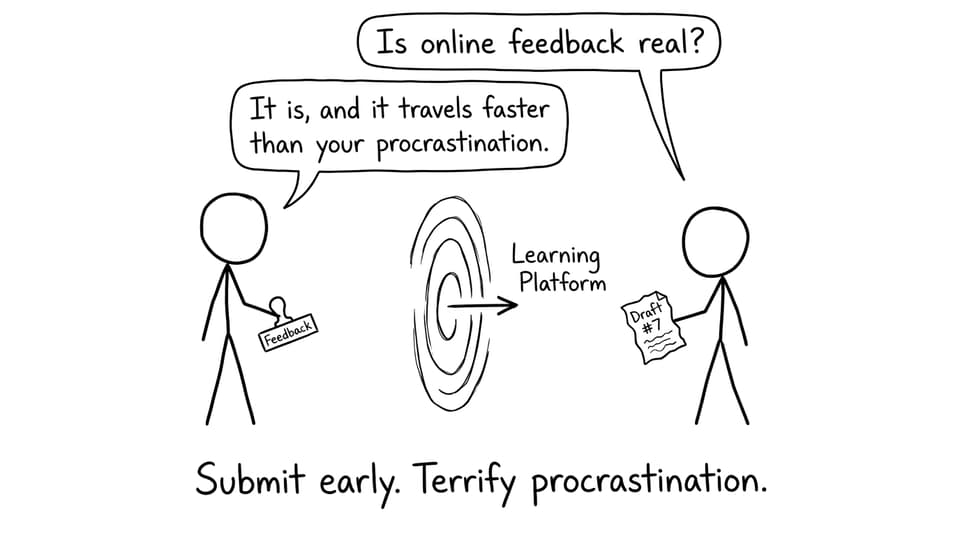
Give frequent, specific feedback.
-
Hold office hours or 1:1 meetings.
-
Coach you through internal deadlines.
-
Monitor your wellbeing, not just your grades.
If feedback feels slow, build your own faster loop. RevisionDojo’s Grading tools and AI Chat help you shorten the time between attempt and correction, which is where most exam improvement comes from.
For a broader view of building a feedback-driven routine, You’re Not Lazy, Your IB Study Method Is Broken is a useful reset.
Assessments and IB exams: what is online and what is not
Studying the IB online does not mean the diploma is “different.” The academic requirements remain aligned to the standard Diploma Programme.
Coursework components like IAs, the EE, and TOK essays are typically drafted and submitted digitally through your school systems. That part fits online life naturally.
However, final IB examinations are taken in person at approved examination centres, usually through partner schools. This protects standardisation and academic integrity.
So think of online IB like this: your learning can be remote, but your performance is still measured in a controlled setting. Your online routine should therefore include in-person simulation: timed writing, closed-book problem sets, and weekly exam-style rehearsal.
To make that rehearsal practical, many students use RevisionDojo’s Mock Exams and Predicted Papers (available via IB Predicted Papers by IB Examiners) to practise pacing, stamina, and question interpretation.
Technology: what you need (and what you don’t)
Online IB success is not about fancy gear. It is about reliability.
You generally need:
-
Stable internet (or a backup plan).
-
A laptop that can handle video calls and documents.
-
A quiet-ish space with minimal interruptions.
-
A simple file system for notes and submissions.
You do not need to turn your desk into a productivity shrine. The point is to reduce decisions.
A good tech habit: keep one “exam practice” tab always available. On RevisionDojo, that can be your Questionbank or Flashcards session, so starting a study block takes seconds, not negotiation.
If you want to tighten your overall revision system, The Ultimate Guide to Revision for IB Students lays out the fundamentals in a way that works online.
Advantages of doing the IB online (when done well)
Online IB can be a genuine advantage for the right student.
Flexibility without lowering standards
You can fit learning around sport, music, travel, health needs, or location constraints, while still pursuing the full diploma.
Independence that compounds
The IB already rewards self-management. Online learning forces you to practise it daily. Over months, that becomes a real skill.
Global perspective becomes personal
You do not just study international-mindedness. You experience it in your group chats and discussions.
Easier access to targeted tools
Online students often adopt smart resources faster: Flashcards for recall, Questionbank practice for technique, AI Chat for instant clarification, and Grading tools for fast feedback.
If you want an all-in-one view of how those pieces fit together, RevisionDojo App: The Smarter Way to Prep for IB Exams shows the full workflow.
Challenges of online IB (and how to beat them)
Online IB has predictable failure points. That is good news, because predictable problems have predictable solutions.
Distraction and drift
Your brain treats home like “low-stakes mode.” Fix it with rituals: same start time, same first task, same short timer.
A strong baseline is:
-
10 minutes Flashcards
-
30-40 minutes Questionbank
-
10 minutes mistake review
If you feel busy but remember nothing, IB: I Study All Day but Remember Nothing explains why that happens and what to change.
Motivation swings
Motivation is not a plan. Your plan should survive low-motivation days.
Use “minimum viable study”: one timed mini-set, one error log, one tiny coursework action. Consistency is the real multiplier in the IB.
Time zone friction
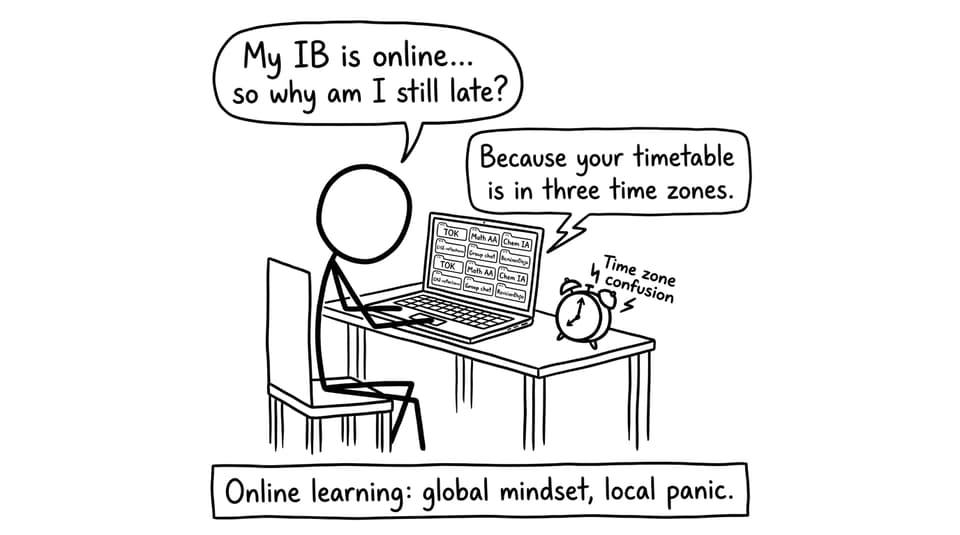
If your program spans regions, your calendar becomes part of your grade. Make all times explicit, set reminders, and never assume.
A final word: make online IB feel simple
Studying the IB online is not easier or harder by default. It is simply less forgiving of vague plans.
When your classroom is everywhere, your routine has to become your classroom.
If you want that routine to be repeatable, RevisionDojo gives you the pieces to run it end to end: learn quickly with Study Notes, retain with Flashcards, practise with the Questionbank, get unstuck with AI Chat, tighten your work with Grading tools, simulate pressure with Predicted Papers and Mock Exams, steady coursework with the Coursework Library, and bring in Tutors when you need a human diagnosis.
Build the loop. Repeat it. That is how online IB preparation becomes calm, and how calm becomes points.