


Sometimes you can feel a school’s identity in the hallway before you can explain it.
It shows up in small things: a teacher who asks why before what, a student who shares notes without being asked, a class that treats mistakes like data instead of drama. In an IB school, those small moments aren’t accidental. They’re the practical, everyday version of shared IB values.
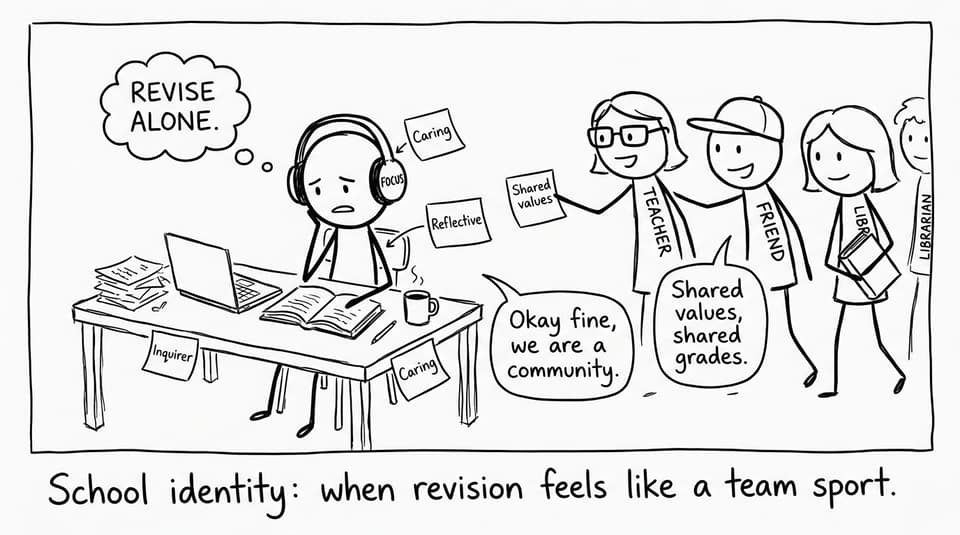
And if you’re an IB student preparing for exams, this matters more than it sounds. A strong school identity built on shared IB values doesn’t just look nice in a mission statement. It creates routines, language, and support systems that make revision more consistent and less lonely.
A quick checklist for living IB values (while revising)
Use this as a simple “school identity to exam results” bridge:
-
Use the IB Learner Profile words in your revision reflection (not just in assemblies).
-
Turn “inquiry” into questions you can test using a question bank.
-
Make reflection visible: keep an error log, not just a to-do list.
-
Connect caring to collaboration: swap one weak-topic session per week with a friend.
-
Ask teachers for feedback you can act on (criteria, command terms, next steps).
If you want a central hub for that workflow, start with RevisionDojo for IB and keep it open as your “home base” across subjects.
Why shared IB values strengthen school identity (and your exam prep)
Shared IB values do something quietly powerful: they give everyone the same compass.
When a school consistently rewards curiosity, integrity, empathy, and reflection, students stop guessing what “good learning” looks like. That reduces friction. It also reduces revision chaos, because the same expectations follow you from class to class.
For exam prep, that shared compass becomes practical:
-
Consistency across subjects: you hear the same language about evidence, evaluation, and structure.
-
Better feedback loops: reflection becomes normal, not a punishment after a bad grade.
-
Belonging under pressure: exam season feels like a shared challenge, not a private crisis.
To see how whole-school systems can support that consistency, schools often begin with RevisionDojo for Schools.
Turning IB values into daily school culture you can feel
Values become identity when they show up in repeatable habits.
Inquiry becomes targeted practice
“Inquiry” isn’t just discussion. For an IB student, it’s the habit of turning confusion into a specific question you can attack.
A simple routine:
-
Read a short explanation (one concept).
-
Ask: “What would the IB actually test here?”
-
Do 5-10 exam-style questions on that exact skill.
That’s why tools like a focused question bank matter. If you’re building this habit, explore Questionbank and (for strategy) IB Question Bank | How to Use It Effectively.
Reflection becomes an error log (not a mood)
A lot of students “reflect” by thinking, I should have studied more. That’s not reflection. That’s guilt wearing glasses.
Real IB reflection is specific:
-
What did I misunderstand?
-
Which command term did I misread?
-
What would a full-mark answer include?
-
What rule will I follow next time?
You can anchor that with concise resources like Digital IB Study Notes, then convert them into recall and practice.
Caring becomes collaboration with boundaries
A strong IB school identity often shows up in how students help each other without turning group work into distraction.
Try this “caring, but effective” structure:
-
25 minutes solo attempt.
-
10 minutes compare methods with a friend.
-
5 minutes write one improvement rule.
When schools normalize this, revision stops being a competition. It becomes shared momentum.
The Learner Profile: your school’s identity in usable form
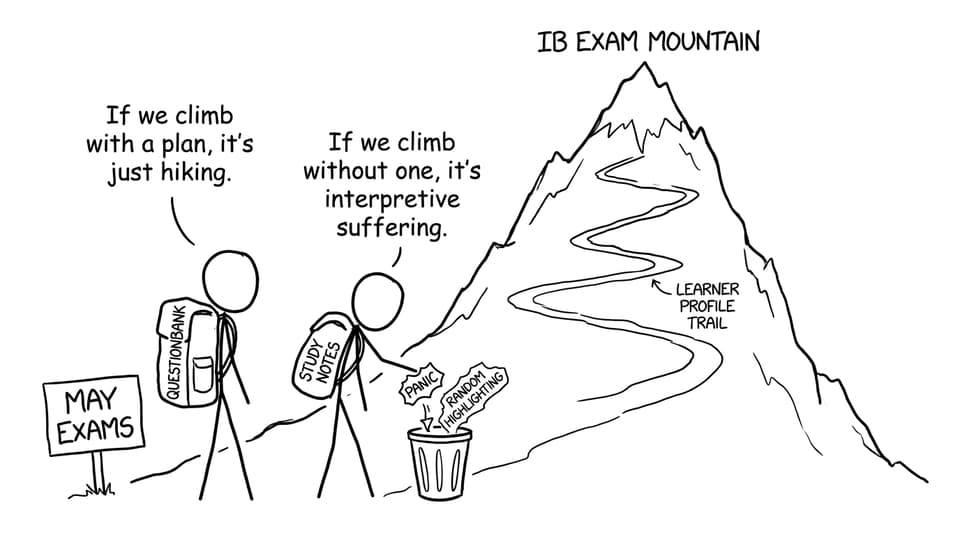
The Learner Profile is where IB values become a daily vocabulary.
If you’re revising, you can use it like a dashboard:
-
Inquirer: What question am I trying to answer today?
-
Thinker: What method will I apply under time pressure?
-
Communicator: Can I explain it in 30 seconds without notes?
-
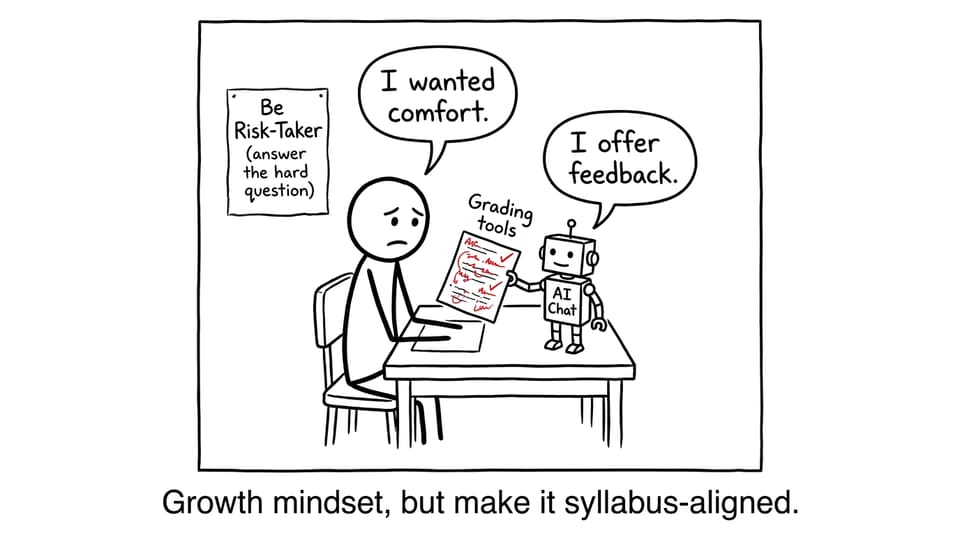
Risk-taker: Will I attempt the hardest question first, at least once?
-
Reflective: What will I change next session?
This is also why connected tools matter. RevisionDojo links Study Notes, Flashcards, AI Chat, and Grading tools into one loop, so your reflection immediately turns into better attempts. If you want a full system, read IB Revision Made Easy With RevisionDojo All-in-One.
How coordinators and teachers protect your IB identity during exam season
In many schools, exam season quietly erodes culture: more stress, less patience, fewer conversations.
Strong IB leadership does the opposite. It makes the values louder when pressure rises. That could look like:
-
department-wide agreement on what “good feedback” includes,
-
shared reflection routines after timed practice,
-
consistent language about criteria and command terms,
-
structured support for coursework using Grading tools and exemplar guidance.
If you’re a student, you benefit most when your teachers are using the same systems too. That’s one reason schools adopt platforms like RevisionDojo to streamline revision and feedback across year groups (see How IB Schools Can Use RevisionDojo to Streamline Exam Preparation).
Closing: make IB identity something you can revise with
A school’s identity isn’t built in slogans. It’s built in repeated choices, especially when exams get close.
If you’re preparing for IB exams, lean into the shared IB values around you: inquire with intention, reflect with precision, and collaborate with care. Then give those values a system. RevisionDojo is designed to be that system, bringing together Questionbank practice, Study Notes, Flashcards, AI Chat, Grading tools, Predicted Papers, Mock Exams, a Coursework Library, and Tutors in one place.
When your school identity and your revision habits point in the same direction, you stop feeling like you’re pushing alone. You start feeling guided.