A quieter kind of fairness in IB
The weirdest part about IB assessment is that you can do everything right and still feel unsure about what counts.
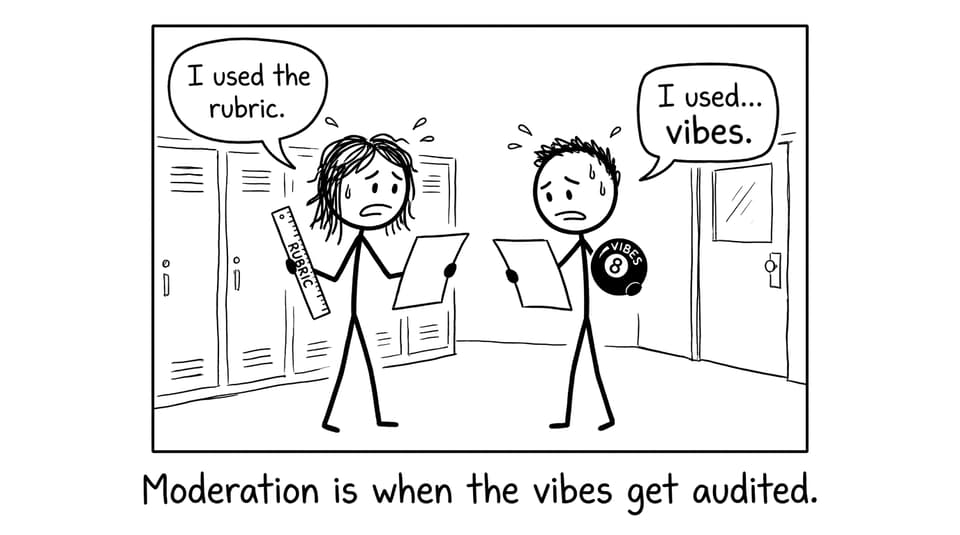
One teacher says your analysis is “excellent.” Another says it’s “developing.” You start wondering if grades are just a matter of mood, handwriting, or luck. Behind the scenes, schools know that fear. It’s why IB marking and moderation exist in the first place: to make sure your work is judged the same way, even when different people are doing the judging.
For students preparing for exams, understanding moderation isn’t just trivia. It’s a way to study smarter. When you know what departments do to standardize grades, you can reverse-engineer the system: write answers that make evidence obvious, hit the criteria cleanly, and avoid the common mistakes that create “borderline” debates.
Quick checklist: what “simplifying IB moderation” should mean for you
Even though marking meetings happen without you, a simplified IB moderation process tends to produce the same student-facing benefits every time:
-
Clearer feedback because teachers align on what the criteria actually mean
-
More consistent grades across different classes and teachers
-
Fewer surprises when work is reviewed internally
-
Faster improvement because “what to do next” becomes specific
-
Better exam prep because the same logic shows up in markschemes
If your school is doing moderation well, your job becomes simpler: make your evidence easy to award.
What moderation is (and why it matters for IB students)
In IB, marking is a teacher judging your work against subject criteria. Moderation is the quality check that keeps those judgments consistent.
There are three useful layers to know about:
Marking
This is the first pass: a teacher applies the criteria to your work and awards levels/marks.
Internal moderation
This happens inside the school. Teachers compare samples, discuss tough cases, and align standards so two students in different classes aren’t graded by two different “invisible rules.”
External moderation
For some components, the IB checks whether a school’s marking aligns with global standards. That’s why schools care so much about keeping an evidence trail, shared rubrics, and consistent annotation.
For students, the takeaway is simple: moderation rewards clarity. If your work makes the criteria easy to see, it tends to travel well across markers.
The shared language problem: why departments drift
Most inconsistency comes from a human issue, not a technical one.
Two teachers can read the same descriptor (“effective evaluation,” “sustained analysis,” “appropriate methodology”) and picture different things. Not because one is careless, but because each has taught different cohorts, seen different scripts, and built different instincts.
Departments simplify IB marking and moderation by building a shared language.
Use department rubrics that mirror IB criteria
A strong department doesn’t rewrite the IB criteria into something else. It clarifies the criteria with notes, examples, and common pitfalls.
If you want to train yourself the same way, practice with tools that behave like criteria, not vibes. RevisionDojo’s practice ecosystem is built around that logic: Study Notes for clarity, Flashcards for recall, a Questionbank for exam-style application, and AI Chat when you’re stuck. Start here: RevisionDojo for IB.
Anchor judgments with exemplars
Calibration often starts with a few “anchor” samples: pieces of work the team agrees represent certain levels. That reduces drift.
You can do a student version of this: keep two or three of your own responses (a strong one, a mid one, and a weak one). When you revise, compare today’s work to your anchors. You’ll spot pattern errors faster.
Short calibration beats rare meetings
Departments that simplify IB moderation tend to do short, frequent alignment sessions rather than one exhausting marathon.
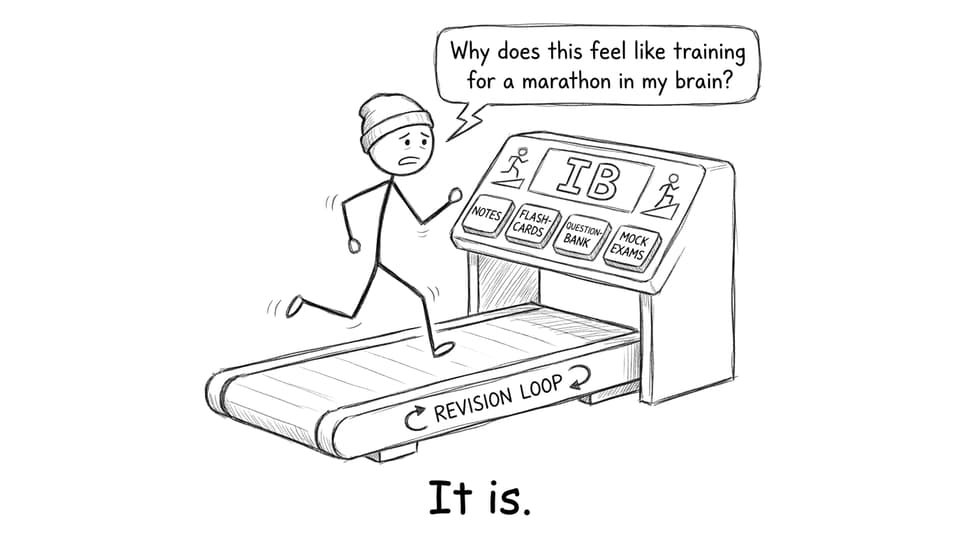
As a student, mirror that rhythm: short, repeated practice under similar constraints. That’s why a loop like “read, recall, apply, review” compounds.
How technology makes IB moderation lighter (and feedback faster)
Paper-based moderation has predictable failure points: missing annotations, inconsistent comments, and no easy way to track why a mark was awarded.
Digital systems simplify IB marking and moderation because they centralize:
-
The rubric
-
The evidence (your work)
-
The feedback (what you should change)
-
The audit trail (why a decision was made)
RevisionDojo’s school tools are built around that exact workflow, which is why RevisionDojo for Schools is often used to reduce admin load while improving consistency.
For exam students, the same principle matters: feedback should be timely, specific, and tied to marks. If you’re training with RevisionDojo, you can combine targeted practice from the Questionbank feature with fast correction loops from RevisionDojo App: The Smarter Way to Prep for IB Exams.
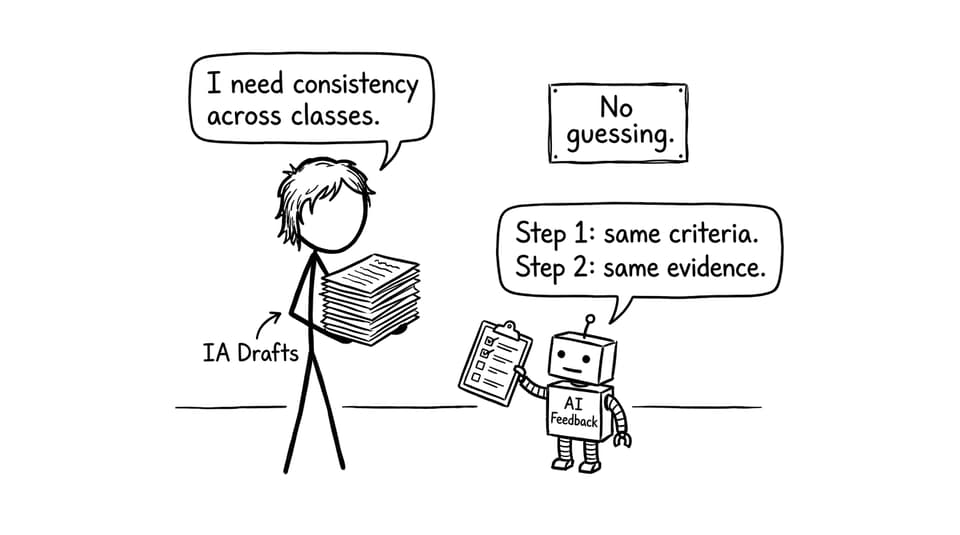
What you can do right now to “fit” the IB moderation mindset
You can’t control how your department runs meetings. But you can make your work moderation-proof.
Write so your evidence is impossible to miss
In IB, the best answers aren’t just correct. They’re easy to award. Use signposting, define terms, and make evaluation explicit.
Practice with markscheme logic, not just content
Do questions that force you to earn marks in the same structure the IB expects. A strong starting point is: IB Question Bank: Thousands of Practice Questions.
Use spaced recall to reduce “borderline” responses
Borderline scripts often happen when students half-remember. Tight recall removes that risk. Build that habit with: IB Flashcards with Spaced Repetition (SRS) and a strategy guide like IB Flashcard System: Active Recall for Better Memory.
Rehearse the pressure, not just the syllabus
Moderation can fix inconsistency, but it can’t fix timing. Train with exam-realistic practice like Best IB Mock Exam Platform: Why Students Pick RevisionDojo and keep your routine realistic.
Closing: turn IB moderation into your advantage
A simplified IB marking and moderation system is meant to protect you from randomness. But it also reveals something useful: the IB is a game of visible evidence.
If you learn to write answers that make the criteria obvious, you don’t just get fairer marking. You get better at the exam itself.
Build that advantage with RevisionDojo’s full loop: Questionbank, Study Notes, Flashcards, AI Chat, Grading tools, Predicted Papers, Mock Exams, a Coursework Library, and Tutors when you want a human plan. When your prep is built around the same logic departments use for IB moderation, your results become more predictable, in the best way.