


A good MYP class has a specific feeling: you walk in with a vague topic, and you walk out with a clearer mind. Not because the teacher talked more, but because the lesson made you think better.
That doesn’t happen by accident.
Most new MYP teachers are learning in public: new rubrics, new language (ATL, global contexts, concepts), and a new expectation that students should do the heavy lifting. Professional development isn’t just for them. It quietly shapes what you experience as an IB student preparing for exams: clearer tasks, tighter feedback, fairer grading, and practice that matches what the MYP actually rewards.
Below is a student-focused guide to the professional development resources that help new MYP teachers get good faster, and how you can use that knowledge to study smarter.
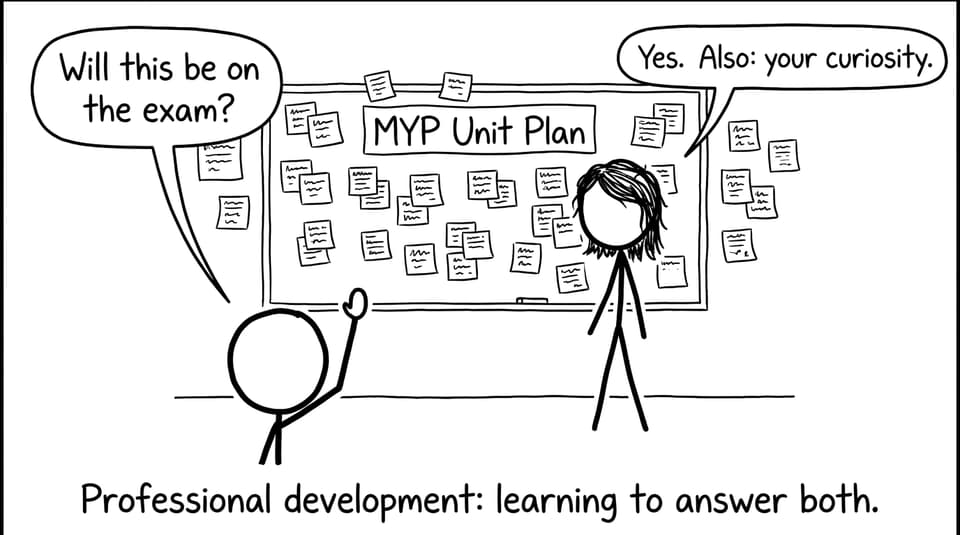
Quick checklist: what “good MYP PD” looks like
If your school is doing MYP professional development well, you’ll notice these patterns:
-
Teachers talk about criteria more than “points.”
-
Tasks start with command terms and success criteria, not vibes.
-
Feedback tells you what to improve next, not just what was wrong.
-
Units connect concepts to real contexts without losing academic rigor.
-
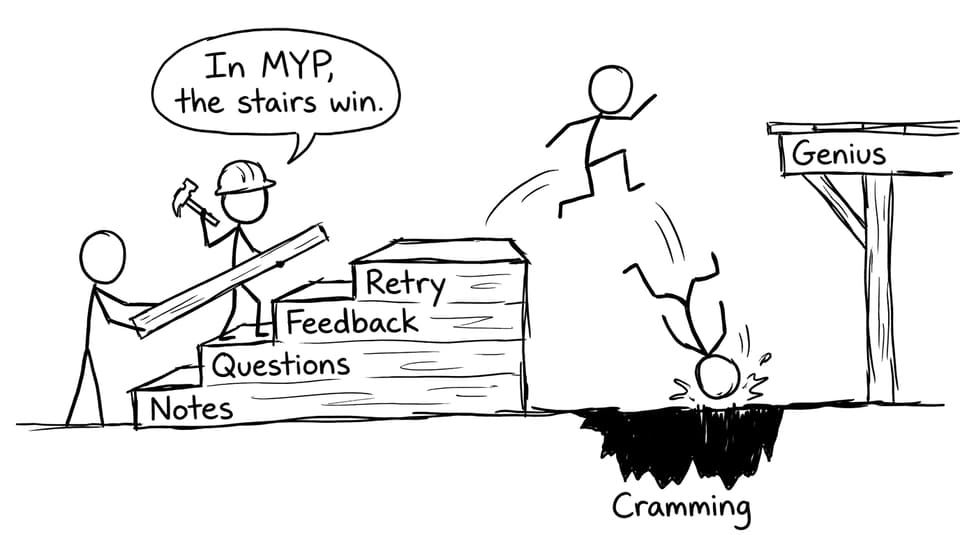
Practice happens in small loops: attempt, feedback, retry.
When you spot these signs, you’re in a classroom that’s preparing you for MYP assessments with less stress.
Why MYP teacher development matters for your exam prep
The MYP is concept-driven and criteria-based. That sounds like teacher-speak until you sit down to write a response and realize the marker isn’t asking, “Did you try hard?” They’re asking, “Did you meet the descriptor?”
Professional development helps new teachers align three things that students often experience as chaos:
-
Inquiry (good questions, not just activities)
-
ATL skills (how you learn, plan, research, and communicate)
-
Assessment criteria (how you earn marks)
When teachers are trained, they set tasks that look a lot like strong exam practice. When they’re not, you end up revising blindly.
If you want a student-friendly overview of how the programme is designed, use Middle Years Program (MYP) Hub as your starting point.
The core professional development resources new MYP teachers rely on
Official IB workshops (Categories 1, 2, and 3)
Most new MYP teachers start with official IB workshops. Category 1 is the “learn the framework” phase. Category 2 helps teachers design better units and assessments. Category 3 is where experienced educators explore leadership and innovation.
Here’s the part that affects you: trained teachers build assessments that match the MYP criteria, and they give feedback in language you can actually use to improve.
When you’re revising, mirror that same logic: criteria first, then practice.
A practical companion is MYP Revision Guide: Study Tips for Success, especially if you’re unsure how to turn classroom learning into exam-ready performance.
School-based PLCs, mentoring, and peer observation
The fastest growth for a new MYP teacher often happens inside the school, not at a one-off workshop.
-
PLCs (Professional Learning Communities) help teachers standardize expectations across subjects.
-
Mentors help new teachers avoid common MYP mistakes (like unclear task sheets or vague rubrics).
-
Peer observation spreads good habits quickly.
As a student, you benefit when your teachers share the same “definition of quality.” That consistency makes revision easier because you’re not decoding different expectations in every class.
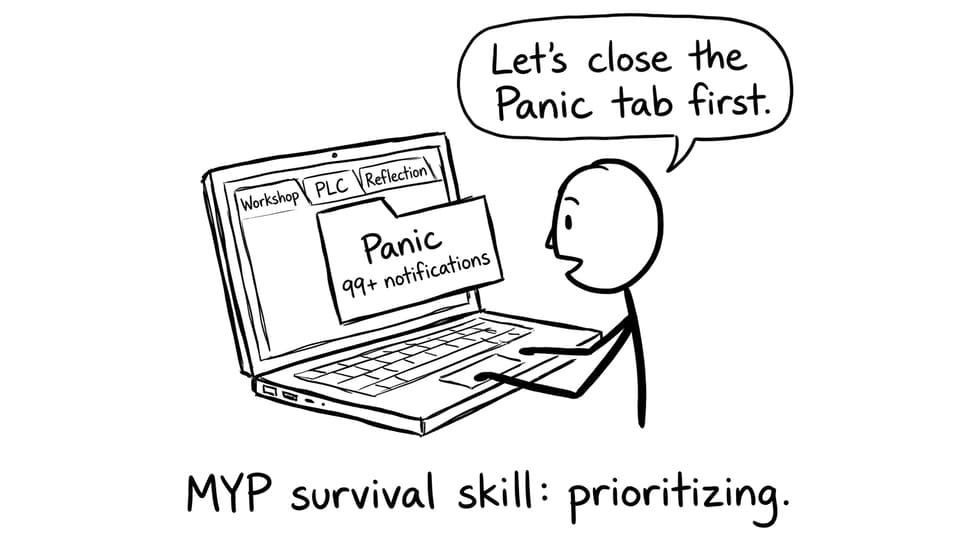
If you’re balancing multiple subject groups and drowning in deadlines, this is worth reading: Best Practices for Balancing Eight Subject Groups in IB MYP.
Online communities and shared resources
New MYP teachers often learn by comparing examples: unit plans, task sheets, criterion interpretations, and moderation conversations.
Students can do a version of that too: compare your own work against strong models and keep your practice consistent.
On RevisionDojo, you can study the way great teachers plan:
-
Use Study Notes to rebuild understanding efficiently: Study Notes
-
Use Flashcards for daily recall training: Flashcards
-
Use the Questionbank to practice under realistic constraints: Questionbank
That trio mimics the best PD advice teachers get: clarity, retrieval, application.
How to turn teacher PD ideas into your MYP study system
Build a “PD-style” feedback loop (attempt, feedback, retry)
A common professional development message is simple: learning improves when feedback changes the next attempt.
You can copy that immediately:
-
Do a short set of MYP questions.
-
Review mistakes like a teacher would: which criterion strand did you miss?
-
Rewrite one answer to match the descriptor.
RevisionDojo makes this loop smoother because your practice, feedback, and tracking live in one place. If you want a bigger structure, use MYP eAssessments: 30-Day Study Plan That Works.
Practice tasks the way the MYP is actually assessed
Many new teachers learn (sometimes painfully) that “fun project” doesn’t automatically equal “high marks.” The MYP rewards clear evidence tied to criteria.
So should your revision.
A very practical resource is Sample MYP Assessment Tasks for Every Subject Group. It helps you see what tasks look like across subjects, and how to practice them like exam prep.
Closing: a quiet advantage in MYP
A new MYP teacher doing professional development is really doing something else: building a better path for students to learn, practise, and improve without guessing.
You can borrow that same structure. Keep your work criteria-driven. Build feedback loops. Practise in small, repeatable steps.
When you’re ready to make your MYP prep feel calmer and more consistent, use RevisionDojo as your one-tab home base: Questionbank, Study Notes, Flashcards, AI Chat, Grading tools, Predicted Papers, Mock Exams, Coursework Library, and Tutors working together to turn effort into results.
If you want more student-friendly MYP strategies, browse All #MYP Posts.


