


Your teachers disappear into meetings. They come back with new rubrics, new wording, and a suspiciously consistent idea of what “analysis” looks like.
If you’re an IB student preparing for exams, this can feel like background noise. But those meetings often decide what your classroom feels like for the next month, and what kinds of answers get rewarded.
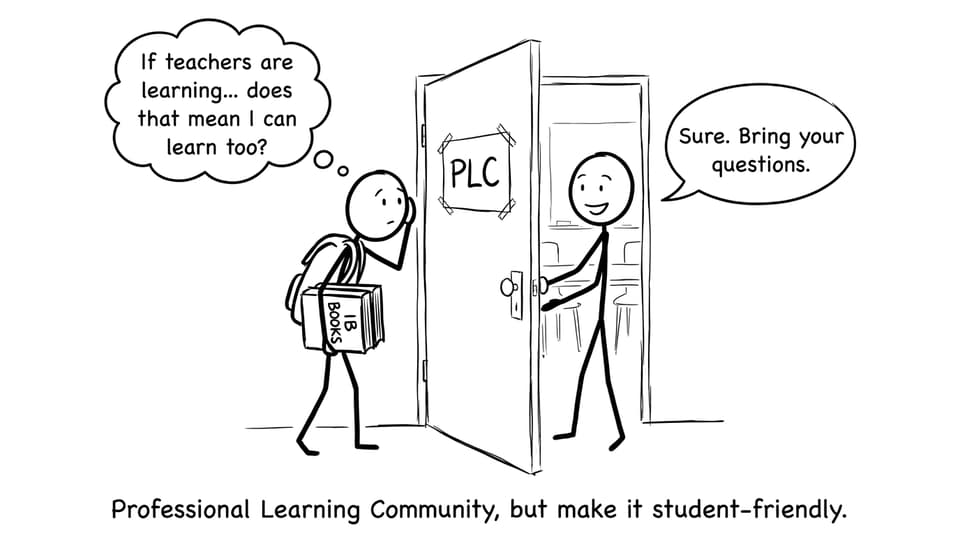
In many IB schools, those meetings are called Professional Learning Communities (PLCs): small, recurring groups where teachers ask one hard question about learning, test changes in lessons, and reflect on evidence. When PLCs are led well, you feel it as a student. Instructions get clearer. Feedback stops being vague. Assessments start matching what you were actually taught.
Quick checklist: what strong IB PLCs look like (from a student’s view)
-
A shared purpose tied to IB standards (not just “we should meet more”)
-
One guiding inquiry question per cycle (so the work doesn’t drift)
-
Evidence that includes student thinking, not only scores
-
Notes and actions recorded, then revisited (real follow-through)
-
Cross-subject collaboration, especially on ATL skills and assessment language
If you notice these patterns at your school, your teachers are probably running PLCs that actually change learning.
Why IB PLCs matter to your exam prep
The IB is as much about how you show thinking as what you know. PLCs are where teachers calibrate that “how.”
In a strong PLC, teachers compare student work, discuss why certain responses earn marks, and align what “good” looks like across classes. That means you get fewer surprises: less “my teacher wanted X but the markscheme wanted Y” energy.
This is also where schools build consistency between grade levels and programmes. When PLCs work across MYP and DP, the habits you practiced earlier (reflection, criterion language, command terms) show up again when stakes are higher.
For your personal IB revision, the takeaway is simple: your environment matters. If your school has strong PLCs, you can lean into the clarity they produce, and then train with exam-style resources at home.
A practical pairing is:
-
Use teacher clarity to understand expectations
-
Use RevisionDojo to rehearse those expectations under pressure
Start with RevisionDojo for IB, then build your routine around Study Notes, Flashcards, and the Questionbank.
The core move: inquiry questions that don’t waste time
A PLC is only as good as its question.
In the IB, strong PLC inquiry questions usually sound like this:
-
“How can we make student reflection more authentic without adding busywork?”
-
“What does ‘evaluate’ look like in Biology vs Economics, and how do we teach it consistently?”
-
“How do we assess ATL skills in a way students can actually act on?”
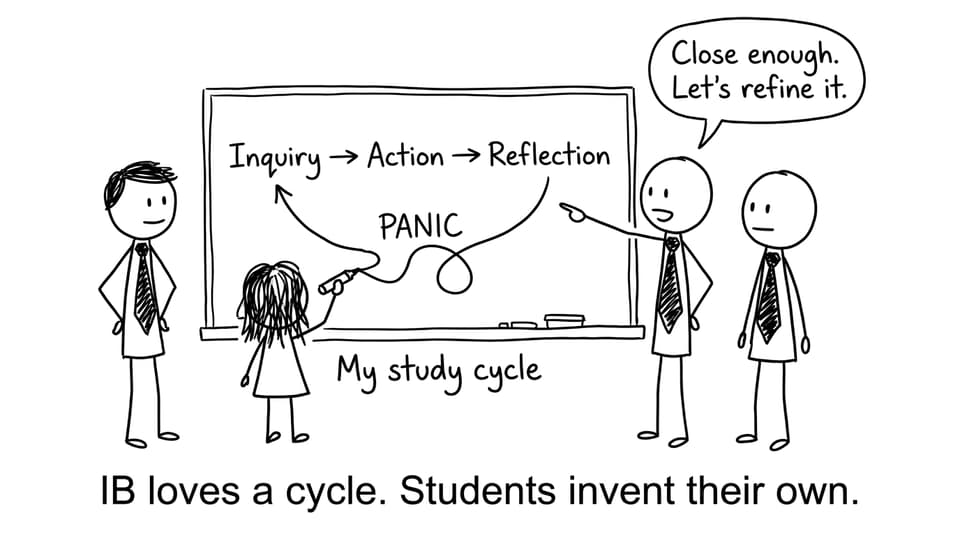
When teachers anchor to one inquiry question, meetings stop being announcements. They become a cycle: inquiry, action, reflection.
Evidence in IB PLCs: not just numbers
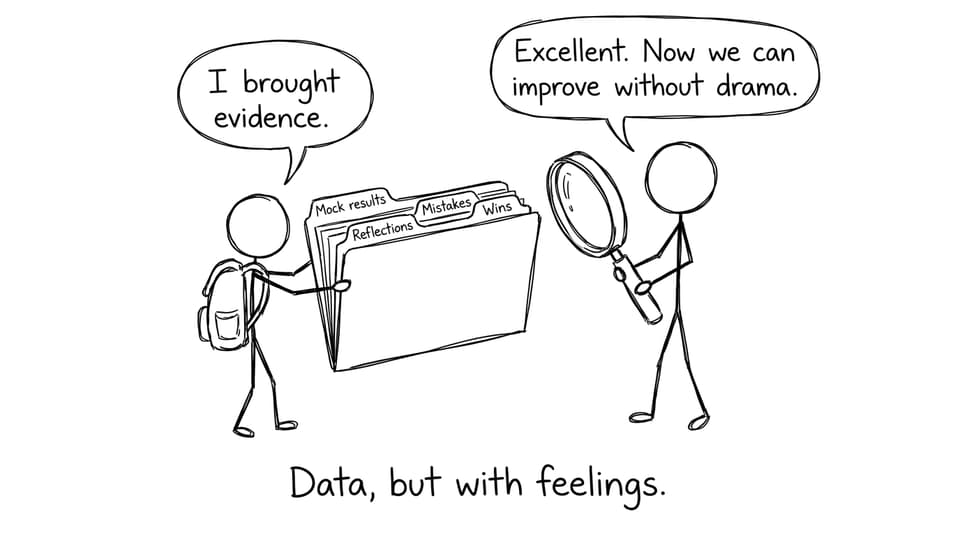
For IB schools, “data” shouldn’t mean only averages.
Strong PLCs use evidence such as:
-
Student reflections and self-assessments
-
Samples of writing showing command term misunderstandings
-
Notes from moderation and marking alignment
-
Common errors from timed practice
If you want to mirror that same grown-up process as a student, do it with your own evidence loop.
One effective system:
-
Learn content quickly with Digital IB Study Notes
-
Lock memory with IB Flashcards
-
Convert knowledge into marks via the IB Question Bank guide
-
Build stamina using IB Predicted Papers
-
Reflect using a mistake log (patterns, not emotions)
That’s essentially a student PLC of one.
What coordinators do when PLCs are led well
In many IB schools, coordinators are the difference between PLCs as “meetings” and PLCs as “momentum.” They protect time, set norms, and keep the cycle moving without turning it into evaluation.
When that leadership works, you notice it in small ways: shared language across subjects, clearer assessment schedules, and feedback that sounds like it was built from a common understanding.
If you want to see what that looks like at a whole-school level, explore RevisionDojo for Schools, which is designed to support consistent exam preparation using Questionbank practice, Mock Exams, Predicted Papers, AI Chat, Grading tools, and analytics.
Closing: use the same PLC logic in your IB revision
The quiet truth about the IB is that outcomes rarely come from one heroic study weekend. They come from small cycles repeated: question, practice, feedback, adjustment.
That’s what great PLCs do for teachers. And it’s what RevisionDojo helps you do as a student, with Study Notes, Flashcards, AI Chat, Grading tools, Questionbank practice, Predicted Papers, Mock Exams, a Coursework Library, and Tutors when you need a human voice.
Build your own IB learning community, even if it’s just you and a routine. Then make it measurable with practice: start at RevisionDojo.