

If you’ve ever frozen mid-sentence in your target language, you know the feeling: your brain holds the vocabulary somewhere, but the moment asks for something else--courage, timing, and a way to keep going when the words don’t arrive neatly.
That’s the quiet genius of MYP Language Acquisition. It’s not a subject built for perfect students. It’s built for students who can communicate anyway.
In the MYP, Language Acquisition is where grammar meets real life: messages to actual audiences, conversations that don’t pause for you to look things up, and cultural context that changes what “correct” even means. This guide gives you MYP-friendly, exam-ready strategies that work whether you’re in Phase 1 or Phase 6.
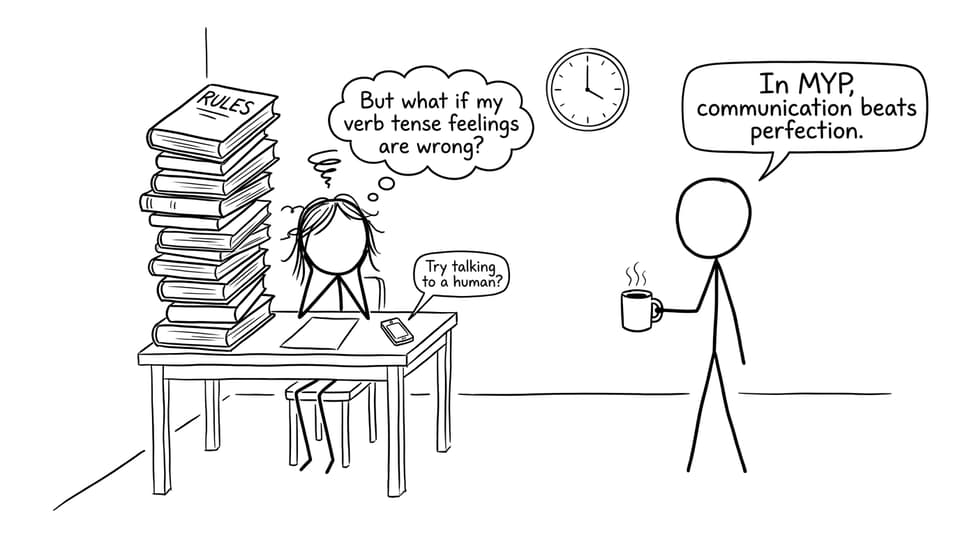
MYP Language Acquisition exam prep checklist
Use this quick list before you revise. It keeps your MYP practice focused and measurable:
-
Identify your phase goals (what you can do now vs next)
-
Train the four skills weekly: listening, reading, speaking, writing
-
Practice with a purpose: audience, context, and task type
-
Use authentic texts (not only textbook exercises)
-
Keep a short error log (patterns, not single mistakes)
-
Do timed mini-tasks so performance matches exam pressure
When you want everything in one place, start at the Middle Years Program (MYP) hub. It’s the easiest way to organize your MYP routine alongside RevisionDojo tools.
What Language Acquisition means in the MYP (and why it feels different)
Language Acquisition is one of the eight subject groups in the MYP, designed for learning a language that isn’t your home language. That sounds simple. But the approach is different from traditional “memorize and repeat” language classes.
In MYP Language Acquisition, you’re rewarded for what you can do with language: interpret meaning, adapt register, respond to real-world prompts, and show cultural awareness. It’s concept-based and inquiry-driven, so a unit might explore identity, culture, or communication itself--and your vocabulary and grammar grow because you need them to express ideas.
That’s also why revision feels slippery at first. You’re not only learning content. You’re building a skill.
If you like seeing how MYP tasks are constructed across subjects (and how criteria shape them), use Sample MYP Assessment Tasks for Every Subject Group to understand the logic behind common task formats.
How MYP Language Acquisition is assessed (the simple model)
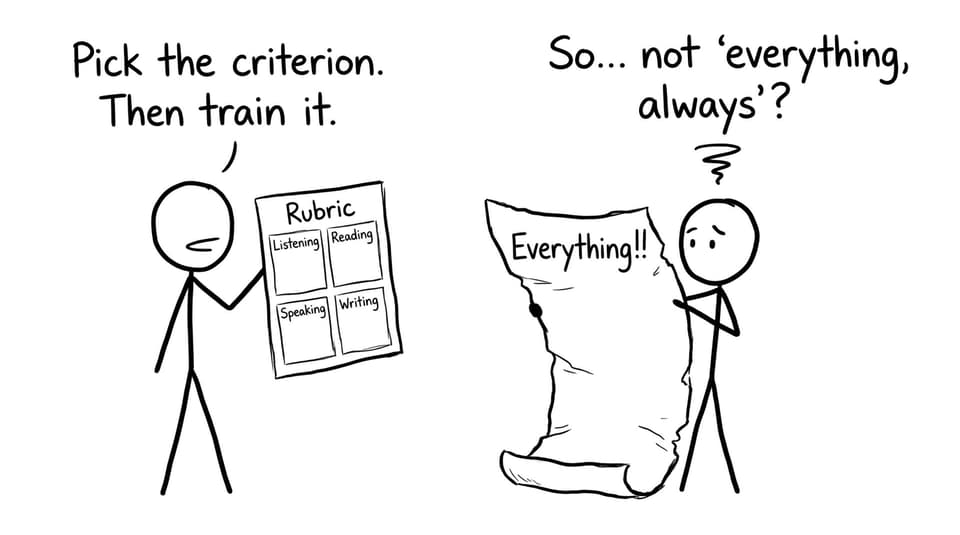
Most students revise language like it’s one big blob: “I need to get better at Spanish.” But MYP assessment breaks language into four distinct skill areas:
-
Listening: understanding and interpreting spoken texts
-
Reading: comprehension and analysis of written texts
-
Speaking: expressing ideas clearly for a context and audience
-
Writing: producing accurate, structured communication
Each area is scored on a 0--8 scale, then combined into a final 1--7 grade. The takeaway for revision is powerful: you don’t “revise language.” You revise one skill at a time.
To understand how criteria-based grading works across the MYP, read How Are IB MYP Students Graded? Criteria Explained. Even if it’s not language-specific, it trains you to think like the rubric.
Winning strategies for MYP Language Acquisition (that don’t burn you out)
Build a daily “small loop” (10--40 minutes)
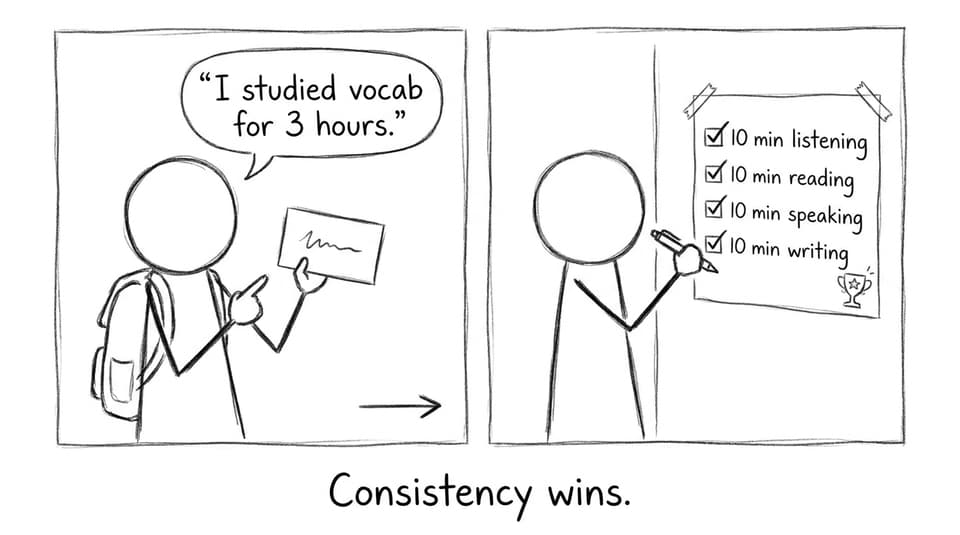
A strange truth about language learning: one focused week beats one heroic day. In the MYP, consistency matters because skills decay quietly.
Try this rotation:
-
10 minutes listening (short clip, repeated twice)
-
10 minutes reading (one text, underline key phrases)
-
10 minutes speaking (record yourself answering one prompt)
-
10 minutes writing (a short message in a set text type)
If you’re short on time, do just one skill per day and rotate across the week. The MYP doesn’t reward exhaustion. It rewards control.
To keep the loop simple, use RevisionDojo’s Study Notes to get clear structures and examples, then reinforce the phrases you actually used with Flashcards.
Use authentic content, but make it exam-useful
Authentic texts--songs, menus, announcements, news clips--are gold in MYP Language Acquisition because they train you to interpret meaning in context.
Make them exam-useful with one rule: every authentic piece must create an output.
-
After listening, write a 3-sentence summary.
-
After reading, extract 8 reusable phrases.
-
After watching a clip, record a 45-second reaction.
This is also where RevisionDojo’s AI Chat shines: ask it to generate comprehension questions, speaking prompts, or a simplified version of the same text for your phase level. Then store the best phrases in Flashcards so they come back at the right time.
Train “communication first” speaking
Most students don’t struggle because they can’t speak. They struggle because they believe speaking requires perfection.
In the MYP, speaking improves fastest when you practice these three moves:
-
Repair phrases: “Could you repeat that?”, “I mean…”, “How do you say…?”
-
Clarifiers: “In other words…”, “The main point is…”
-
Opinion frames: “I agree because…”, “From my perspective…”
These phrases buy you time and keep meaning moving forward. That’s what communication is.
If you also take MYP Language and Literature, you’ll notice the same principle: criteria reward clarity and control more than fancy language. See Best Revision Strategies for MYP Language and Literature for skill-based routines you can borrow.
Make writing predictable with text-type templates
MYP writing tasks often look “creative,” but they’re usually predictable: email, blog post, diary entry, brochure, interview, narrative. Your advantage is to build templates.
For each common text type, create:
-
a 3-line opening
-
5 linking phrases
-
a closing sign-off
Then practice swapping topics while keeping the structure stable. Revision becomes less about inventing and more about choosing.
When you want to tighten vocabulary and style, pull a short technique from MYP English resources like Notes for Sensory detail - MYP and adapt the idea in your target language (simple, vivid nouns and verbs beat vague adjectives).
Reflect like a strategist, not a judge
Reflection is built into the MYP for a reason: it turns effort into improvement.
Instead of writing “I’m bad at listening,” write one of these:
-
“I miss numbers and dates when speakers talk fast.”
-
“I understand the topic, but not the opinion.”
-
“I panic when I can’t translate word-for-word.”
Then choose one fix for the week. On RevisionDojo, you can keep an error log alongside Questionbank practice, use Grading tools to get rubric-aligned feedback on written pieces, and revisit your weak patterns with Flashcards.
If you’re planning your revision weeks, the structure in MYP eAssessments: 30-Day Study Plan That Works adapts well to language: short daily work, timed practice, and calm review.
Common MYP Language Acquisition challenges (and how to beat them)
Fear of making mistakes
Mistakes feel public in a language classroom. But in the MYP, mistakes are also data: they show you what you attempt.
Make your goal “keep meaning alive” instead of “say it perfectly.” If you forget a word, describe it. Use a synonym. Give an example. Ask a question back. That’s communication.
If you can, practise with a friend and agree on one rule: no interruptions for correction during the first run. Corrections happen in the second run. This mirrors exam reality--you don’t get do-overs mid-task.
Balancing grammar and fluency
Grammar matters, but grammar learned in isolation doesn’t transfer under pressure. In the MYP, you want grammar inside repeatable sentence frames.
Choose one structure per week (a tense, connectors, comparatives) and force it into everything you produce: one speaking prompt, one short writing, one listening summary. Suddenly grammar becomes a tool, not a topic.
RevisionDojo’s Study Notes are useful here because they keep explanations short and usable, while Flashcards keep the sentence frames alive until they become automatic.
Staying motivated when progress feels slow
Language progress is sneaky. You often improve in ways you don’t notice: faster comprehension, fewer pauses, better tone.
Set small MYP metrics:
-
“I can speak for 60 seconds without switching languages.”
-
“I can read a short text and infer meaning of 5 unknown words.”
-
“I can write an email with correct register and clear structure.”
And if you want more MYP-specific guidance across subjects (including language), browse All #MYP Posts and build a strategy stack that fits your schedule.
Conclusion: make MYP language feel real again
The students who thrive in MYP Language Acquisition aren’t the ones who never make mistakes. They’re the ones who keep meaning moving forward, practise in small consistent loops, and train the exact skills they’ll be assessed on.
If you want a calmer, more effective way to revise for MYP exams, build your routine inside RevisionDojo: use Study Notes to learn fast, Flashcards to retain high-utility phrases, AI Chat to generate speaking prompts and explanations, Questionbank to practise task-style questions, Grading tools to improve writing with criteria, plus Mock Exams, Predicted Papers, the Coursework Library, and Tutors when you need an expert to reset your strategy.
Start at the Middle Years Program (MYP) hub, and make your next 20-minute session count.
