

The night you decide to chase a 45 in the IB is rarely dramatic. It’s usually quiet. A tab full of grade boundaries. A half-finished planner. And that small, stubborn thought: What if I actually tried to do the whole thing perfectly?
A perfect score in the IB feels like a myth because it’s framed like a personality trait. “Those people are just built different.” But in reality, a 45 is a series of ordinary decisions made early, repeated consistently, and protected from chaos when deadlines collide.
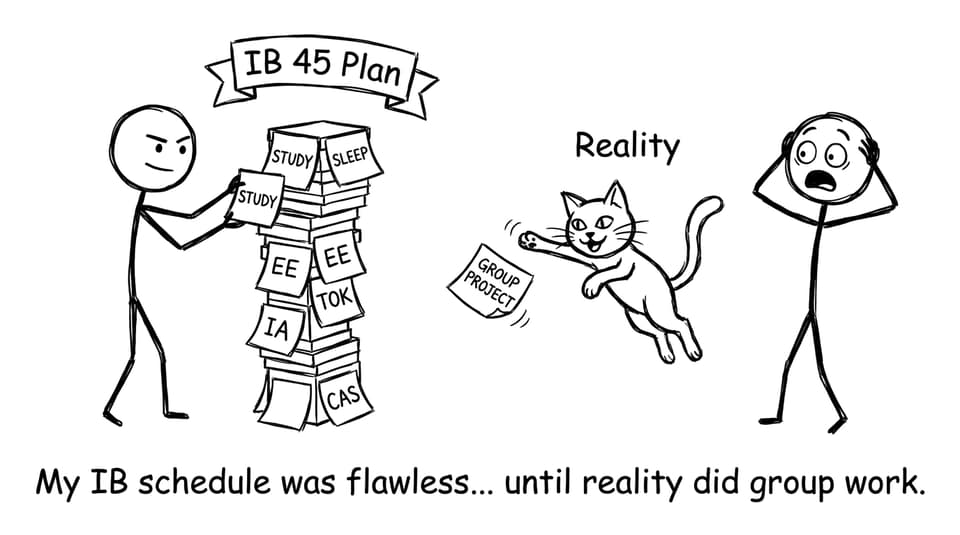
How the IB 45 actually works
To reach 45 in the IB Diploma, you need two things to happen at the same time:
-
Six subjects, each scored out of 7 (max 42)
-
Three bonus points from TOK and the EE (max 3)
And, yes, you must also satisfy CAS requirements. CAS doesn’t add points, but it can quietly block the diploma if you treat it like background noise.
A 45 is simple to describe and hard to execute: 7s across six subjects plus full TOK/EE points. The difficulty is that the IB doesn’t test one skill. It tests your ability to switch skills without losing accuracy: essays to data analysis, recall to evaluation, speed to clarity.
How rare is a 45 in the IB (and why that matters)
A 45 is rare in any year of the IB. Historically, less than 1% of candidates achieve it. In 2023, just over 1,100 students out of around 180,000 earned 45 points (roughly 0.6%).
The helpful takeaway isn’t “don’t try.” It’s this: if you’re aiming for 45, you’re not competing against other students. You’re competing against entropy: missed feedback cycles, late coursework, and revision that stays passive.
A realistic 2026 checklist for chasing a perfect IB score
This is the small set of behaviours most 45-track IB students share:
-
Build high-scoring coursework early (IAs, EE, TOK) with multiple feedback rounds
-
Use spaced repetition for definitions, processes, case studies, and command terms
-
Do timed mock exams often enough that timing stops feeling “special”
-
Mark ruthlessly and track patterns, not just scores
-
Keep stress boring and predictable (sleep, routines, short daily review)
On RevisionDojo, that whole loop can live in one place: the Questionbank for targeted practice, Study Notes for fast concept refresh, and IB Flashcards with spaced repetition for daily recall.
The main barriers to a 45 (and how to plan around them)
Your HLs can make a 45 harder than it needs to be
Certain HL combinations are simply more volatile in the IB. Courses like Math AA HL, Physics HL, and Chemistry HL can be brilliant choices, but they punish weak foundations and vague revision.
A perfect score is more realistic when your subject choices match both your strengths and your willingness to practice under pressure. “Status HLs” don’t award extra points.
Coursework bottlenecks are where 45s are lost
The IB rarely defeats students on content alone. It defeats them in the calendar.
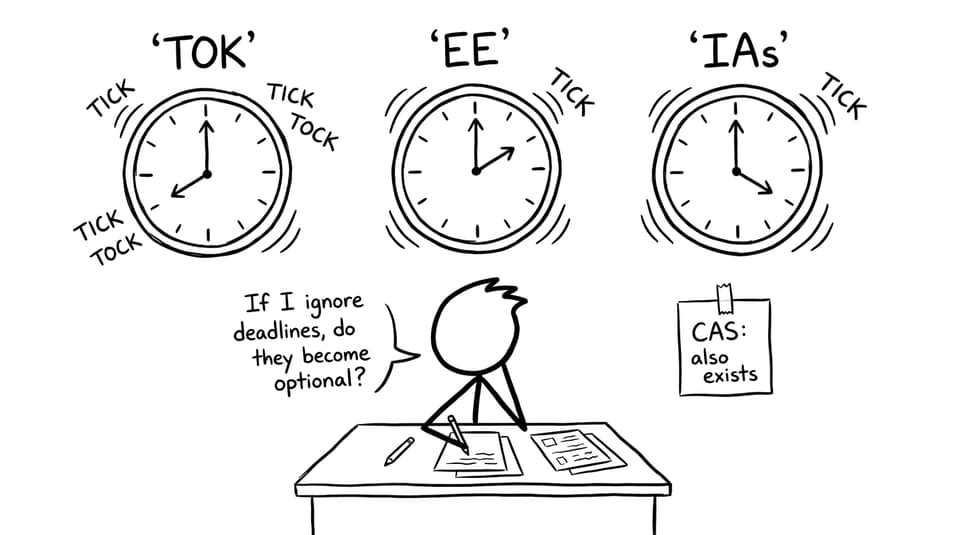
Your EE, TOK essay, and IAs don’t just require intelligence. They require calm drafting, formatting discipline, and early starts so feedback can do its job. If you want extra support here, RevisionDojo’s Coursework Library and Tutors help you avoid the classic trap of last-minute polishing that never becomes real improvement.
Exam stamina is a trainable skill
Many students can score a 7 on a topic test, then drop marks on a full paper because their attention fractures.
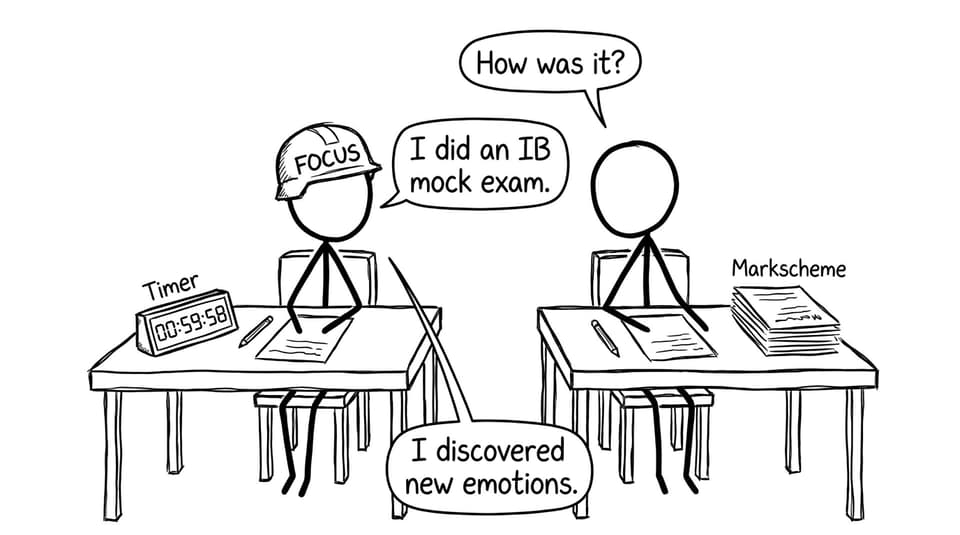
That’s why timed practice matters. Use resources designed for realistic rehearsal, like IB Predicted Papers and the kind of custom, exam-length practice described in IB test templates. Pair that with Grading tools and AI Chat so every attempt becomes a feedback loop, not a confidence lottery.
So… is an IB 45 realistic in 2026?
Yes, for a small group of students who treat the IB like a long project, not a last-minute sprint.
In 2026, grading is unlikely to “gift” a 45. That’s good news. It means your odds improve mainly through controllables: earlier coursework drafts, smarter practice, and better marking accuracy. In other words, a 45 becomes realistic when your system is realistic.
If you want an all-in-one structure, start with RevisionDojo for IB, then build your weekly routine around the IB Question Bank guide and digital IB study notes.
The calm way to aim for a perfect IB score
Aim for 45 in the IB the same way you’d aim for anything difficult: by building a system that makes progress boring.
If you want that system ready-made, RevisionDojo brings it together: Questionbank, Study Notes, Flashcards, AI Chat, Grading tools, Predicted Papers, Mock Exams, Coursework Library, and Tutors, so your effort turns into points, not just time.
Start your 2026 plan here: International Baccalaureate (IB).