


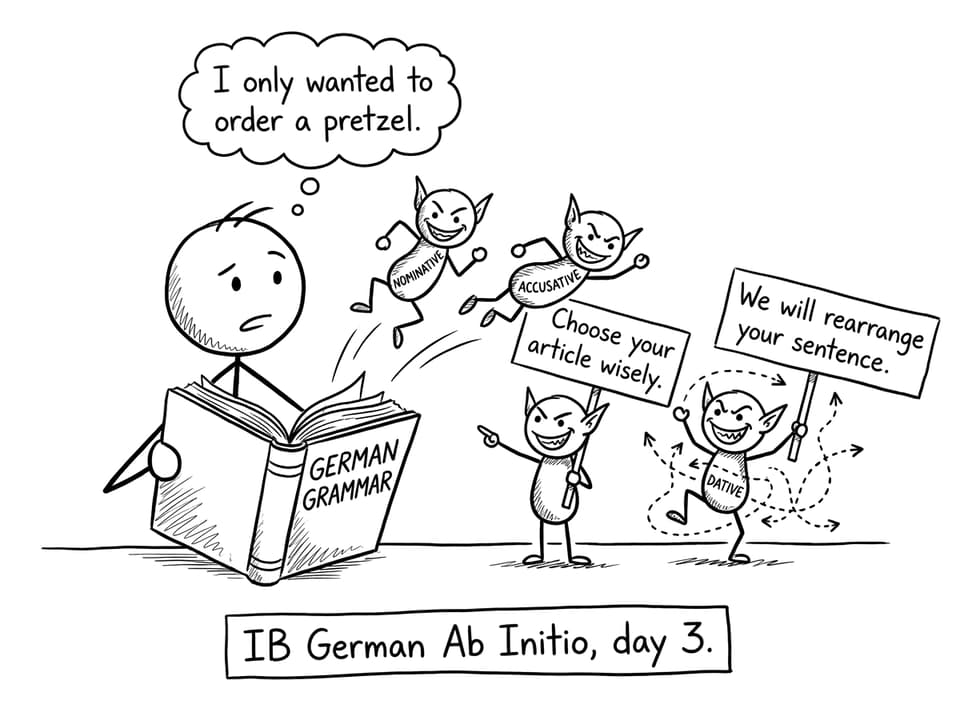
When you first open a beginner German textbook, it can feel like someone hid the rules inside a puzzle box. You learn Haus and Wasser and think, “Okay, this is doable.” Then you meet der, die, das, and suddenly the language has opinions.
That moment is why so many students ask the same question each year: Is IB German Ab Initio hard?
The honest answer is: it can be hard in the way learning any new skill is hard. But it is also built for beginners, and that design matters. In the world of IB Languages, Ab Initio exists so you can start from zero and still end up communicating clearly under exam conditions, even if you make mistakes along the way.
The quick checklist: will IB German Ab Initio feel hard for you?
If you want a fast self-check before the deeper guide, use this:
-
You can commit to 10-15 minutes of contact most days (not just before tests).
-
You are willing to sound imperfect while you learn (especially in speaking).
-
You like structure: themes, predictable task types, and routines.
-
You can handle gradual grammar rules (gender, cases, word order) without panicking.
-
You use one reliable system for practice, feedback, and tracking.
If most of those are “yes,” IB German Ab Initio is usually manageable inside the broader landscape of IB Languages.
For course overviews and official-aligned support, start with the German ab initio subject hub.
What German Ab Initio is designed to do in IB Languages
Ab Initio is not a “secretly advanced” course. It’s the IB’s entry point for students who have little to no prior experience.
The course aims to build real communication across the four skills: listening, reading, writing, and speaking. By the end, most students land around A2 level, which basically means you can handle everyday topics, short texts, and simple conversations when the context is familiar.
If you want the details on outcomes and what A2 looks like in practice, see What level of German will I achieve in IB German Ab Initio?
Why IB German Ab Initio feels hard (and why that’s normal)
Within IB Languages, difficulty rarely comes from “too much content.” It comes from the emotional friction of practicing something public: speaking, writing, and being corrected.
Here are the biggest pain points students report.
Grammar: small words, big consequences
German grammar can feel strict early on.
-
Gendered nouns (der, die, das) force you to memorize alongside vocab.
-
The case system changes articles and pronouns depending on function.
-
Word order shifts in ways English speakers don’t expect.
This is why students often feel like they understand a sentence, then lose control when they try to build one.
If you want a focused list of what to prioritize, use What grammar topics are most important in IB German Ab Initio?
Listening: your brain needs “German mileage”
Listening can be discouraging at first because your brain hasn’t built pattern recognition yet. You might know the words on paper but miss them in fast audio.
The fix is not “try harder.” It’s exposure plus repetition. The listening skill grows quietly, then suddenly you notice you can follow the gist.
Speaking: the fear of being simple
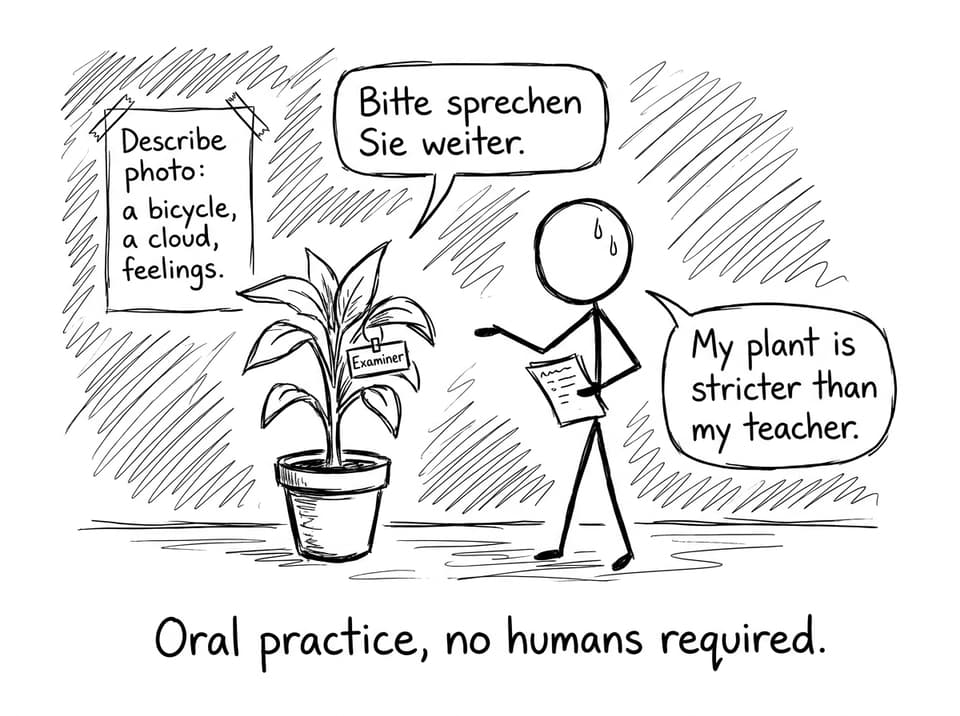
The oral assessment intimidates students because it feels like you’re being judged in real time. In truth, the IB is assessing communication strategies: describing, extending, clarifying, and staying on topic.
If you want to see how exam expectations are structured, read IB German Ab Initio exam format (2025 guide).
What makes IB German Ab Initio manageable in IB Languages
Here’s the part students underestimate: German Ab Initio is hard, but it’s trainable.
The exam is structured (so your practice can be structured)
In IB Languages, you’re rarely rewarded for random study. You’re rewarded for rehearsing the exact skills the assessment wants.
German Ab Initio assesses:
-
Writing (Paper 1)
-
Reading and listening (Paper 2)
-
Individual oral
That balance helps. If speaking is your weakness, you can still build marks through reading and writing. If writing feels slow, you can still score by becoming strong at comprehension.
For writing specifically, use How can I prepare for IB German Ab Initio Paper 1?.
The themes reduce the “infinite vocabulary” problem
Vocabulary feels endless until you realize the course is organized around a repeating set of contexts. The themes become your mental filing system.
For the full breakdown, see What themes and topics are covered in IB German Ab Initio?.
A practical 2025 routine for IB Languages students taking German Ab Initio
You don’t need a heroic study plan. You need a plan you can repeat on a tired Tuesday.
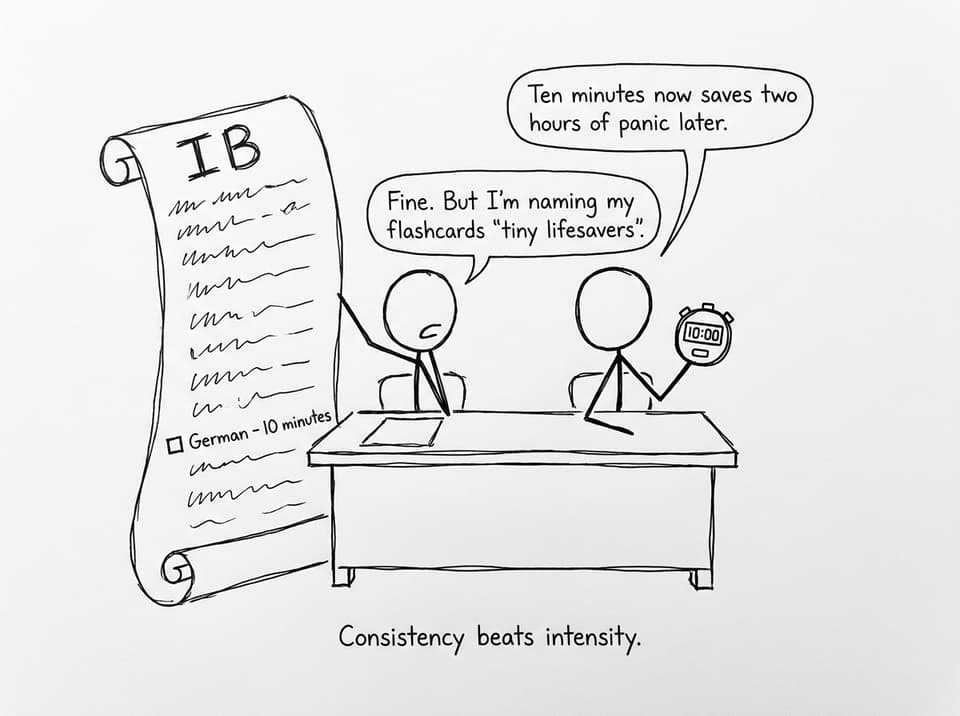
Daily (10-15 minutes): build automaticity
-
Review themed vocabulary using RevisionDojo Flashcards
-
Speak for 2 minutes out loud (describe your day using simple verbs)
-
Do one micro-listen (short clip, focus on gist)
3x per week (25-35 minutes): exam skill reps
-
Write one timed paragraph with a clear text type opening and closing
-
Do a reading set and highlight connectors (cause, contrast, sequence)
-
Drill targeted practice using the RevisionDojo Questionbank
Weekly (45-60 minutes): simulate, then fix
-
Do one mini mock under time pressure
-
Use feedback to identify 2 recurring errors
-
Turn those errors into new flashcards and re-test them
If you want to combine this into one workflow across IB Languages, the RevisionDojo app guide for IB exam prep explains how students build a repeatable loop using Study Notes, Flashcards, AI Chat, and timed practice.
How hard is German Ab Initio compared to other IB Languages?
Students often compare German to Spanish or French Ab Initio. The comparison is real, but it’s not the whole story.
-
German may feel harder at the start because grammar is more visible (cases, articles).
-
German can feel easier later because pronunciation is consistent and English has many related words.
In practice, the hardest IB Languages course is the one you don’t practice consistently. Effort compounds quietly in languages.
For a broader comparison lens, read How hard is IB German Ab Initio compared to other IB subjects?.
Conclusion: is IB German Ab Initio hard in IB Languages?
IB German Ab Initio is hard in the way learning to play a new instrument is hard. The early days feel clumsy. The rules feel personal. And then, one day, you say a sentence without translating in your head.
In the bigger picture of IB Languages, German Ab Initio is challenging but fair: it’s designed for beginners, assessed across balanced skills, and made manageable by routine practice.
If you want one place to run that routine, RevisionDojo brings it together: Study Notes for clarity, Flashcards for daily recall, AI Chat for speaking practice, Grading tools for feedback, the Questionbank for targeted drills, plus Predicted Papers, Mock Exams, a Coursework Library, and Tutors when you want human support. Start with the German ab initio subject hub and build your next week of IB Languages practice around consistency, not panic.