


If you have ever looked at your to-do list and felt your stomach drop, you already understand the emotional center of the IB.
One moment, it is a proud decision: a globally respected programme, serious academic habits, doors opened. The next moment, it is 2 a.m., you are rewriting a paragraph for the third time, and you are asking a simpler question: Is the IB actually worth it for me?
This is an honest guide for IB students preparing for exams. Not a sales pitch, not a scare story. Just the real trade-offs, the real upside, and a way to decide with your eyes open.
What the IB Diploma really is (in one minute)
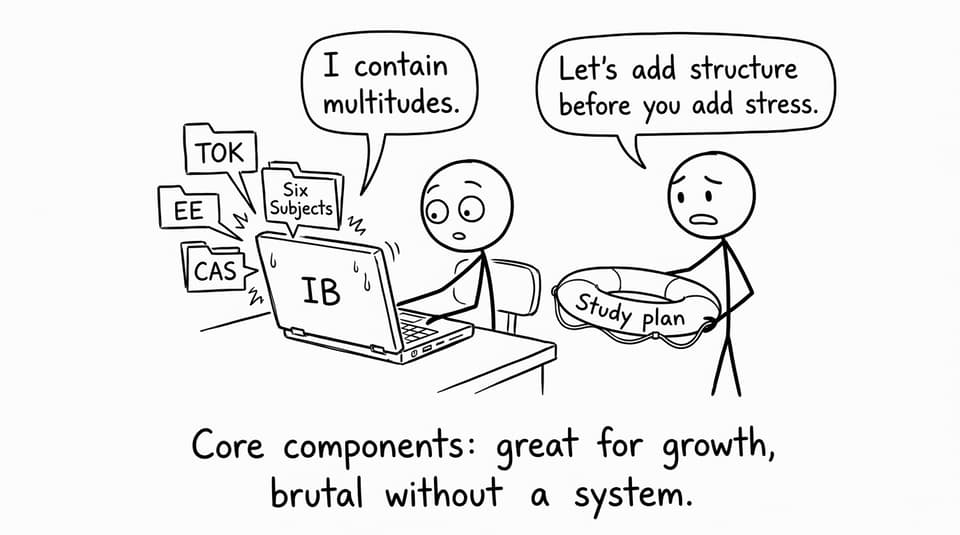
The IB Diploma Programme is a two-year curriculum for students aged 16-19. You study six subjects (usually three at Higher Level and three at Standard Level) and complete three core components:
-
Theory of Knowledge (TOK)
-
Extended Essay (EE)
-
Creativity, Activity, Service (CAS)
It is designed to build breadth (multiple disciplines), depth (HL courses), and skills (research, reflection, writing, communication). If you want a general orientation, the International Baccalaureate (IB) hub is a helpful starting point.
Quick checklist: is the IB worth it for your situation?
Use this as a fast self-audit before you get pulled into other people’s opinions.
-
You want university preparation that rewards writing, analysis, and independent work.
-
You can tolerate sustained effort without needing constant novelty.
-
You are willing to practice under exam conditions, not just “study.”
-
You can build a support system (teachers, friends, or tools) before workload peaks.
-
You understand that the IB is not only hard because of content, but because of concurrency (many deadlines at once).
If you said “yes” to most of those, the IB can be worth it. If you said “no” to most, it still can be worth it, but only with deliberate structure.
The honest pros of the IB
The IB teaches you how university actually feels
Plenty of programmes teach content. The IB teaches throughput: how to produce work consistently, across different subjects, under time pressure.
TOK discussions train you to argue carefully. The EE teaches research stamina. HL subjects force you to explain, not just recall. Later, when you hit university readings, essays, labs, and deadlines, the rhythm is familiar.
If you want a practical exam-season picture of what top performers do, read How 45-Point IB Students Prepare for Exams.
Global recognition (and signalling)
The IB is widely recognized by universities internationally. That matters if you are applying across countries, moving schools, or simply want a qualification that translates well.
But the deeper benefit is signalling: the IB tells admissions teams you can handle complexity and manage workload without someone hovering over you.
Skills that compound: writing, thinking, self-management
Here is the underrated part: the IB makes you practice uncomfortable skills repeatedly.
-
Planning when you would rather “feel ready” first
-
Writing before you have perfect ideas
-
Revising based on criteria rather than vibes
Those habits compound the way fitness does. Slowly, then suddenly.
On RevisionDojo, students often build these habits by linking Study Notes to action: learn a concept, then prove it with questions. If you struggle with notes taking too long, Digital IB Study Notes: Access Anywhere, Anytime captures that workflow.
The honest cons of the IB
The workload is not a myth (and it is not evenly distributed)
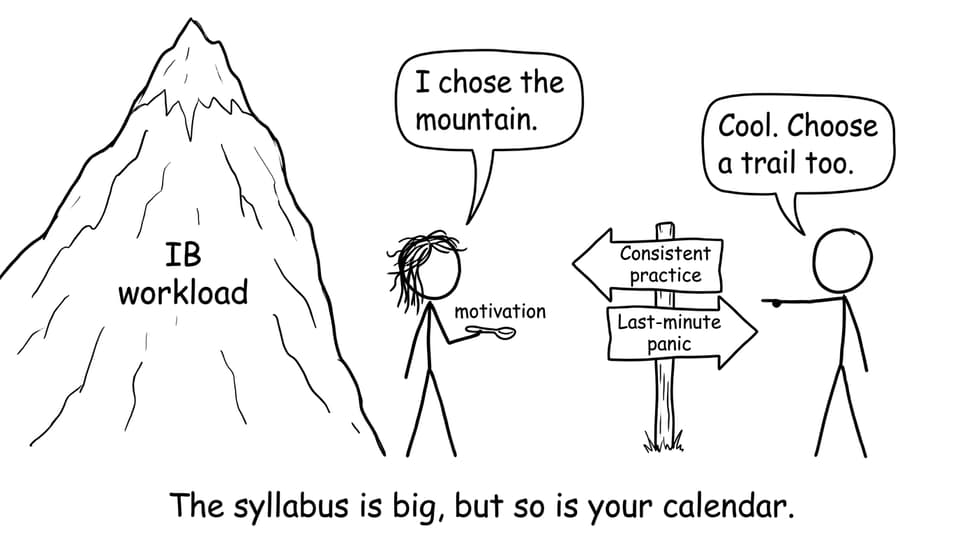
The IB is hard in a specific way: everything happens at once. You have six subjects, plus TOK, CAS, and the EE. Even if each piece is manageable alone, the overlap can become the real enemy.
Students rarely burn out because they are “weak.” They burn out because they try to carry the programme in their head instead of on a system.
If you need a calm, practical framing of difficulty, Is IB Actually the Hardest Curriculum? A Calm, Honest Answer is worth reading.
Stress can quietly turn into identity
The most dangerous sentence in the IB is: “I’m just not an IB person.”
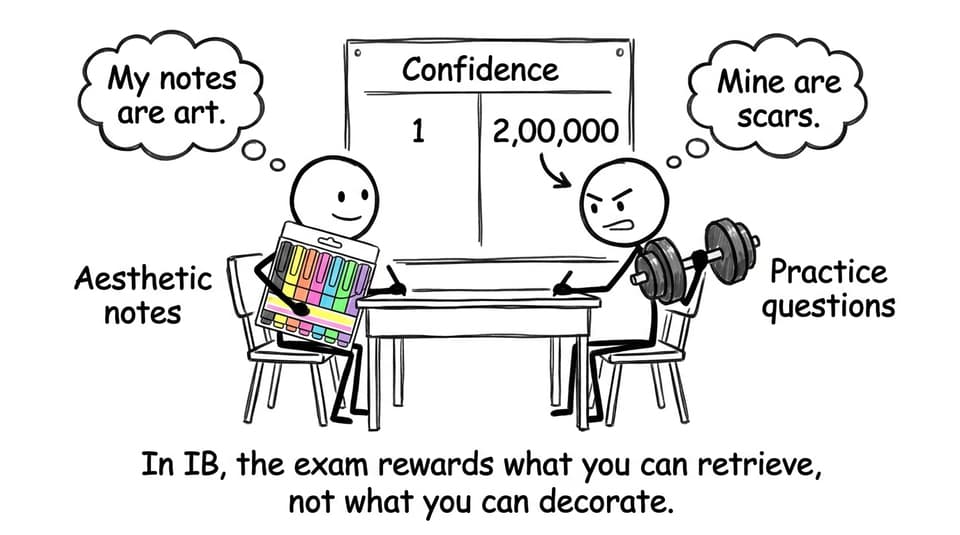
It sounds like self-awareness, but it often hides a missing process. When stress rises, you stop doing the actions that create confidence (retrieval practice, timed work, feedback loops), and you start doing actions that feel productive (rewriting notes, rewatching videos, reorganizing folders).
RevisionDojo is built to interrupt that spiral. The Questionbank gives you unlimited exam-style practice with instant feedback, and Questionbank makes it easy to see what is actually improving.
Breadth can feel like a tax if you want early specialization
Some students thrive on having Literature, Math, Science, and Humanities all in one week. Others want to go deep on three subjects and ignore the rest. If you are someone who finds breadth draining, the IB can feel like you are constantly context-switching.
That does not make it “bad.” It just means you need to choose it for the right reasons.
IB vs other options: what you are really choosing
IB vs AP
AP often offers flexibility (take what you want, when you want) and is heavily exam-focused. The IB is a full ecosystem: breadth, projects, reflection, and skills-based assessment.
If you want structure and a coherent programme identity, IB can win. If you want targeted subject acceleration, AP can fit better.
IB vs A-Levels
A-Levels allow earlier specialization, which can be ideal if you already know your path. The IB requires you to stay broad longer, which can be either a gift (more options) or friction (less focus).
Your best choice depends on whether you want to keep doors open or narrow them early.
If you do IB, here is how to make it “worth it” during exam prep
There is a quiet truth about the IB: you do not need more motivation. You need fewer decisions.
A simple loop looks like this:
-
Learn with Study Notes
-
Lock recall with Flashcards and spaced repetition
-
Apply under pressure in the Questionbank
-
Get unstuck fast with AI Chat (Jojo AI)
-
Simulate the real thing with IB Predicted Papers and Mock Exams
-
Use Grading tools and the Coursework Library when coursework and written criteria matter
-
Bring in Tutors when you need human strategy, not more content
If you want one overview of how RevisionDojo connects that workflow, RevisionDojo App: The Smarter Way to Prep for IB Exams lays it out clearly.
Conclusion: so, is the IB worth it?
The IB is worth it when you want more than a transcript. It is worth it when you want the habits that make hard things feel less chaotic: clear thinking, consistent work, and the ability to perform under pressure.
But the IB is not worth it if it turns into a two-year blur of stress without systems. The workload will not apologize. It will simply arrive.
If you are preparing for IB exams now, make the programme pay you back. Build a loop that turns effort into marks: RevisionDojo’s Questionbank, Study Notes, Flashcards, AI Chat, Grading tools, Predicted Papers, Mock Exams, Coursework Library, and Tutors are designed to do exactly that.
Start small today: pick one topic, do one timed set, review mistakes, and let momentum do the heavy lifting.