

Is 31 a good IB score?
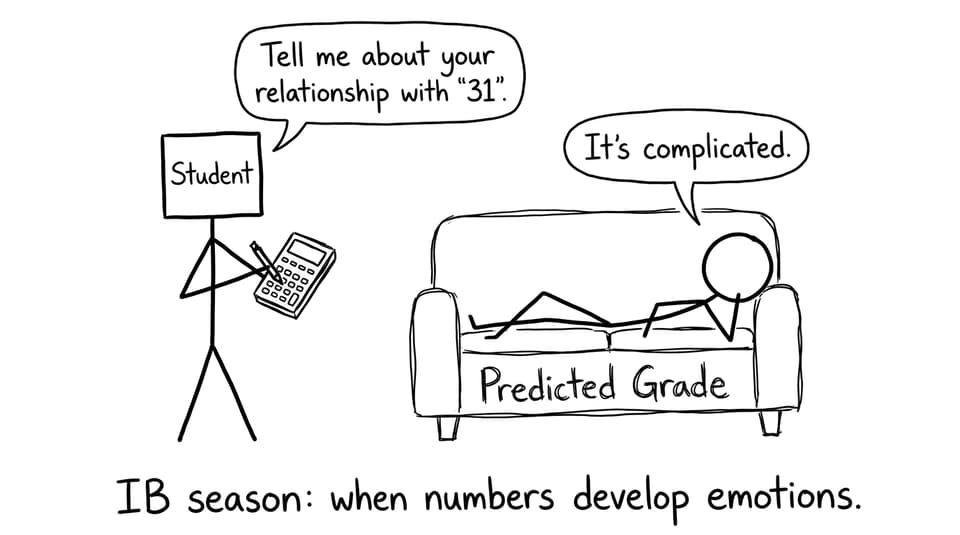
The first time you see 31 on an IB predicted grade report, it can feel oddly personal. Not because it’s low, but because it’s specific. You can almost hear your brain translating it into outcomes: Which universities are still realistic? Should I panic? Am I average?
Here’s the calmer truth: a 31 in the IB Diploma is a solid score. It clears the diploma requirements comfortably, sits around the global average in many sessions, and opens doors at a wide range of universities worldwide. More importantly, a 31 is rarely a “final identity” in the IB. It’s often a snapshot of where your exam technique and consistency are right now.
If you want one home base for tightening that snapshot into a stronger final score, start with RevisionDojo for IB and build from there.
Quick checklist: what a 31 in the IB usually signals
-
You’re well above the minimum to earn the IB diploma (assuming other requirements are met).
-
Your subject grades are typically a spread of 5s and 6s, sometimes with a 4, plus some core points.
-
You’re likely strong in content but still leaving marks on the table through timing, command terms, or weak topics.
-
You have plenty of room to move up with targeted practice, especially if 31 is predicted.
To shift from “I understand” to “I score,” the fastest lever is deliberate practice. RevisionDojo’s Questionbank is built for exactly that: exam-style questions with feedback that teaches the marking logic.
How the IB score is actually built (and why 31 matters)
The IB Diploma Programme is scored out of 45 points:
-
Six subjects graded 1 to 7 (maximum 42)
-
Up to 3 bonus points from TOK + EE combined
You still need to meet the diploma conditions (including completing CAS, satisfying core requirements, and avoiding failing conditions), but 31 points clears the headline score requirement comfortably.
A useful way to think about 31 is not as “good or bad,” but as balanced competence across six different academic languages: essays, data response, problem-solving, labs, and structured short answers. That’s what universities often see when they see the IB.
If your stress is coming from the core, it helps to remember: those TOK and EE points can swing your total meaningfully. Even one extra point can change the story of your profile.
How a 31 compares globally in the IB
In many recent sessions, the world average IB diploma score sits around 30-31 points. Scores above 40 exist, but they’re achieved by a small minority.
So a 31 is typically:
-
around average or slightly above, depending on the session
-
internationally competitive for many degrees
-
a sign that your performance is spread across subjects, not dependent on one spike
This matters because the IB is designed to reward consistency. Universities know that. A 31 isn’t a “nearly failed” score. It’s evidence that you can carry a full workload across disciplines.
University admissions with a 31 IB score (what it can realistically do)
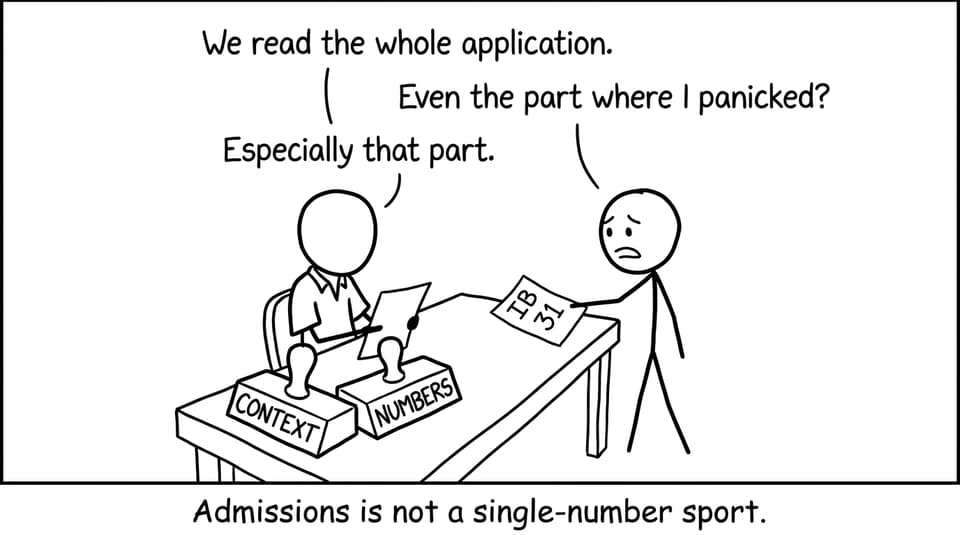
Admissions decisions are never identical across countries, and universities care about different things: overall points, HL totals, specific subject requirements, or even the narrative in your application. Still, a 31 IB score generally keeps a lot of options alive.
United Kingdom
Many UK offers sit in the 30-32 range, especially outside the most oversubscribed programs. For humanities, social sciences, business, and many non-clinical STEM degrees, a 31 can be competitive depending on the university and your HL subjects.
Canada
Canadian universities often view the IB holistically and may award automatic entrance scholarships starting around the low 30s at some institutions. Requirements vary widely, but a 31 is commonly within a realistic admission band.
United States
In the U.S., your IB score is one part of a bigger file: grades, course rigor, essays, recommendations, and extracurriculars. A 31 generally signals strong preparation for college-level work, especially when paired with a coherent academic story.
Australia and parts of Asia
Conversions to ATAR or equivalent systems often make a 31 suitable for direct entry into many undergraduate programs. Your exact pathway depends on the institution and course.
If 31 is your predicted IB score: how to push it higher
A predicted 31 is often the most useful kind of score: stable, but improvable. Many students can lift 2-4 points by fixing the predictable leaks.
Build marks, not motivation
-
Use the IB Predicted Papers to rehearse timing and full-paper decision-making.
-
Add one weekly timed session using strategies from Custom IB Mock Exams: Build Practice Tests by Topic.
-
Drill weak areas with IB Question Bank | How to Use It Effectively.
Use the “learn -> recall -> apply” loop
RevisionDojo is strong here because the pieces connect:
-
Learn fast with Digital IB Study Notes
-
Lock it in with IB Flashcards with Spaced Repetition and the strategy in IB Flashcard System: Active Recall for Better Memory
-
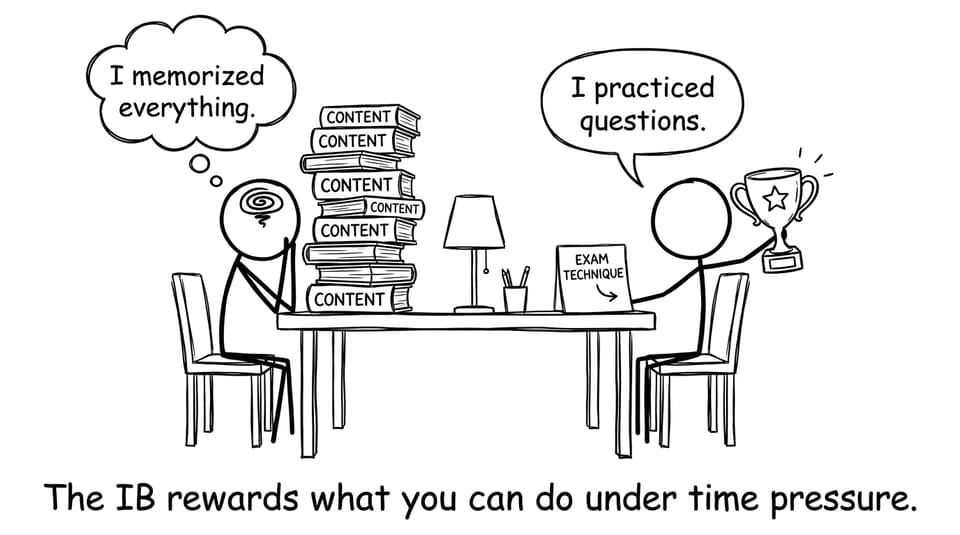
Apply under pressure with the Questionbank and timed practice workflows from RevisionDojo App: The Smarter Way to Prep for IB Exams
Common myths about a 31 in the IB
“You need 40+ to get into a good university.”
Most offers worldwide sit well below 40. The IB distribution itself makes that obvious: 40+ is rare by design.
“A 31 means I’ll struggle at university.”
A lot of students in the low 30s thrive because the IB trains endurance: writing under time pressure, handling multiple deadlines, and thinking across disciplines.
“Scholarships only start at 36.”
Some scholarships are competitive, but many institutions have automatic or tiered awards that begin closer to 30+. Your subjects and your broader application still matter.
Closing: make 31 a platform, not a verdict
A 31 in the IB is not a warning sign. It’s a stable base: evidence you can handle breadth, deadlines, and rigorous assessment. If it’s your final score, it’s something to respect. If it’s predicted, it’s also something you can upgrade.
When you’re ready to turn that upgrade into a routine, use RevisionDojo as your one-stop IB system: Study Notes for clarity, Flashcards for recall, the Questionbank for mark-winning practice, AI Chat and Grading tools for feedback, Predicted Papers and Mock Exams for realism, plus Coursework Library resources and Tutors when you need a human push. Build the loop, repeat it, and let the score follow.