


MYP in Public vs Private Schools: What Students Feel
You can tell when a school is doing MYP well because students stop asking, “Will this be on the test?” and start asking, “What does this mean?” It’s a small shift, but it changes everything.
Still, the day-to-day experience of MYP can feel wildly different depending on whether you’re in a public school with packed classes and tight schedules, or a private school with smaller cohorts and more flexible resources. And if you’re an IB student preparing for exams, that difference matters, not because the MYP framework changes, but because your study strategy has to match your environment.
Quick student checklist for judging MYP quality
If you’re trying to understand whether a public or private setting is helping you succeed in MYP, use this quick scan:
-
Is the school fully authorized for MYP (not “candidate” forever)?
-
Do teachers actually use the criteria (A-D) in feedback, or just give grades?
-
Are ATL skills taught explicitly (not assumed)?
-
Is interdisciplinary learning real, or just a poster on the wall?
-
Do you have enough timed practice and exam-style questions to build confidence?
For exam prep support that works regardless of school type, start with the Middle Years Programme (MYP) hub, then build a loop using RevisionDojo’s Questionbank, Study Notes, Flashcards, AI Chat, Grading tools, Predicted Papers, Mock Exams, Coursework Library, and Tutors.
What stays the same in MYP (public or private)
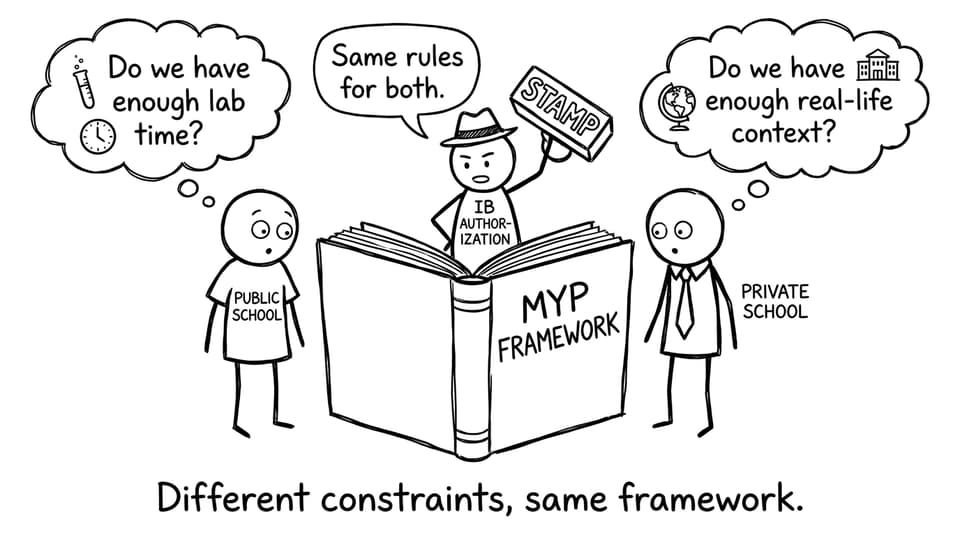
The most important thing to understand is that MYP is designed to be consistent across school types. If a school is authorized, it commits to the same big structures: inquiry-led units, conceptual understanding, global contexts, and criteria-based assessment.
So whether you’re in a public school or private school, you should still see:
-
The IB Learner Profile showing up in classroom language and reflection
-
ATL skills (Approaches to Learning) being practiced, not just mentioned
-
Assessment criteria used repeatedly, so you know what “top band” actually means
-
Tasks that require transfer: applying knowledge to unfamiliar situations
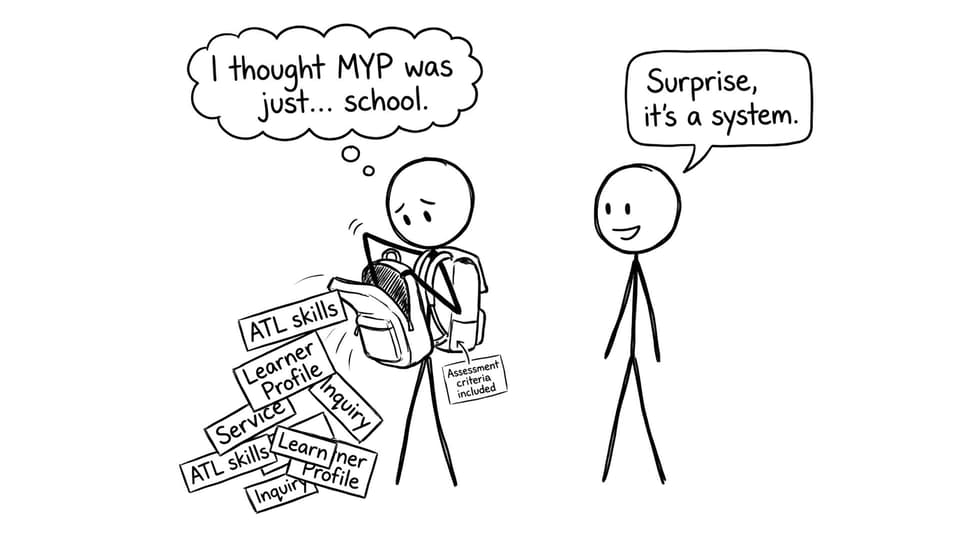
If you want a student-friendly explanation of what MYP is really training you for, read What Is the IB Middle Years Programme? Explained for Parents and Students. It helps you see why the program feels “different” even when the content looks normal.
MYP in public schools: strengths and friction points
Public schools that offer MYP often do something the IB quietly values: they normalize academic seriousness across a wide range of learners. In many public settings, MYP isn’t an “elite track,” it’s a school-wide expectation. That can build resilience.
Public-school strengths in MYP
-
Diversity of perspectives: discussions often feel more connected to real community issues.
-
Authenticity: service learning and local context can be deeply meaningful.
-
Adaptability: students learn to do strong work even when conditions aren’t perfect.
Public-school challenges in MYP
-
Bigger classes can mean less individual feedback on criteria strands.
-
Less budget for lab time, materials, and frequent teacher training.
-
Scheduling constraints when national requirements compete with MYP flexibility.
If you’re in a public school and your feedback is limited, you can manufacture your own feedback loop with RevisionDojo: do a set in the Questionbank, mark it carefully, then use AI Chat to explain mistakes in criteria language. Pair that with the MYP eAssessments: 30-Day Study Plan That Works to make your prep feel structured.
MYP in private schools: opportunities and hidden risks
Private schools can make MYP feel smooth. Often there’s more time for planning, more devices available, more structured support for projects, and more predictable routines. For students, that can reduce cognitive load: fewer logistical problems, more mental energy for learning.
Private-school strengths in MYP
-
Smaller class sizes can mean faster, clearer criteria-based feedback.
-
More enrichment: clubs, competitions, trips, and extra language support.
-
More teacher collaboration time to design strong inquiry units.
Private-school challenges in MYP
-
Accessibility: tuition can narrow the range of lived experiences in the room.
-
Performance pressure: sometimes “being an IB school” becomes a brand, not a philosophy.
-
Over-scaffolding: too much support can unintentionally weaken independence, which exams demand.
If you’re in a private school where support is high, your exam advantage comes from using that support to build independence. Try running timed sessions using RevisionDojo’s Mock Exams and Predicted Papers, then tightening gaps with Study Notes and Flashcards. A helpful guide for your overall workflow is RevisionDojo App: The Smarter Way to Prep for IB Exams.
What actually matters most: MYP implementation quality
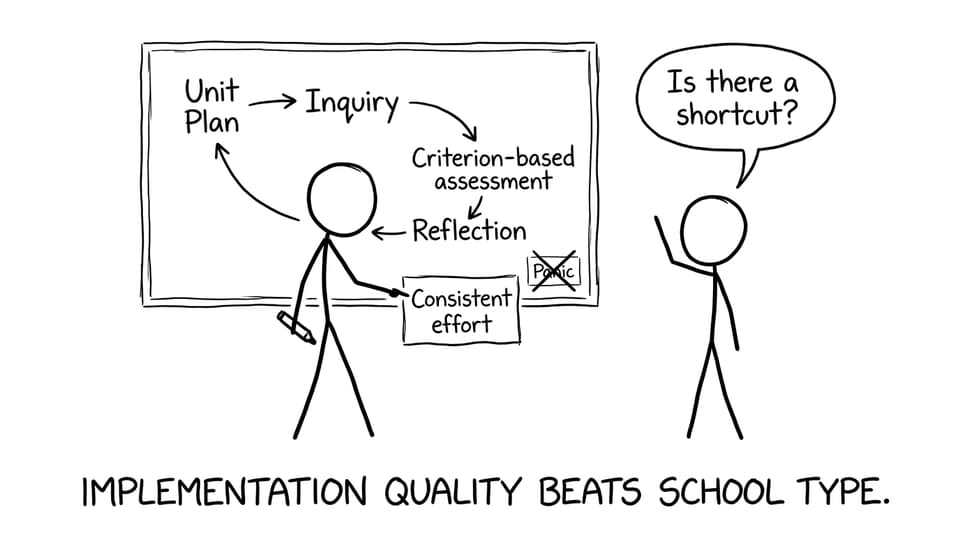
Students often ask, “Is MYP better in public or private schools?” The calmer answer is that the school type is a rough context. The real variable is implementation quality: how consistently your teachers use the framework, and how much practice you get applying it.
A strong MYP implementation usually looks like this:
-
Teachers name the concept, not just the topic
-
Feedback uses the criteria strands (so improvement is concrete)
-
Reflection is short but real (what changed in your thinking?)
-
Students do frequent exam-style practice, not just projects
For practical studying that fits any setting, keep a simple loop: read to understand (Study Notes), test to reveal gaps (Questionbank), review to fix patterns (Grading tools/AI Chat), and repeat. If you want a broader strategy guide, see MYP Revision Guide: Study Tips for Success.
FAQ
Is the MYP curriculum the same in every school?
The MYP framework is consistent across authorized schools, which means the core expectations don’t change just because the building does. You’ll still see criteria-based assessment, ATL skills, and concept-driven units. What changes is how visible and usable those structures feel day to day. In some schools, criteria language is part of every task; in others, you only hear about it near reporting time. If you’re unsure, ask to see rubrics and examples of feedback on student work. The framework is the same, but the habits around it can be stronger or weaker.
Can public schools prepare students just as well for MYP exams?
Yes, a public school can prepare you extremely well for MYP, especially when teachers are consistent with criteria and provide frequent practice. The biggest predictor isn’t funding; it’s the strength of the practice loop and the clarity of feedback. If class sizes are large, you may need to be more proactive about getting help and correcting mistakes. This is where RevisionDojo becomes a practical equalizer: you can generate high-volume practice, get explanations quickly, and track weak areas without waiting for the next unit test. Use targeted Questionbank sets and then reflect in criteria language so your improvements translate into marks. Over time, that consistency matters more than the school label.
What if my school’s MYP implementation feels messy or inconsistent?
First, don’t assume the problem is you; inconsistent MYP implementation is a real experience for many students. Your job becomes building a personal structure that the school may not provide consistently. Start by identifying your criteria and command terms for each subject and using them as your “study headings.” Then run weekly timed practice using RevisionDojo’s Questionbank and follow with careful review using AI Chat and Grading tools. Add Flashcards only for what you repeatedly forget, not for everything in the syllabus. If you’re also working on major coursework like the Personal Project, use the MYP Personal Project: The Ultimate Student Guide and compare exemplars in the IB Personal Project (MYP) Examples. A messy environment becomes survivable when your system is calm.
Closing: pick the environment, then build your system
Public vs private schools can change the feel of MYP: class size, resources, scheduling, and stress. But the core opportunity stays the same. MYP is training you to think in criteria, concepts, and transfer, the exact mindset you’ll need when exams stop looking like your notes.
If you want your MYP prep to feel steady no matter what your school can provide, build your routine on RevisionDojo: start from the MYP hub, practice with the Questionbank, lock in recall with Flashcards, fix gaps with Study Notes, and simulate pressure with Mock Exams and Predicted Papers. When your system is strong, your setting becomes just a detail.