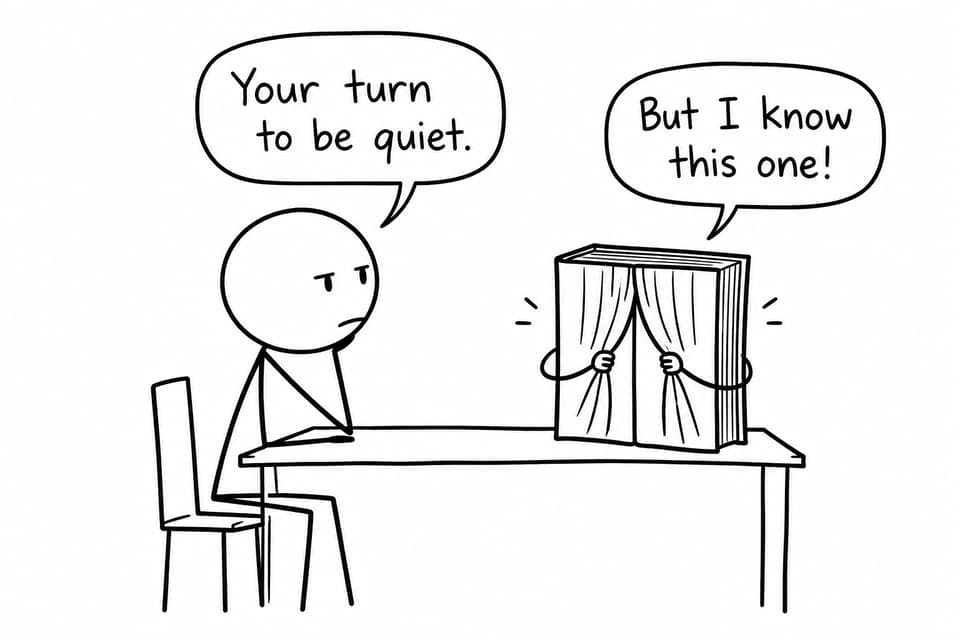

IB revision active recall works when study begins with a question, not an open textbook. For IB Diploma students, the method is simple: retrieve a topic from memory, check the answer, record the gap, and revisit it after an interval. Build those steps into each week and revision becomes a repeatable system.
Six subjects compete with coursework, Theory of Knowledge, and the Extended Essay. Your goal is to identify what you can recall independently and direct your limited time toward what you cannot.
How IB revision active recall works
Active recall means deliberately producing an answer from memory. That can involve explaining photosynthesis aloud, reconstructing a historical argument, writing a formula, sketching an economic model, or listing quotations before checking the source.
The checking stage is essential. Without it, a confident mistake can become familiar. Birmingham City University's guide to active recall and spaced repetition recommends reviewing material at increasing intervals, with examples such as one day, three days, and one week later.
A practical retrieval loop has four steps:
- Choose a precise prompt.
- Answer with all resources closed.
- Compare your response with reliable notes or a mark scheme.
- Schedule another attempt based on the result.
If the answer was complete, lengthen the interval. If it was partial, revisit it sooner. For more detail, see RevisionDojo's guide to spaced repetition for IB revision.