



The night before IB History Paper 3, most students do the same dangerous thing: they try to “revise everything.” Not because it works, but because it feels responsible. Paper 3 punishes that instinct. It rewards something quieter: choosing, shaping, and defending an argument under pressure.
This guide breaks down what IB History Paper 3 really tests and how to walk in with confidence.
What IB History Paper 3 actually is
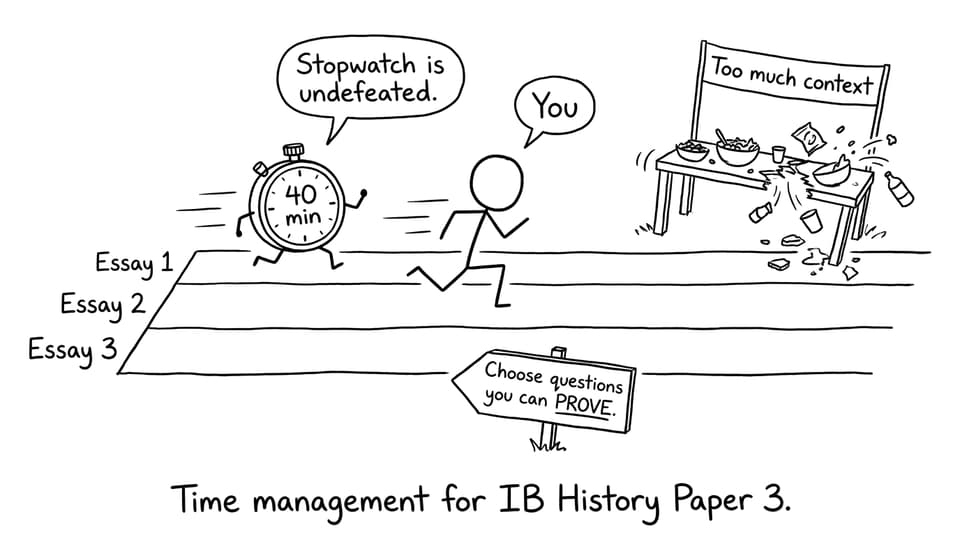
IB History Paper 3 is the HL-only essay paper based on your regional depth study. You select three essay questions from a set (often around 6-8 options) and write three full essays.
Key facts to remember for your planning:
-
You write 3 essays
-
You need roughly 40 minutes per essay (including a short plan)
-
Marks come from accurate knowledge, analysis, a clear argument, and well-chosen evidence
If you want the official-aligned topic hub to keep your revision organised, start with IB History Resources.
Quick checklist: a Paper 3 routine that works
Before every timed practice, run this IB History checklist:
-
Can I turn the question into a one-sentence thesis?
-
Do I have 2-3 arguments (not 7 mini-points)?
-
Do I have specific evidence ready (dates, policies, leaders, outcomes)?
-
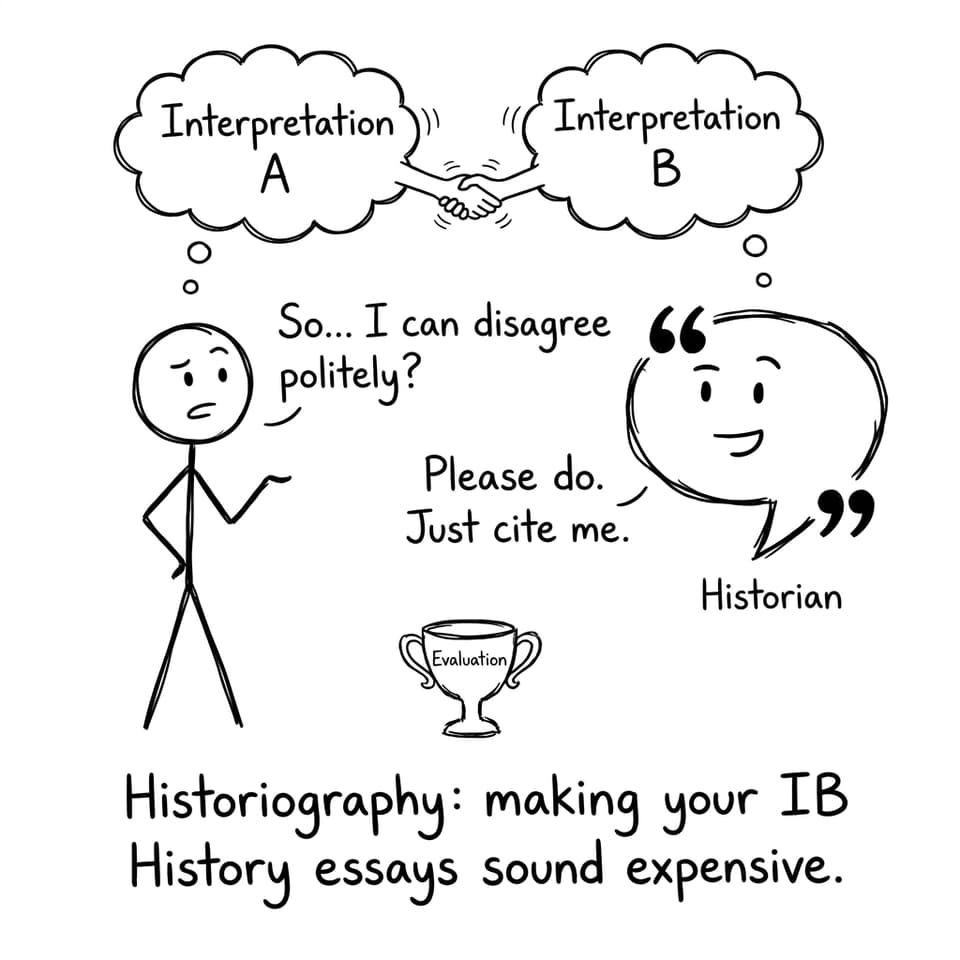
Can I add one historiography angle or interpretation?
-
Do I know what I will leave out?
For a structured reference point, use IB History Paper 3 Notes.
IB History Paper 3 strategy: themes beat timelines
The fastest way to drown in IB History is to revise as if Paper 3 wants a chronological documentary. Most high-mark essays are organised by themes (causation, change and continuity, significance, perspectives), using chronology only when it serves the argument.
A practical method:
-
Build a one-page theme grid for each section of your depth study
-
Under each theme, store 3-5 “high power” facts (evidence that can be reused across questions)
-
Attach one debate line: “Some historians emphasise X; others stress Y”
To practise those themes in context, work inside your region pathway, such as Paper 3: History of Asia and Oceania or Paper 3: History of Europe.
How to write faster without writing worse
In IB History, speed comes from decisions, not handwriting.
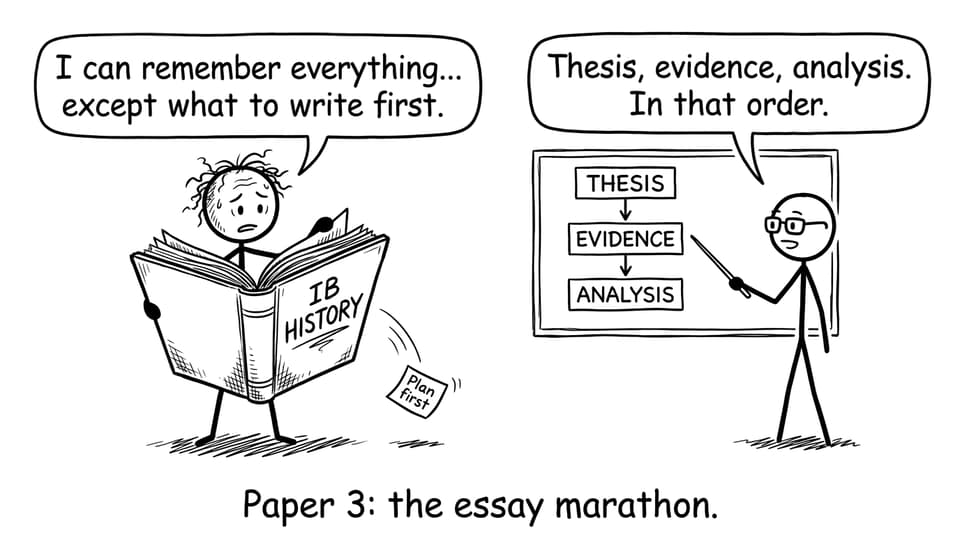
Use a simple structure every time:
-
Introduction (3-5 sentences): answer the question directly, define your scope, preview your line of argument
-
Body paragraphs: point, evidence, analysis, mini-judgment
-
Conclusion: return to the question and weigh the factors (don’t just summarise)
On RevisionDojo, you can build this skill loop quickly: use Study Notes to patch gaps, Flashcards for daily recall, the Questionbank for exam-style prompts, and Grading tools to see what your essays are missing. When you get stuck, AI Chat can help you tighten a thesis or test a counterargument, and Tutors can give human feedback when you need deeper diagnosis.
For exam realism, add History Predicted Papers to your weekly routine and treat them like stamina training.
FAQ
Is IB History Paper 3 harder than Papers 1 and 2?
In IB History, Paper 3 often feels harder because it’s depth plus endurance. You’re writing three full essays, back-to-back, with very little time to “warm up.” Unlike Paper 1, there’s no source pack guiding you toward evidence. Unlike Paper 2, the content base is narrower but more detailed, so gaps show quickly. The good news is that Paper 3 is also more predictable once you practise the same planning structure repeatedly. If you train with timed practice and consistent feedback, it becomes manageable rather than mysterious.
How do I choose which three questions to answer?
Start by scanning for questions where your evidence is instantly available in your head, not “somewhere in your notes.” IB History rewards specificity, so pick prompts where you can name events, policies, leaders, and consequences without reaching. Next, choose questions that allow argument, not narration: you want to evaluate “to what extent,” weigh factors, or compare impacts. Spend 2-3 minutes deciding, then commit. Indecision during writing is what destroys time. RevisionDojo’s Questionbank helps here because repeated exposure teaches you which themes you can answer strongly.
What if I forget dates or exact details in the exam?
In IB History, precision helps, but perfection isn’t required to show historical understanding. If you can’t recall an exact date, anchor your evidence with a clear timeframe and accurate sequence (for example, “early 1930s” rather than guessing a year). Focus on naming the policy, the actor, and the consequence, then explain why it matters to your argument. Avoid inventing specifics; one confident error can weaken credibility. This is why daily Flashcards are so effective: they don’t just store facts, they make retrieval automatic under stress. Use RevisionDojo Flashcards alongside Study Notes so the details you need are the ones that stick.
Final takeaway: confidence comes from proof
Confidence in IB History Paper 3 isn’t a mindset you force on exam day. It’s the result of repeated proof: timed plans, improved essays, and feedback you actually use.
If you want one place to run that loop, RevisionDojo brings it together: Study Notes, Flashcards, Questionbank, AI Chat, Grading tools, Predicted Papers, Mock Exams, Coursework Library, and Tutors. Build your next timed practice, grade it honestly, and let your preparation do what it’s supposed to do: make the exam feel familiar.