
If IB History has a moment where it stops being “I know the content” and becomes “I can judge the content,” it’s Paper 3.
Most HL students remember the first time they tried a Paper 3 essay under timed conditions. The plan looked fine. The facts were there. But the feedback stung: descriptive, thin evaluation, limited synthesis. In the IB History course (first assessment 2028), Paper 3 is designed to reward something quieter and harder: controlled depth, sustained evaluation, and confident historical judgment.
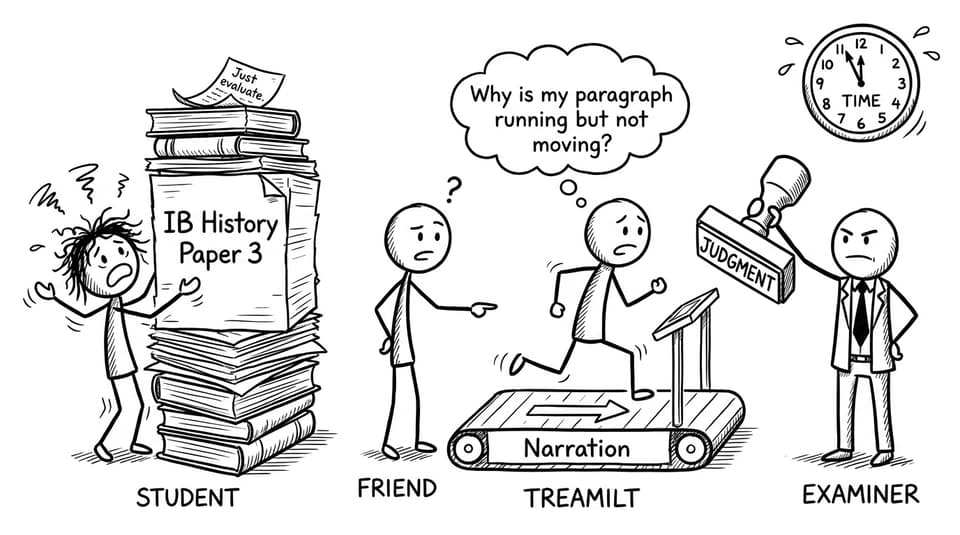
Quick checklist: what Paper 3 wants from HL students
Use this before every timed practice essay in IB History:
-
State a judgment in the introduction (not a summary)
-
Select evidence (2--3 strong examples beat 10 loose ones)
-
Evaluate factors throughout, not only at the end
-
Compare or connect case studies to show synthesis
-
Keep returning to the exact wording of the question
For a broader map of skills across the course, keep the IB History Exam Prep guide open while you revise.
What is IB History Paper 3 (HL only)?
IB History Paper 3 is the HL-only essay paper based on your regional depth study. You typically write three essays within the exam window, drawing on detailed regional knowledge and using it to build evaluative arguments.
If you need a clean overview of the full syllabus and regional options, start with the IB History resources hub.
Paper 3 exists to separate “I revised” from “I can think like a historian under pressure.” It is not just longer Paper 2. It’s a different standard.
IB History Paper 3 vs Paper 2: why strong students still drop marks
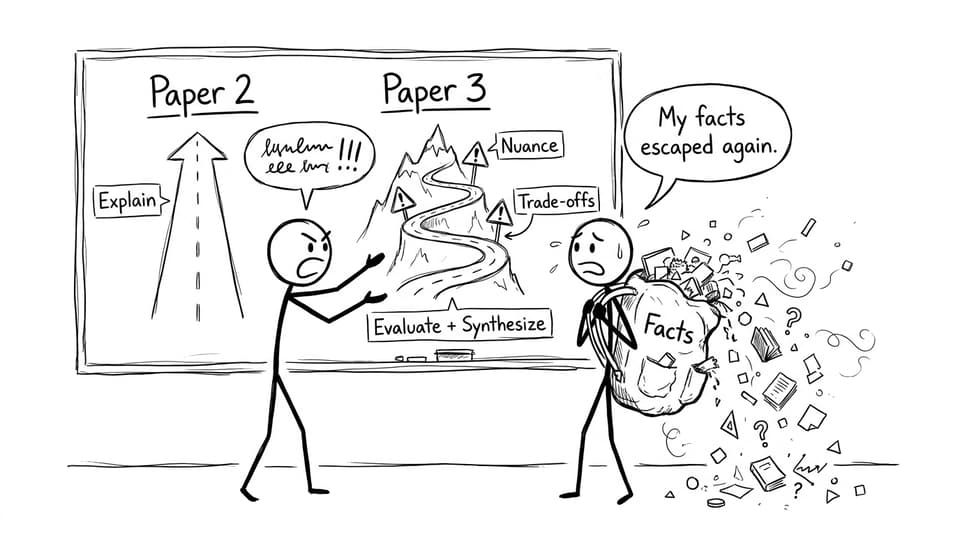
Paper 2 in IB History often rewards clear explanation tied to themes (causation, change and continuity, significance). Paper 3 still uses those concepts, but turns the difficulty up in three ways:
-
More depth: you need command of detail, not just recognition.
-
More evaluation: you must weigh, prioritize, and qualify as you go.
-
More synthesis: your essay should connect developments, not treat topics as isolated.
If you want a practical skills bridge between the papers, read IB History Assessment Explained: Papers and IA (FA 2028).
What “depth” means in IB History Paper 3
Depth is not “more notes.” In IB History, depth shows up when you can control the material instead of dumping it.
Depth looks like:
-
Precise evidence (specific policies, turning points, actors, outcomes)
-
Context that earns its place (only what helps answer the question)
-
Complexity without chaos (you can show tensions and contradictions clearly)
-
Interpretive awareness (even a brief nod to differing perspectives can elevate the argument)
A simple self-test: if you removed half your facts, would your argument still stand? If the answer is no, you’re probably using detail to hide uncertainty instead of using it to prove judgment.
For topic-by-topic content support, RevisionDojo’s IB History Paper 3 notes help you revise depth studies without losing the thread.
Evaluation: the core skill examiners reward
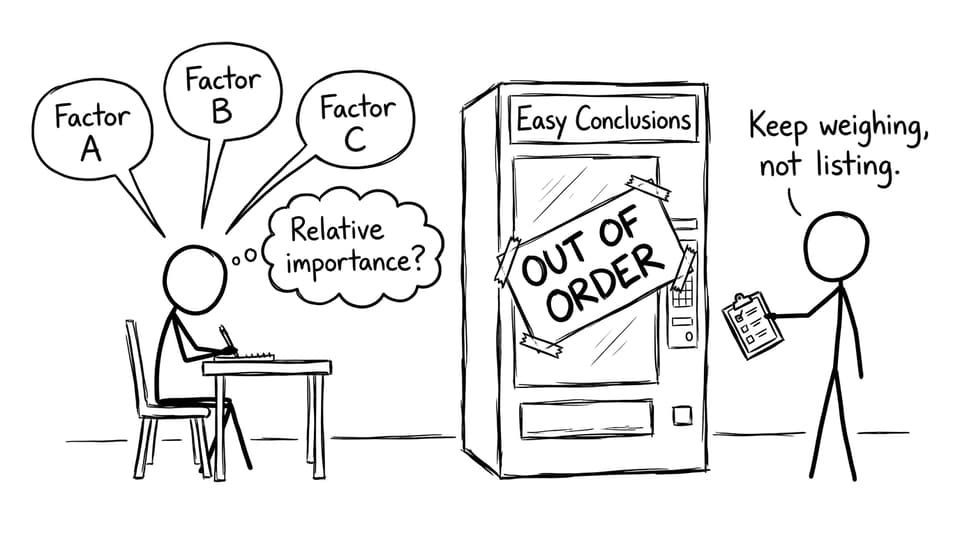
Evaluation in IB History is the habit of weighing explanations and making decisions about relative importance.
Instead of writing:
“There were economic, political, and social causes…”
you write:
“Economic pressures created the conditions, but political miscalculation determined timing; social tensions intensified impact rather than initiating change.”
Notice what changed: you didn’t add more content. You added judgment.
Try building evaluation into every paragraph using one sentence frame:
-
“This mattered more than X because…”
-
“However, its impact was limited by…”
-
“In the short term…, but in the long term…”
That is how top-band IB History Paper 3 essays feel: they are making choices continuously.
Synthesis: the HL difference-maker
In IB History Paper 3, synthesis is how you show you’re not trapped inside one storyline. It can be as small as a two-sentence comparison that clarifies your point.
Synthesis can include:
-
Comparing two leaders’ constraints to explain different outcomes
-
Linking a domestic development to international pressures
-
Showing a pattern across decades, then explaining the exception
If you’re unsure what synthesis looks like under the new course, pair this article with IB History: The 4 Key Concepts for FA 2028.
A practical Paper 3 training loop (that actually improves marks)
Here’s a calm routine that fits real student time:
-
Study Notes: read one micro-topic inside your region (15--25 minutes)
-
Flashcards: drill key terms, turning points, and mini-claims (10 minutes)
-
Questionbank: do exam-style prompts and plan fast (25 minutes)
-
Timed essay: write one full response weekly
-
Grading tools + AI Chat: get feedback and rewrite one paragraph, not the whole essay
On RevisionDojo, this loop is built in: Questionbank, Study Notes, Flashcards, AI Chat, Grading tools, Predicted Papers, Mock Exams, Coursework Library, and Tutors. Start from the IB History hub and move outward based on what you need.
To practice the “paper feel,” use History Predicted Papers and the IB History Predicted Papers page to simulate full sessions.
FAQ
Is IB History Paper 3 harder than Paper 2?
For many HL students, yes, because IB History Paper 3 punishes autopilot writing. Paper 2 can sometimes be managed with strong structure and decent thematic knowledge. Paper 3 asks for the same structure, but demands deeper control of detail and more consistent evaluation. The time pressure makes the gap feel bigger, because you must select evidence quickly and still sound deliberate. The good news is that “harder” usually means “more trainable.” Once you practice weighing factors in every paragraph, Paper 3 becomes predictable rather than scary.
What does “evaluation throughout the essay” actually look like?
In IB History, evaluation throughout means your paragraphs end with judgment, not just information. You present evidence, then immediately explain what it proves and how strongly it proves it. You compare causes, consequences, or significance in a way that shows priorities. You also acknowledge limitations: not to sound hesitant, but to show you understand complexity. The easiest method is to add one evaluative sentence per paragraph that uses relative language (more significant, less decisive, constrained by, amplified by). Over time, those sentences become your natural voice.
How do I revise for Paper 3 without memorizing endless facts?
Revise IB History Paper 3 by building “evidence packages,” not timelines. For each likely theme (causes, consolidation of power, opposition, economic change, social impact), prepare 2--3 examples you can deploy flexibly. Make each example come with a mini-judgment (why it matters, what it limits, what it shows). Then practice planning under time so selection becomes automatic. RevisionDojo helps here because you can move from Paper 3 notes to targeted drilling using the Questionbank mindset (even when practicing other papers, the same selection skill applies). Finally, use Tutors or AI feedback to diagnose whether your weakness is knowledge, structure, or evaluation.
Closing: turn IB History Paper 3 into an advantage
The hidden truth of IB History Paper 3 is that it rewards maturity more than speed. You don’t win by saying everything. You win by choosing what matters, proving it with depth, and evaluating it with calm control.
If you want one place to build that skill--with Study Notes, Flashcards, Questionbank practice, AI Chat support, Grading tools, Predicted Papers, Mock Exams, a Coursework Library, and expert Tutors--start at the IB History resources hub and train Paper 3 like a craft, not a crisis.
