


A disappointing IB result can make a family feel that something must have gone wrong. Sometimes that instinct deserves investigation. The International Baccalaureate offers a formal post-results process called an Enquiry Upon Results, or EUR, through which a school can request services including a re-mark of externally assessed work.
The essential answer is reassuringly clear: a student can ask their school’s IB coordinator to submit an EUR, but neither the student nor the parent can submit one directly to the IB. A Category 1 re-mark can raise the subject grade, leave it unchanged, or lower it. Written consent is therefore required, fees and deadlines apply, and the decision should begin with the student’s distance from the relevant grade boundaries.
This IB enquiry upon results remarks guide explains what parents need to ask, what the different services mean, and when a re-mark should be considered alongside a retake.
The parent’s quick EUR checklist
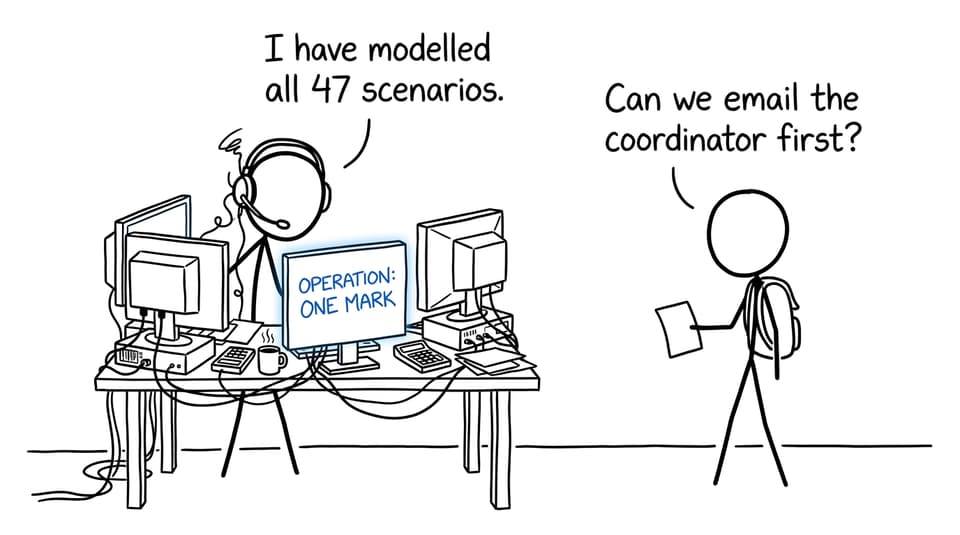
Before agreeing to anything, work through these questions with your child and their coordinator:
- How many scaled marks are needed for the next subject grade?
- How close is the result to the lower boundary?
- Which externally assessed components are covered?
- Would a higher grade change the diploma outcome, university offer, scholarship, or prerequisite?
- What fee does the school charge, and when might it be refunded?
- What is the school’s internal deadline?
- Is the student comfortable with the possibility of the grade decreasing?
- Should a retake plan be developed while the EUR is pending?
The first four questions establish the potential value. The remaining questions establish the cost, risk, and next step.
What is an IB Enquiry Upon Results?
An EUR is the IB’s official framework for handling certain requests after results are released. Parents often call the process a remark, recheck, or appeal, but those words are not interchangeable.
A Category 1 EUR is what most families mean by a remark. It involves re-marking all eligible externally assessed components for one candidate in one subject. It is not a request to reconsider only one question or selectively review the paper that felt weakest.
A formal appeal is different. It generally concerns whether the correct procedures were followed, rather than offering another opportunity to re-mark work simply because a family disagrees with the academic judgment. The school coordinator should explain the appropriate route for the examination session concerned.
RevisionDojo’s guide to appealing IB results and requesting regrades provides additional context on that distinction.
Understanding the main EUR categories
The exact services and conditions are governed by the IB procedures for the relevant session. At a high level, parents may hear the following terms:
| EUR service | What it generally does | Can it directly change an individual grade? |
|---|---|---|
| Category 1 | Re-marks eligible externally assessed material for one candidate and subject | Yes, the grade may rise, remain unchanged, or fall |
| Category 1 report | Reports on the marking following a Category 1 EUR | No, it explains the re-mark rather than performing another one |
| Category 2 | Returns copies of externally assessed material | No, returning work does not itself change the grade |
| Category 3 | Re-moderates a school’s internal-assessment sample | Potentially, but this is a school-level process rather than an individual IA remark |
These distinctions matter. A parent cannot request an individual re-mark of an internally assessed component through Category 1. Category 3 concerns the moderation of the school’s sample and is initiated in the appropriate circumstances by the school.
Avoid relying on an old form or another school’s website for fees, subcategories, and deadlines. EUR procedures can change, while schools may impose earlier internal cutoffs or administrative charges.
How to decide whether a re-mark is sensible
The distance to the next boundary is the natural starting point. IB subject grades run from 1 to 7, with weighted component marks combined into a final scaled result and compared with session-specific boundaries. The student’s detailed results may show the scaled total, boundary information, and marks needed for an increase. The coordinator can help interpret the available component information.
For a fuller explanation, read how IB grade boundaries work and the IB grading system from 1 to 45.
A close boundary is relevant, not predictive
Being one mark below a higher grade makes a re-mark worth discussing. It does not mean the missing mark will be found. The examiner’s task is to apply the assessment standard correctly, not to search for an extra point because the student is close.
The decision becomes stronger when several facts align:
- The student is close to the next boundary.
- Eligible external components involve substantial examiner judgment.
- A teacher sees a credible reason to question the marking.
- The higher grade would produce a meaningful practical outcome.
- The family accepts the downside and can afford to lose the fee if no grade change occurs.
Conversely, a student close to the lower boundary should examine the risk particularly carefully. RevisionDojo explores this trade-off in whether one extra IB point on a remark is really rare.
Predicted grades are context, not proof
A large gap between predicted and final grades is emotionally striking, but it does not establish a marking error. Predictions and final assessments are produced under different conditions. Use the prediction as a reason to investigate the component evidence, not as evidence that the result must be changed.
The practical process for parents and students
Contact the coordinator promptly
The school’s DP or CP coordinator is the route into the EUR system. Ask for the student’s scaled mark, grade-boundary position, available component information, applicable services, fee, expected processing period, and the school’s deadline.
The IB’s public materials place post-results enquiries broadly in July to September for the May session and January to March for the November session. However, the operative date for a family is the earlier deadline supplied by its own school. Contact the coordinator immediately rather than waiting for the end of the published window.
Give informed written consent
A Category 1 re-mark can lead to a higher or lower grade. The IB therefore requires written consent from the candidate or legal guardian, as applicable, before a request capable of changing the grade is submitted.
This is not routine paperwork. Consent means accepting all three outcomes: increase, no change, or decrease. If a grade falls after a properly submitted request, the original result is not simply restored because the family dislikes the outcome.
Confirm fees in writing
EUR services are not automatically free. The coordinator should explain the fee charged through the school. Official IB guidance states that the fee is not payable when a grade changes as a consequence of a Category 1 re-mark, but families should confirm how the school handles payment and reimbursement before proceeding.
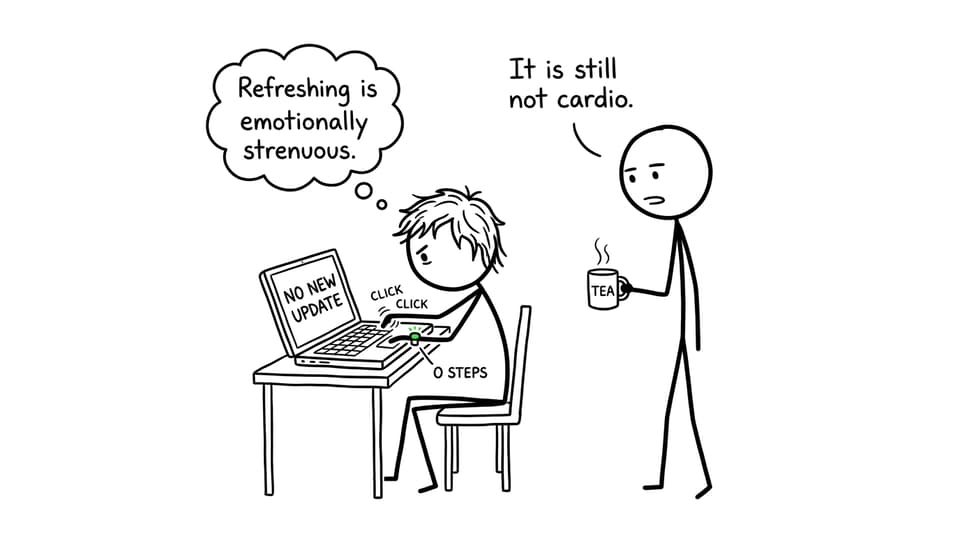
Wait without treating silence as evidence
The result is communicated to the school coordinator, not directly to the family. Processing time can vary by service and session, so ask the coordinator for the current expectation rather than relying on a universal online estimate.
What if a university place depends on the result?
Do not wait silently for the EUR outcome. Contact the university admissions office promptly, explain that a re-mark has been requested, identify the affected subject and condition, and ask what evidence it needs. The university decides whether it can hold a place or reconsider the application, so avoid assuming that a pending EUR automatically protects an offer.
If an official transcript previously sent to a university changes following a re-mark, the IB states that it sends an updated transcript without requiring the candidate to purchase another one. Still, confirm the revised result with both the coordinator and admissions office, especially where deadlines are close.
The broader emotional and practical sequence is covered in RevisionDojo’s parents’ guide to IB results day and its plan for when IB results day goes wrong.
Remark or retake: preserve both options
A remark reviews work that already exists. A retake creates a new assessment attempt. Those are different bets.
A close-boundary Category 1 request is often considered alongside a retake because the family may need to make registration decisions before the EUR outcome provides certainty. The IB permits candidates to retake a subject in a future examination session, subject to current restrictions, subject availability, curriculum requirements, and acceptance by an IB World School. Schools are not obliged to accept external retake candidates.
Ask the coordinator about registration dates while discussing the EUR. Preparing for a retake does not mean assuming the remark will fail. It means protecting the student from losing time.
If a retake becomes necessary, RevisionDojo offers a calmer system than simply rereading everything. Students can diagnose gaps with the Questionbank, rebuild concepts through Study Notes, reinforce recall using Flashcards, and resolve misconceptions with AI Chat. Grading tools, Predicted Papers, and Mock Exams turn preparation into measurable practice, while the Coursework Library and specialist Tutors provide support where independent study is not enough. Start with the calm strategic guide to IB retakes.
A calm next step
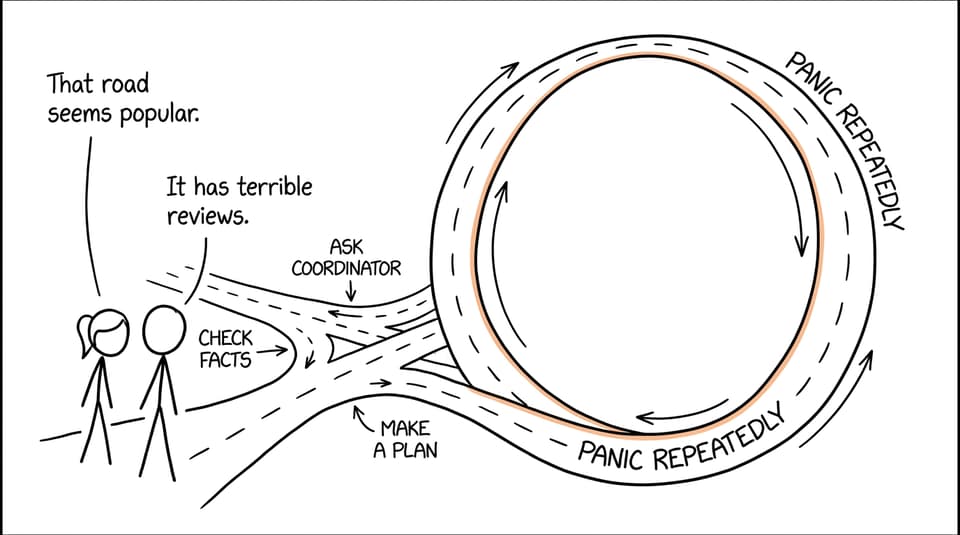
An unexpected result is not proof of an error, but neither is it the end of the conversation. The most useful parent response is not “This cannot be right.” It is: “Let’s gather the numbers and ask the coordinator what our options are.”
Request the boundary information, clarify the relevant EUR category, weigh the consequence against the downside, and protect any university or retake deadlines. Then give the student something uncertainty rarely offers on its own: a plan.
Whether the result changes or revision begins again, RevisionDojo remains the ultimate IB resource for turning that plan into focused action.