
Introduction
The night before a Chinese B writing task, most vocabulary problems look the same: you know what you want to say, but the word you need lives just out of reach. You end up repeating 很好, 很重要, 很有意思 until your paragraph feels like it is wearing the same outfit three days in a row.
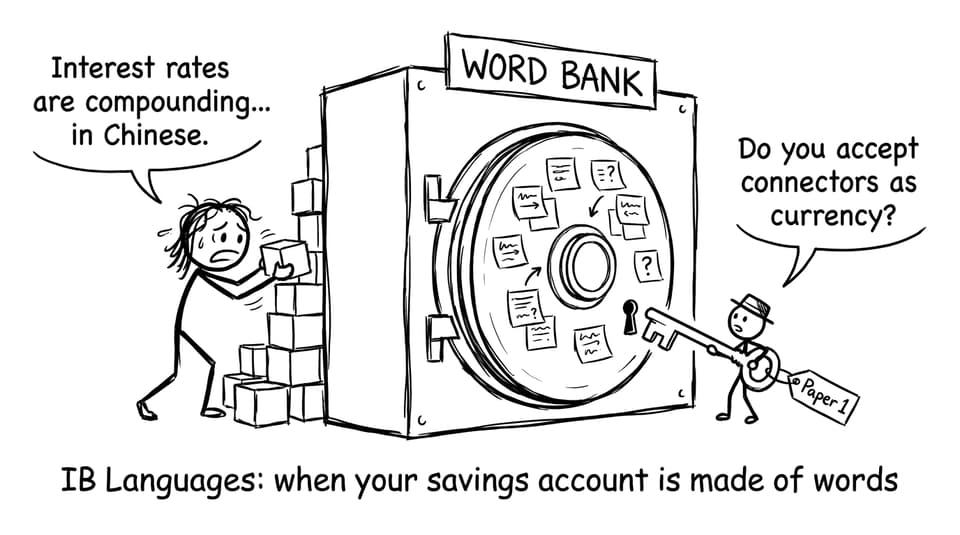
That is why building an IB Chinese B vocabulary system is less about collecting more words and more about building a usable word bank that shows up under pressure. In IB Languages, the students who improve fastest are not the ones with the longest lists. They are the ones with the best retrieval habits: themed vocabulary, sentence-level practice, and review that keeps words alive.
In this guide, you will build a practical word bank for Chinese B that works across Paper 1, Paper 2, and the Individual Oral, with a workflow you can run inside RevisionDojo.
Quick checklist: the word bank that actually sticks
-
Sort vocabulary by the five prescribed themes used in IB Languages
-
Prioritize high-frequency connectors (because they unlock complex sentences)
-
Learn words in context (mini-sentences, not isolated translations)
-
Use active recall + spaced repetition instead of rereading
-
Rehearse for output: short writing drills + speaking prompts
-
Keep a “mistake bank” so your errors become tomorrow’s flashcards
Why IB Chinese B vocabulary matters for IB Languages results
Vocabulary is not just decoration in IB Languages. It is the tool that lets you show clarity, range, and control.
-
Paper 1 (Writing): richer vocabulary helps you match text type, audience, and purpose. If you want a clear workflow, pair this article with IB Languages: Writing Strategies for IB Chinese B and the deeper text-type guidance in IB Chinese B Writing: Mastering Different Text Types.
-
Paper 2 (Reading + Listening): recognition vocabulary speeds up comprehension, especially for signal words and tone. For targeted practice, see Reading Strategies for IB Chinese B Paper 2.
-
Individual Oral: varied vocabulary reduces pauses and makes ideas sound more nuanced.
If you want the full assessment map before you plan your week, bookmark IB Languages: IB Chinese B Exams 2025 Overview and IB Chinese B Grading Explained.
Build your word bank by theme (the IB Languages shortcut)
In IB Languages, the themes are not background knowledge. They are the organizing system that makes vocabulary easier to store and faster to retrieve.
The five prescribed themes for Chinese B are explained clearly in IB Languages: The 5 Core Themes of IB Chinese B. Use them as your folder structure.
Theme starter sets (small, strong, reusable)
Instead of trying to “finish” a theme, start with 20-30 words that let you speak and write with flexibility.
-
Identities (身份认同): 健康, 饮食, 锻炼, 压力, 习惯
-
Experiences (体验): 旅行, 文化, 节日, 计划, 回忆
-
Human Ingenuity (人类创造力): 科技, 媒体, 创新, 隐私, 影响
-
Social Organization (社会组织): 教育, 社区, 规则, 责任, 公平
-
Sharing the Planet (共享地球): 环境保护, 可持续发展, 资源, 浪费, 平等
Then add a second layer: 5 opinions + 5 examples per theme. That is where IB Languages marks often appear.
Prioritize high-frequency words that power your sentences
Students often chase rare nouns (advanced-sounding topics) but ignore the language that creates logical structure. In IB Languages marking, connectors and framing phrases create clarity, cohesion, and sophistication.
Start with these patterns and actually use them:
-
因为…所以…
-
虽然…但是…
-
不但…而且…
-
除了…以外…还…
-
总的来说, 比如, 因此, 然而
A useful rule: if a phrase helps you write longer, more controlled sentences, it belongs near the top of your vocabulary list.
Learn vocabulary in context (so you can use it on exam day)
If you only memorize translation pairs, you are training recognition, not performance. IB Languages exams demand performance.
Try this three-step method for every new word:
Build a “one sentence, three variations” set
Pick a word like 环境保护 and write:
-
A simple sentence: 我觉得环境保护很重要。
-
A reason sentence: 因为资源越来越少,所以我们应该减少浪费。
-
A example sentence: 比如,我家开始垃圾分类,也少用塑料袋。
Now your word bank has grammar, connectors, and a ready-made example, not just a definition.
Add a cultural anchor
Chinese B becomes easier when vocabulary attaches to something real: shared bikes, exam pressure culture, Spring Festival travel, online shopping, school rules. Even one concrete reference can make your message feel specific.
Make active recall + spaced repetition your default
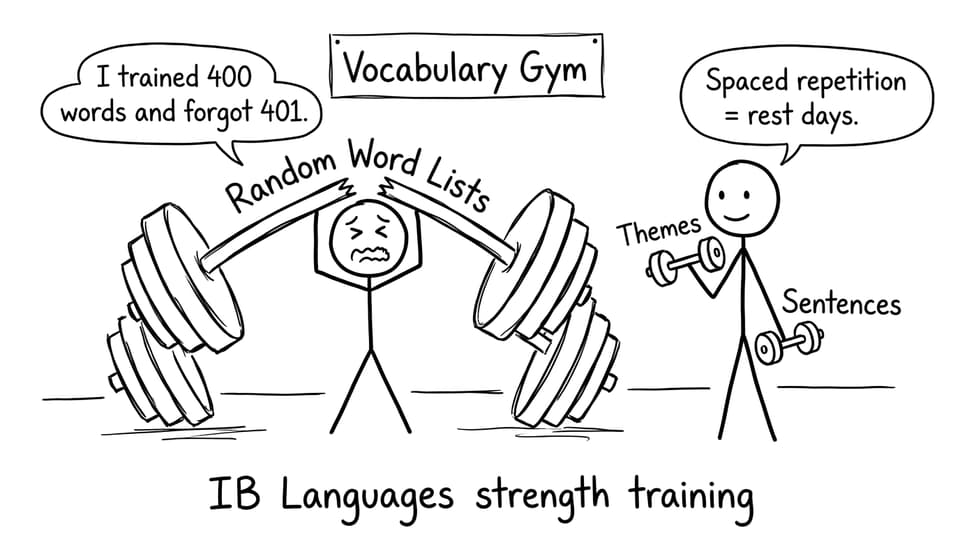
The fastest way to grow your Chinese B word bank is to accept one quiet truth: forgetting is normal. Your job is not to avoid it. Your job is to build a review system that catches it early.
-
Active recall: test yourself before you look.
-
Spaced repetition: review right before you are about to forget.
This is where RevisionDojo becomes an IB Languages advantage. Use Flashcards (and the broader IB Flashcards with Spaced Repetition (SRS)) to schedule reviews automatically, then reinforce with targeted practice from the Questionbank.
For Chinese B specifically, start from IB Chinese B Vocabulary Practice and treat it like your daily warm-up.
Apply your word bank to each assessment (so it becomes exam language)
Paper 1: text-type vocabulary + theme vocabulary
Paper 1 rewards control of conventions and register, not just “good Chinese.” Build mini-banks for openings, closings, and tone shifts, then plug in theme vocabulary.
Use this as your launchpad: How to Prepare for IB Chinese B Paper 1 plus the text-type guide in IB Languages: Master Chinese B Paper 1 Text Types.
Paper 2: recognition banks for signal words
For Paper 2, build a short list of “signal words” you want to instantly recognize: 因此, 然而, 结果, 另一方面, 首先/其次/最后. This is low effort, high return in IB Languages reading and listening.
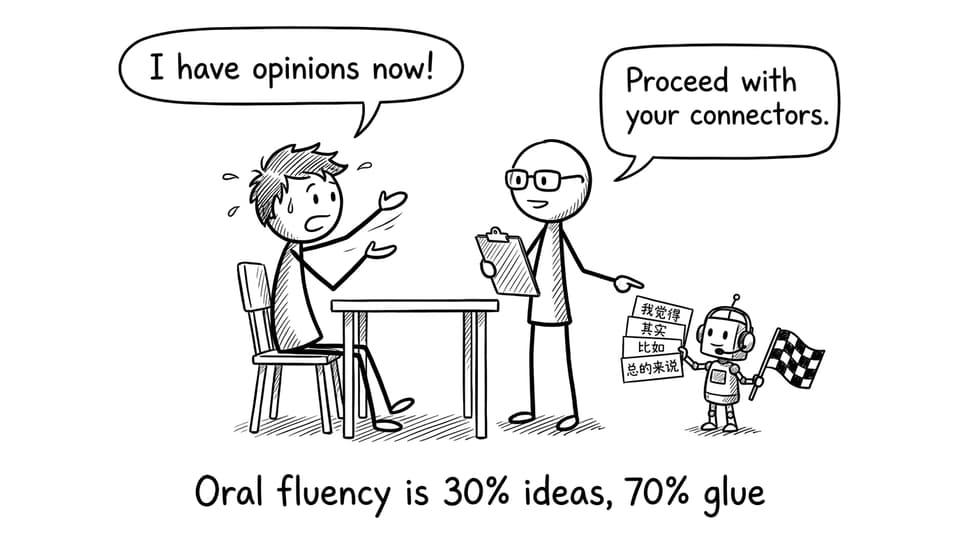
Individual Oral: “glue phrases” that buy you thinking time
Create an oral bank of flexible starters:
-
我觉得…
-
其实…
-
从一方面来说…从另一方面来说…
-
比如…
-
总的来说…
These phrases are not filler. They are structure.
A simple weekly plan (15 minutes a day)
-
Mon: 8-12 new words from one theme + 3 “one sentence, three variations” sets
-
Wed: one short Paper 1 paragraph using the same words
-
Fri: 5-minute oral recording using the theme + glue phrases
-
Sun: spaced repetition review + add mistakes to your flashcards
If you want a bigger structure for the year, adapt the cadence from IB Languages: Build a One-Year Self-Study Plan.
Common mistakes that quietly shrink your word bank
-
Building a huge list with no sentence practice
-
Studying only nouns and ignoring connectors
-
Reviewing by rereading instead of testing
-
Trying to add 50 words in one day, then stopping for a week
-
Not tracking personal errors (your highest-yield vocabulary list is your mistake log)
FAQ
How many words do I need to know for IB Chinese B in IB Languages?
There is no official fixed number because IB Languages exams measure what you can do with language, not how many dictionary entries you can recognize. Many strong students end up with roughly 1,500-2,000 active words, but the more important difference is retrievability under time pressure. A smaller bank that you can access quickly in writing and speaking often beats a larger bank you only recognize while reading. If you build by theme, you also recycle the same words across multiple prompts, which multiplies their value. Finally, remember that connectors and opinion phrases count as vocabulary too, and they often create the biggest jump in markbands.
Should I memorize characters, pinyin, or both?
For IB Chinese B, characters matter because writing tasks and reading comprehension depend on them. Pinyin can help you learn pronunciation and speed up initial memorization, but it is not enough on its own for exam performance. A practical approach is to learn characters with pinyin support, then quickly transition to character-only flashcards for recall. When you add a new word, write it inside a sentence so you practice character order and common collocations. Over time, your brain stops seeing characters as art and starts seeing them as meaning.
What is the best way to remember difficult vocabulary long-term?
The best method is a loop: active recall, spaced repetition, and real usage in tasks that resemble IB Languages assessments. First, test yourself before you look at the answer, even if it feels uncomfortable. Second, review on a schedule that revisits words right before you forget them, not randomly when you feel like it. Third, force the word into a sentence, then into a paragraph or oral response, because production strengthens memory more than recognition. Also keep a mistake bank: every time you miss a word in writing or speaking, turn that exact error into a flashcard and reattempt it two days later. Over weeks, your hardest words become your most reliable ones.
Conclusion: build a word bank you can withdraw from under pressure
A strong Chinese B vocabulary bank is not a list. It is a system: themed storage, connector-driven sentence building, active recall, and regular output practice. That is the IB Languages approach that survives exam timing and stress.
If you want one home base, start with IB Chinese B Resources and build your routine around RevisionDojo’s Study Notes, Flashcards, AI Chat, Questionbank, Grading tools, Mock Exams, Predicted Papers, Coursework Library, and Tutors. Your word bank grows fastest when practice, feedback, and review live in one place.
Near the end of your revision, return to this question: in IB Languages, can you use your vocabulary on command? If the answer is “mostly,” you are closer than you think.