

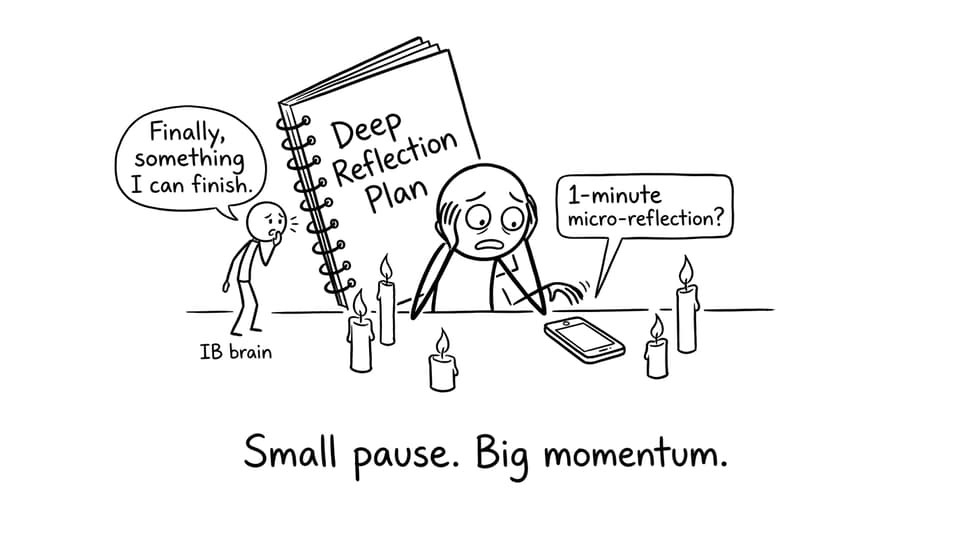
Micro-reflection isn’t a big, dramatic journal entry. In the IB, it’s more like a tiny steering correction that keeps you from drifting off course.
If you’ve ever finished a study session and thought, “I worked… but I’m not sure what changed,” you already know the problem. IB revision can feel like motion without direction. Micro-reflection moments fix that by asking for one honest sentence at the right time: what’s working, what’s unclear, what’s next.
What micro-reflection moments mean (in IB exam prep)
Micro-reflection moments are 60--180 second pauses where you make your thinking visible. Not for your teacher. For you.
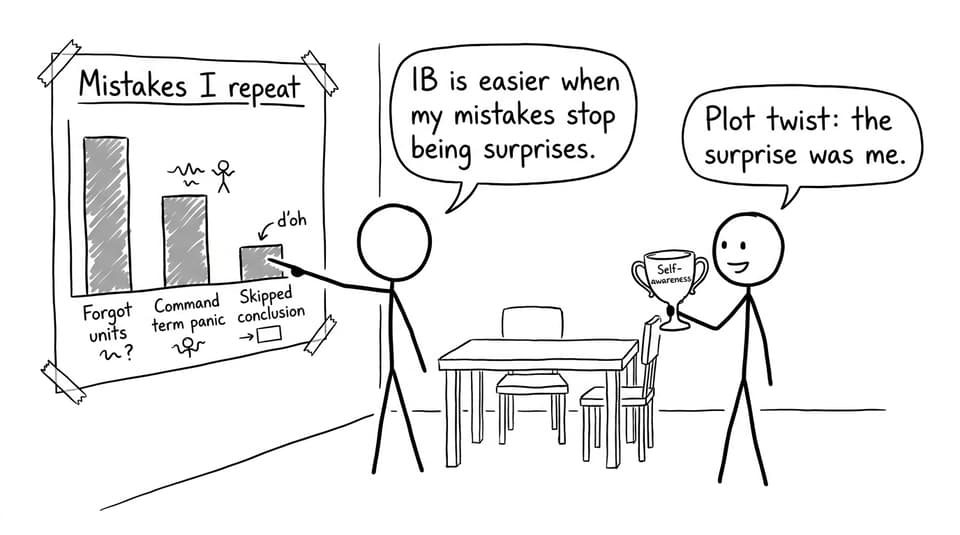
In IB exam preparation, that visibility matters because your biggest gains rarely come from “more hours.” They come from catching patterns early: the command terms you misread, the topic you always avoid, the steps you skip when you’re timed.
To make those pauses practical, anchor them to tools you already use:
-
After a practice set in the Questionbank
-
After a quick review session with IB Flashcards with Spaced Repetition (SRS)
-
After tightening a weak concept using Study Notes
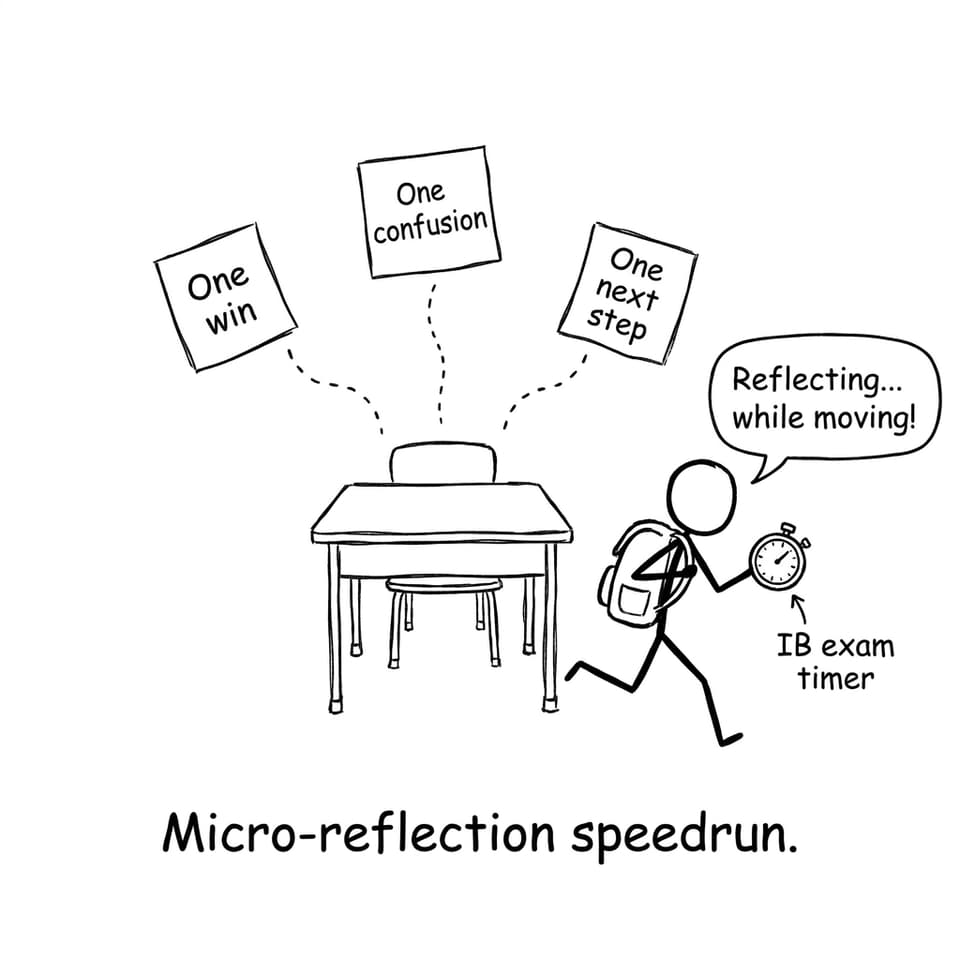
Quick checklist: your 2-minute IB micro-reflection routine
Use this after any revision block (even 15 minutes):
-
One win: What did I do correctly and why did it work?
-
One confusion: What still feels fuzzy (be specific)?
-
One next step: What will I do in the next 24 hours to fix it?
Write it in a notes app, on paper, or in a running doc. The format doesn’t matter. The honesty does.
Where to place micro-reflection moments for maximum engagement
Engagement is fragile during IB revision. It drops when effort doesn’t create feedback. So place micro-reflection moments where feedback is naturally available.
At the start: set a single intention
Before you open anything, answer: “What would make this IB session ‘worth it’?”
Then choose one resource that matches that intention:
-
If you need accuracy and marking logic, open the IB Question Bank: Thousands of Practice Questions
-
If you need fast recall, run a short set from the Flashcards feature
Mid-session: stop the silent slide
Halfway through, ask: “Am I still solving the right problem?”
This is where RevisionDojo’s ecosystem shines because you can switch modes without losing momentum: notes to clarify, questions to apply, then a quick check-in using AI support. (If you’re stuck on a concept, using AI Chat for a second explanation can turn confusion into a plan.)
At the end: turn reflection into action
Finish with: “What’s the smallest next task that would improve my IB score?”
This is how micro-reflection moments create engagement: they end sessions with a clear next move, not vague guilt.
Micro-reflection moments that map to real IB tools
A reflective habit is easier when it attaches to something concrete:
-
After questions: Use prompts from IB Question Bank | How to Use It Effectively
-
After timed practice: Debrief with structure using IB Test Templates: Pre‑Made Exams for Quick Practice
-
After a full simulation: Build stamina with How to Use RevisionDojo's Mock Exam Builder to Simulate ...
-
After group revision: Compare thinking patterns with Collaborative IB Mock Exams: Study with Friends Online
And when you want the bigger picture of how reflection supports long-term progress, it’s worth reading Building Resilience and Reflection in IB Classrooms | RevisionDojo.
Closing: small pauses that compound in the IB
IB success is rarely about one heroic weekend. It’s about small, repeated corrections that compound quietly.
Micro-reflection moments are the simplest correction tool you have: they keep your revision honest, targeted, and engaging. Pair them with RevisionDojo’s Questionbank, Study Notes, Flashcards, AI Chat, Grading tools, Predicted Papers, Mock Exams, Coursework Library, and Tutors, and you don’t just revise more--you revise with direction.
To build your next micro-reflection into real practice, start at RevisionDojo for IB and run one short session today.