Film music can feel like a shortcut. You press play, the strings swell, and suddenly you can hear your own assignment becoming bigger than your bedroom desk.
But IB Music doesn’t reward “big.” It rewards intentional. The best film scores aren’t just emotional wallpaper; they’re tightly built systems: motifs that return with new meaning, textures that change the air in the room, harmony that turns a scene’s subtext into sound.
If you treat film music like a toolbox (not a template), it becomes one of the richest sources of inspiration for IB Music Exploring, Creating, and Performing.
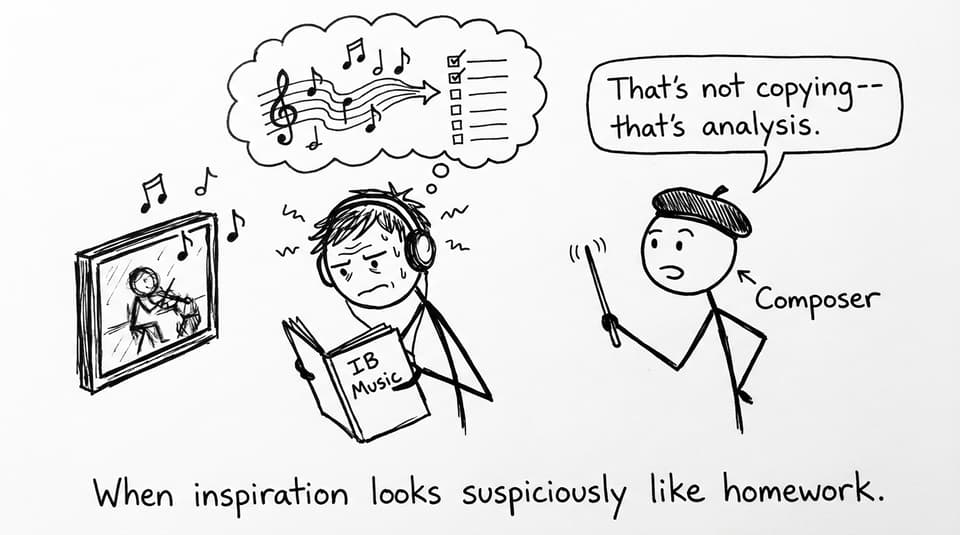
Quick checklist: turning film music into IB Music evidence
Use this before you start writing or composing. It keeps your IB Music work examiner-friendly:
-
Choose one clear focus: motif, texture, harmony, rhythm, timbre, or form.
-
Collect time-stamped evidence (0:45-1:10: “ostinato enters, low strings, crescendo”).
-
Describe what you hear using precise musical vocabulary.
-
Explain why it works in the scene (function and meaning).
-
Apply one technique in your own Creating or Performing.
-
Reflect on decisions (what you changed and why).
If you want a structured way to build this habit across your portfolio, start with Best Study Routines for IB Music Coursework Deadlines.
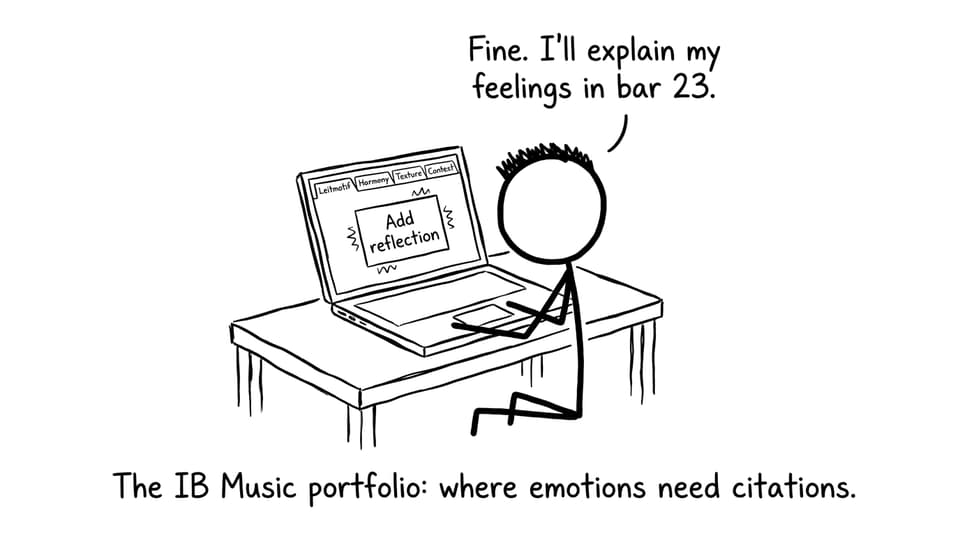
Use leitmotifs like a storyteller (without copying)
A film leitmotif is basically a character in musical form. Think of how certain themes in blockbuster franchises return, but rarely the exact same way twice. They stretch, compress, shift mode, change orchestration, or appear in fragments.
For IB Music, that’s gold because it gives you something you can prove:
-
Identify the motif (pitch contour + rhythm).
-
Track its transformations (augmentation, diminution, reharmonization, inversion, fragmentation).
-
Link the transformation to narrative function (new threat, new alliance, loss, victory).
Then borrow the method, not the melody. Write your own 3-5 note cell and treat it like a film composer would: let it evolve across sections so the piece sounds coherent.
Need help making the analysis sound sharp (rather than vague)? Use the framework from How to Revise Effectively for IB Music Listening Exams and apply it to a film cue.
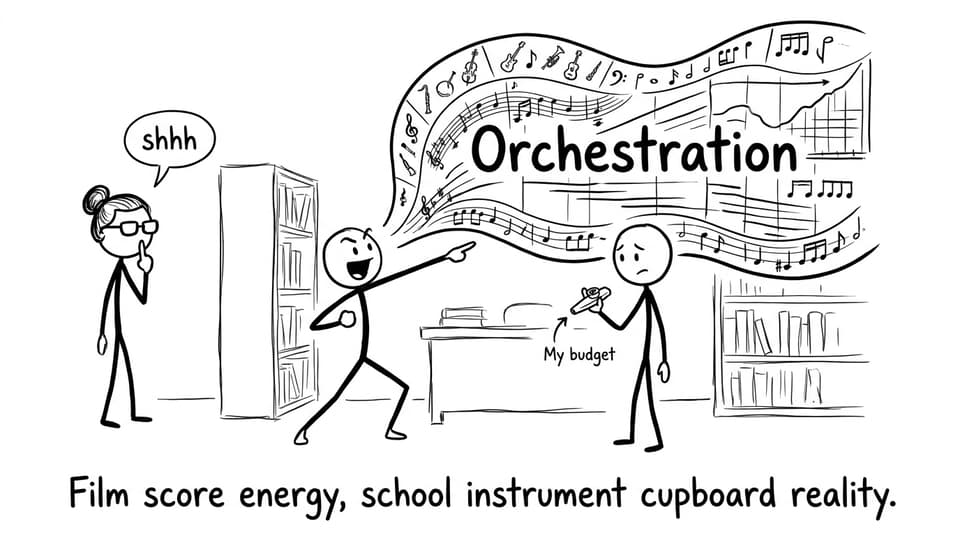
Steal orchestration strategies, not instruments
Most students love film scores because they sound expensive. Your school ensemble (or DAW template) might not.
That’s fine. IB Music isn’t grading your budget. It’s grading your choices.
Study orchestration as a set of strategies:
-
Register: high strings for fragility, low brass for weight.
-
Doubling: melody doubled at the octave for intensity.
-
Layering: ostinato + sustained harmony + short melodic fragments.
-
Timbre contrast: acoustic warmth vs electronic edge.
Then translate those strategies into what you can use: piano + simple percussion, strings patch + synth pad, vocal layers, or a chamber arrangement.
If your Creating process needs more structure, borrow a composition workflow from How to Compose Music for IB Music Coursework.
Write “film-style” textures that earn IB Music marks
A lot of cinematic sound is texture first, melody second. That’s not a weakness; it’s a compositional decision.
Try one texture technique that’s easy to document in IB Music reflections:
-
Ostinato engine: a repeating rhythmic cell that gradually thickens.
-
Pedal point tension: static bass note while harmony shifts above.
-
Additive layering: instruments enter one by one to build momentum.
-
Minimalist cells: short patterns that phase, displace, or reharmonize.
The key is to explain your intention: “I used a pedal point under shifting extended chords to mirror the scene’s unresolved conflict.” That sentence is worth more than “I wanted it to sound dramatic.”
For deeper context-driven thinking, explore topic ideas from Best IB Music Exploration Themes for Depth and Variety.
Performing film music: turn ‘expression’ into specific decisions
Film repertoire can make Performing feel meaningful because it demands narrative phrasing. In IB Music, the strongest performances are the ones where you can articulate what you controlled:
-
Dynamic shaping tied to phrase direction.
-
Articulation choices that match genre (legato lines vs rhythmic bite).
-
Rubato that supports tension/release (not randomness).
-
Balance decisions in ensemble (who carries the story right now?).
To calibrate your preparation to examiner expectations, use What Examiners Look for in IB Music Performances.
Context matters: film music is cultural evidence
Film scores don’t exist in a vacuum. They borrow from classical traditions, jazz language, popular genres, and global musical practices (sometimes respectfully, sometimes not). That contextual layer is exactly where IB Music can move from “good” to “high scoring.”
Build context with questions like:
-
What musical tradition is being referenced, and why?
-
Who is the intended audience, and what codes do they recognize?
-
How does the score shape identity, place, or power in the film?
Once you can compare film cues with works from different cultures and functions, your Exploring becomes more sophisticated. A useful guide here is Best Strategies for IB Music Comparative Analysis.
Conclusion: make IB Music cinematic by making it specific
Film music is powerful because it’s disciplined. Every swell, silence, and repeat has a job.
Bring that same mindset into IB Music: analyze motifs like characters, treat orchestration as strategy, build textures you can explain, and write reflections that show decisions instead of diaries. When you do, film music stops being “inspiration” and becomes evidence.
If you want one place to run the whole process, from analysis to creating drafts to performance prep, use the RevisionDojo ecosystem (Questionbank, Study Notes, Flashcards, AI Chat, Grading tools, Predicted Papers, Mock Exams, Coursework Library, and Tutors) to keep your IB Music work calm, coherent, and high scoring.

