


Introduction
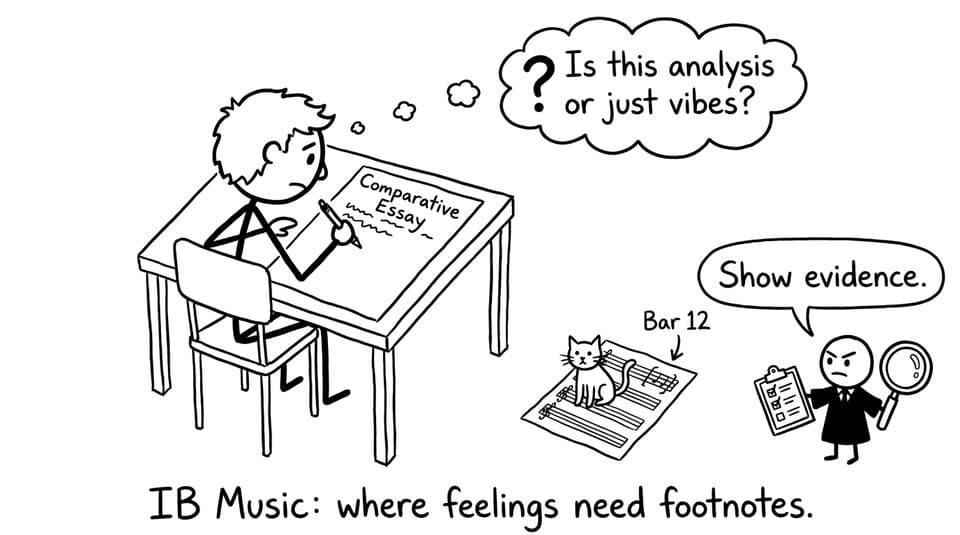
The night before you draft your comparative essay, everything sounds meaningful. The drum pattern feels like a heartbeat. The melody feels like a confession. Then you start writing, and suddenly you are arguing with your own sentences: is this analysis, or just vibes?
In IB Music, that moment matters. Examiners are not grading how intensely you felt the pieces. They are grading how clearly you can prove what you heard, compare it to something else, and explain why it matters in context. This post breaks down examiner expectations for IB Music comparative essays so your writing lands where marks actually live.
A fast checklist examiners look for in IB Music
If you do nothing else, run your draft through this:
-
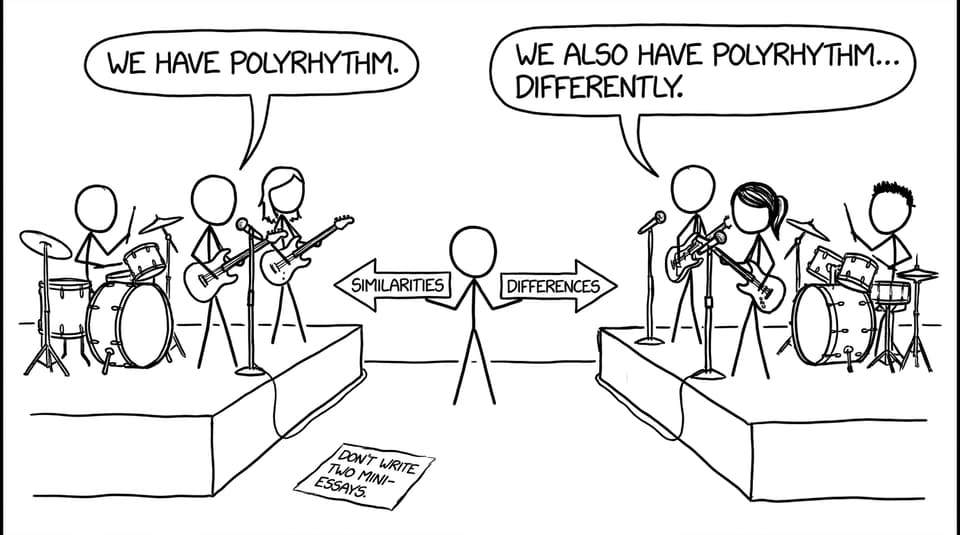
A clear comparative argument (not two separate mini-essays)
-
Multiple musical features in play (not only one)
-
Accurate musical vocabulary used precisely
-
Evidence tied to moments (timestamps, bar numbers, score cues)
-
Culture and context that explain why it sounds like that
-
Balanced similarities and differences
-
A short, thoughtful reflection on significance
If you are still choosing repertoire, start with How to Choose Pieces for IB Music Comparative Analysis so your pieces can actually carry the level of comparison IB Music expects.
Write for clarity first, sophistication second
Examiners cannot reward what they cannot find. In IB Music, clarity is a scoring strategy.
Swap broad claims for specific mechanisms:
-
Instead of: “Piece A is happier.”
-
Write: “Piece A sustains a bright timbral palette through upper-register instrumentation and stable diatonic harmony, while Piece B leans into a darker colour via lower tessitura and modal inflections.”
A helpful habit is to build each paragraph around a single sentence you could underline as your “claim,” then spend the rest of the paragraph proving it.
For a wider framework that keeps comparisons tight, use Best Strategies for IB Music Comparative Analysis.
Build “side-by-side” comparison (the examiner’s favourite shape)
A common reason IB Music essays stall is structural: students write Work 1, then Work 2, then hope the examiner connects the dots. Do the connecting yourself.
Try this repeatable paragraph pattern:
-
Point of comparison (rhythm, texture, harmony, form, timbre)
-
Work A evidence (what happens, where it happens)
-
Work B evidence (what happens, where it happens)
-
So what (what the difference or similarity means)
This approach naturally balances similarities and differences. And it prevents the “two mini-essays” problem that examiners quietly punish.
Use musical vocabulary like a spotlight, not a dictionary
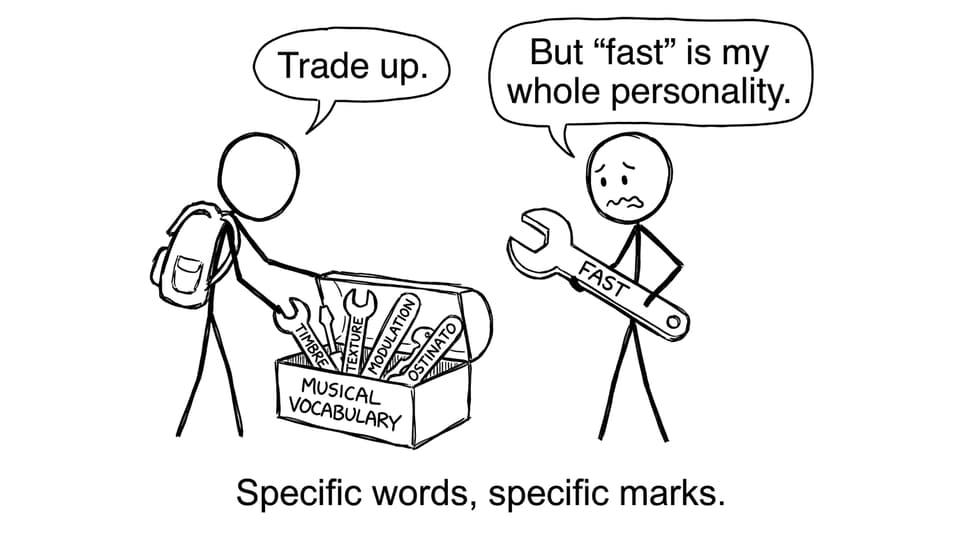
In IB Music, terminology is not decoration. It is a tool for precision.
Good vocabulary choices do two things:
-
They name the feature accurately (e.g., ostinato, heterophony, modulation, polyrhythm)
-
They help you explain effect and function (what it does in that tradition)
If you catch yourself writing “fast,” “sad,” or “powerful,” pause and translate into something measurable: tempo marking, rhythmic density, articulation, harmonic rhythm, texture, register, instrumentation, production choices.
To strengthen listening-based detail, pair this with How to Revise Effectively for IB Music Listening Exams.
Context is not a paragraph you “add”; it is the reason the music works
Examiners reward cultural awareness when it explains the sound.
That means context should be attached to features:
-
If you mention call-and-response, connect it to communal participation, ritual, worship, or social function.
-
If you mention virtuosity, connect it to performance spaces, patronage, technology, or values in that scene.
For dedicated guidance, use How to Connect Musical Analysis to Cultural Context and, if you need a stronger research process, How to Research Music Effectively for IB Assignments.
Evidence: the simplest way to sound examiner-ready
In IB Music, evidence is how you turn a good ear into a high mark.
Make your proof easy to verify:
-
Use timestamps from recordings (e.g., 2:14-2:32)
-
Use bar numbers or rehearsal marks when you have a score
-
Quote short, relevant observations (instrument enters, texture shifts, harmonic change, rhythmic break)
Then add the link: how that moment supports your comparison.
Conclusion: write like an examiner is holding a highlighter
In IB Music, the best comparative essays feel calm. Not because the music is simple, but because the thinking is visible: clear claims, balanced comparison, precise vocabulary, and evidence tied to real moments.
RevisionDojo helps you practise that examiner-ready clarity with Study Notes, Flashcards, and a Questionbank for musical features and context, plus AI Chat to test your comparisons, Grading tools to check your draft against criteria, and Mock Exams and Predicted Papers to rehearse exam conditions. When you are ready, explore the full IB Music hub at All #IB Music Posts and turn your next comparative essay into something an examiner can reward immediately.