


If you have ever opened your DAW or notation software, stared at an empty bar, and felt your brain turn into white noise, welcome to the real start of IB Music.
The funny part is that composing rarely fails because students lack talent. It fails because the theme is fuzzy. A clear theme gives you decisions: what rhythm belongs, what harmony feels honest, what timbre carries meaning. A vague theme gives you options, and options are where procrastination hides.
Below are examiner-friendly IB Music composition themes and ideas that are still personal enough to feel like yours.
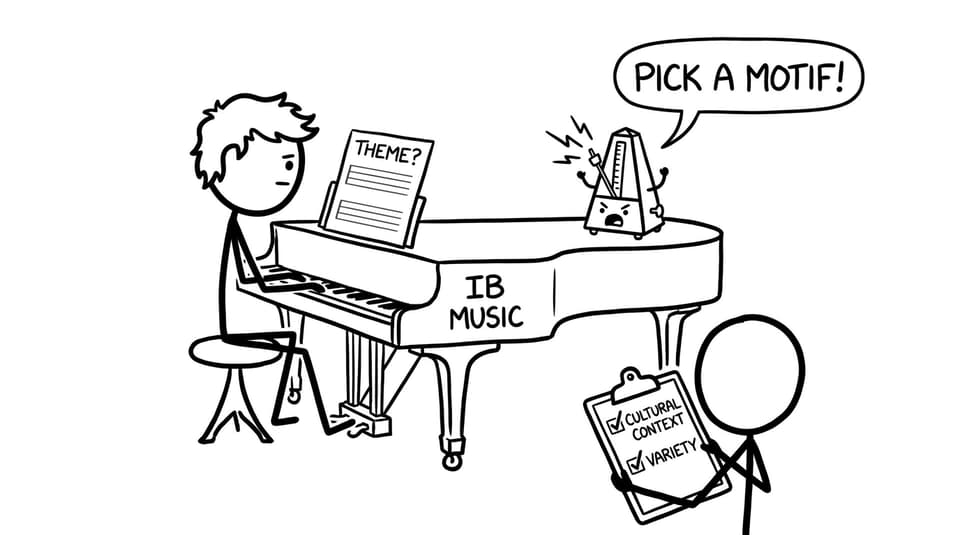
Quick checklist: pick a theme that composes for you
Before you commit, pressure-test your theme with this quick IB Music checklist:
-
Can you create variety (rhythm, melody, harmony, texture, timbre, form)?
-
Can you explain a cultural or contextual influence in your reflections?
-
Can you finish it within the Creating component timeframe?
-
Can you show development (motifs changing, textures evolving, structure becoming clearer)?
-
Can you write program notes that sound intentional (not accidental)?
If you want a broader view of how Creating fits the course, use What Is the IB Music Course? A Complete Beginner's Guide.
Nature and the environment (sound painting that earns marks)
Nature is a classic because it naturally invites musical contrasts: stillness vs. motion, light vs. shadow, fragile vs. violent.
Ideas that work well in IB Music composition:
-
Birdsong-inspired motifs (short cells, repetition with variation)
-
Water textures (arpeggiation, planing, layered ostinatos)
-
Climate anxiety (unstable harmony, gradual thickening texture, disrupted pulse)
To keep it examiner-ready, plan your form early. If you need a composing roadmap, see How to Compose Music for IB Music Coursework.
Identity and culture (personal without being vague)
“Identity” only becomes weak when it stays abstract. Make it concrete: specific rhythms, tuning systems, instruments, performance practices, or genre conventions.
Strong IB Music directions:
-
Reworking a folk melody into a new harmonic language
-
Writing for a traditional instrument (or imitating its timbre in a DAW)
-
Blending two styles you genuinely live between (home music vs. school music)
This theme also links neatly to your research work. If you want ideas that connect Exploring and Creating, read Best Ways to Link Performing, Creating, and Exploring in IB Music.
Storytelling and narrative (structure becomes your best friend)
Narrative is a cheat code for musical structure. If your piece follows a story arc, your sections almost plan themselves.
Try these IB Music prompts:
-
A myth retold through leitmotifs
-
A “scene” from an imaginary film (set time, place, mood)
-
A character transformation shown through harmonic shift (mode to major/minor, stability to dissonance)
Then write program notes that explain why each musical change happens. Use How to Write Program Notes for IB Music Compositions as your guide.
Social and political issues (emotion, but with craft)
Music can argue without lyrics. The key is translating the issue into sound, not just declaring it.
Effective IB Music approaches:
-
Protest energy through call-and-response textures
-
Migration through fragmented motifs that recombine
-
Surveillance through mechanical repetition and limited pitch sets
To keep this from becoming messy, focus on development over adding more material. For what examiners reward, use What Examiners Look for in IB Music Compositions.
Fusion and hybridity (originality with cultural awareness)
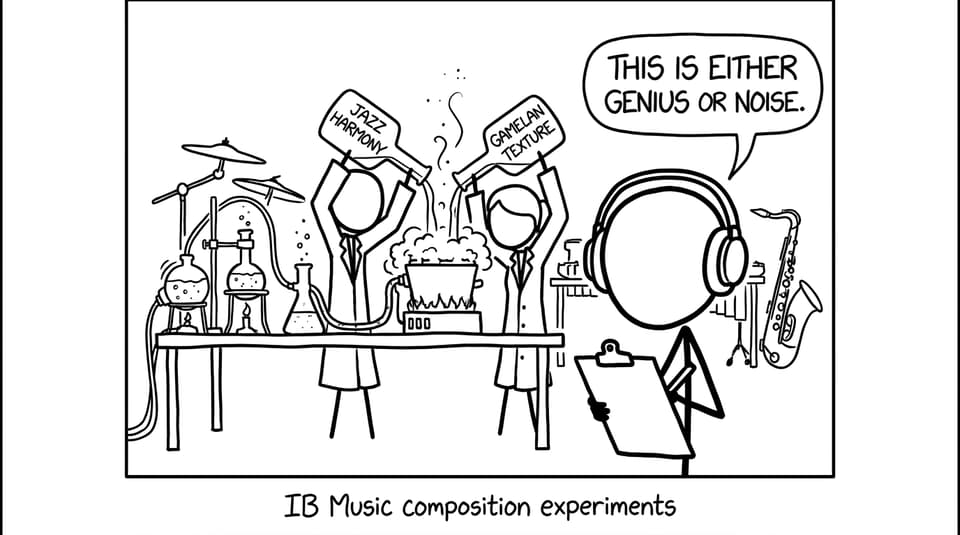
Fusion works when it is respectful and specific. Don’t just “add a beat.” Learn the role that rhythm, timbre, and structure play in each tradition.
High-scoring IB Music fusion ideas:
-
Jazz harmony supporting West African-inspired rhythmic layers
-
Minimalism techniques (phasing, additive rhythm) applied to a folk melody
-
Gamelan-like interlocking patterns recreated with synths
If you need models for cultural depth, explore Best IB Music Exploration Themes for Depth and Variety.
Technology and the future (innovation that you control)
Tech is powerful, but it only scores well if you are clearly making musical decisions.
Smart IB Music directions:
-
Sampling as “memory” (time-stretched fragments, filtered echoes)
-
Electronic + acoustic contrast (human rubato vs. grid-locked loops)
-
Algorithmic patterns that you then edit and shape into form
If tech makes you nervous, you are not alone. Tips to Succeed in IB Music as a Non-Specialist has practical ways to use tools without losing musical intention.
Bringing it all together (and actually finishing)
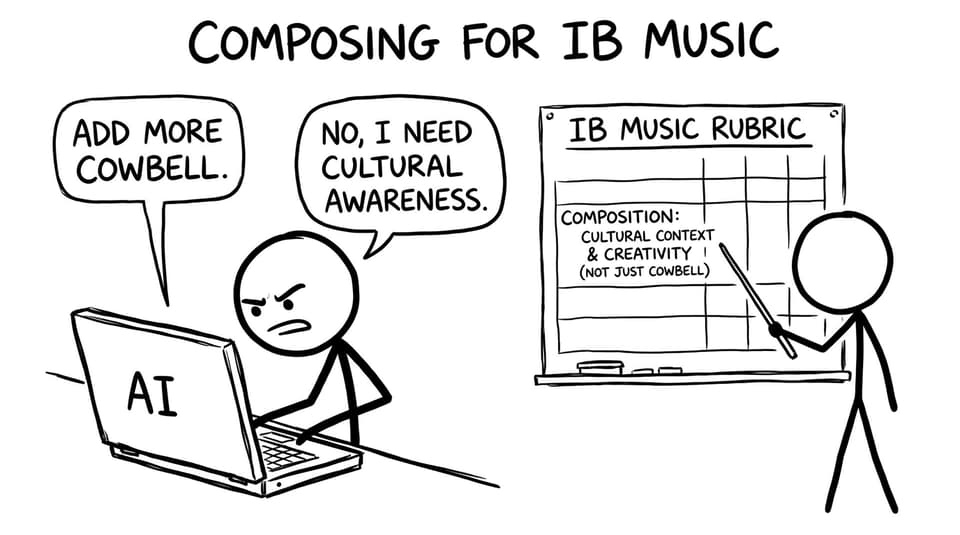
The best themes in IB Music are not the most dramatic. They are the most usable, and they lead you toward choices about motif, harmony, texture, and form, and they give you something real to explain in your reflections.
When you are ready to turn an idea into a polished submission, RevisionDojo can carry the heavy load: Questionbank practice for musical vocabulary, Study Notes for technique, Flashcards for quick recall, AI Chat for brainstorming and refinement, Predicted Papers and Mock Exams for exam prep, and Grading tools plus Tutors when you want feedback that feels like an examiner’s ear.
If you want one place to organize your entire IB Music workflow, start with Best Resources for IB Music Composition: Study Smart with RevisionDojo and build from there.