



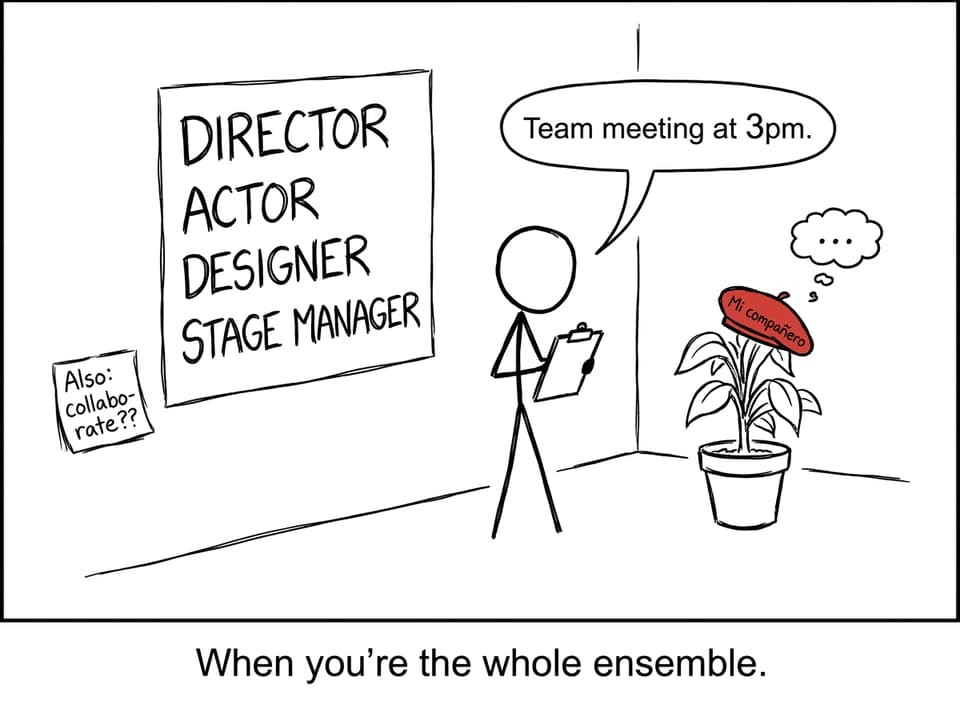
If you ever open your IB Theatre planner and realize the “Collaborative Project” is scheduled for… just you, it can feel like theatre’s biggest contradiction. Theatre is supposed to be an ensemble art, and you’re standing there as a one-person cast, crew, and creative team.
But here’s the part students often miss: in IB Theatre, you’re assessed on what you contribute, how you build a process, and how clearly you document decisions. So even if your class is tiny (or nonexistent), you can still create a legitimate collaborative process by designing collaboration intentionally.
The solo IB Theatre mindset shift: build collaboration on purpose
In IB Theatre, “solo” should never mean “isolated.” It should mean you are the producer of your own network.
Start by grounding yourself in what the task expects. If you need a refresher on the assessment logic, read Understanding the Collaborative Project in IB Theatre and keep it open while you plan.
A helpful rule: collaboration is not a vibe; it’s evidence. Evidence can be meetings, feedback, shared stimuli, iterative changes, rehearsal logs, and documented decisions.
Quick checklist for executing IB Theatre collaboration solo
-
Choose a starting point that can generate multiple theatrical experiments
-
Recruit at least two feedback sources (online or local)
-
Assign yourself clear roles (director, performer, designer, dramaturg)
-
Schedule 3-5 documented collaboration moments (calls, workshops, feedback sessions)
-
Keep a reflection log after every work session
For strong starting-point practice, borrow tactics from Using Starting Points Effectively in the Collaborative Project.
How to create “real” collaboration when you’re the only IB Theatre student
Collaborate virtually with other students
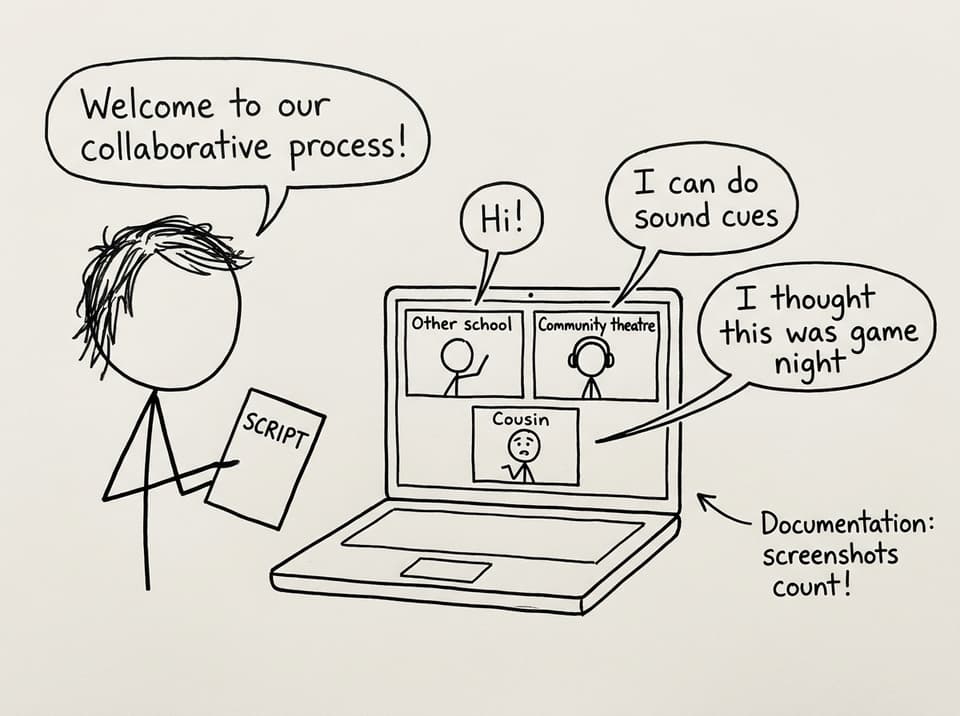
Virtual collaboration is often the cleanest solution because it looks like what the IB expects: exchange of ideas, negotiation, and refinement.
You can:
-
Join student communities and find one or two peers willing to workshop your concept
-
Run short Zoom rehearsals (even 20 minutes is enough)
-
Ask collaborators to respond to a stimulus, improv prompt, or staging draft
Then document it like a theatre-maker, not like a texter: screenshots, brief meeting notes, and what changed afterward.
Collaborate locally (community theatre counts)
If virtual options are limited, go analog.
Reach out to:
-
A community theatre director for feedback on blocking and audience impact
-
A drama club student to test a short scene or physical score
-
Friends or family members as a test audience
In IB Theatre terms, this becomes collaboration when you incorporate their feedback into revisions and explain why you accepted or rejected it.
Collaborate with your “past self” using multimedia
A solo student’s unfair advantage is control. Use it.
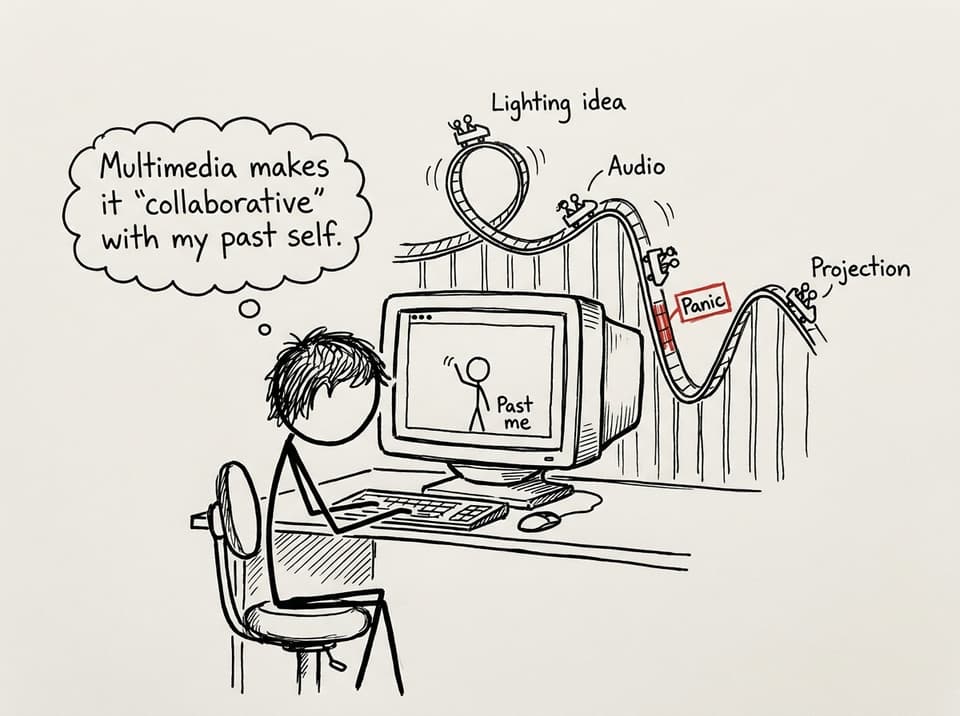
Build collaboration through layered media:
-
Record alternative versions of movement, voice, or staging
-
Edit them together to test contrasts
-
Use projections, recorded sound, or split-screen performance
This isn’t “cheating collaboration.” It’s demonstrating devised experimentation with clear artistic intention.
Documentation: the part of IB Theatre that saves your grade
When you work solo, your reflection becomes your ensemble. Your writing needs to show:
-
What you tried
-
What feedback you received
-
What you changed
-
What you learned about collaboration and theatre-making
Use this guide as your reflection backbone: How to Reflect on the Collaborative Project for Maximum Marks.
Also, if you want a practical way to simulate ensemble skill-building, steal one warm-up per session from Best Ensemble-Building Exercises for IB Theatre Students and adapt it as a solo training drill.
How RevisionDojo helps you stay calm and sharp in IB Theatre
Solo projects can spiral because there’s no one to reality-check your plan. RevisionDojo is built for that moment.
Use RevisionDojo’s Study Notes to clarify assessment expectations, then turn your process into bite-size recall using Flashcards. When you need exam-style practice habits (even for arts subjects, the skill is still analysis and justification), run short sessions using the Questionbank. If you get stuck, AI Chat helps you untangle concepts quickly so you can return to making theatre.
When your reflection draft feels messy, use Grading tools to tighten criterion focus, and scan the Coursework Library to see what strong structure looks like. If you need a human perspective, Tutors can give targeted feedback without taking over your voice.
If you want broader course context, bookmark Dive into the World of IB Theatre: An In-Depth Syllabus Overview.
Closing: make the “solo” version your advantage
Executing a Collaborative Project solo in IB Theatre isn’t about pretending you had an ensemble. It’s about proving you can create one: through outreach, feedback loops, and disciplined reflection.
If you want your IB Theatre process to feel structured instead of stressful, build your plan inside RevisionDojo: clarify with Study Notes, strengthen recall with Flashcards, pressure-test thinking with the Questionbank, and tighten your write-up using AI Chat and Grading tools. Then step into the rehearsal room and do what theatre has always been about, making something real, even when the conditions aren’t perfect.