

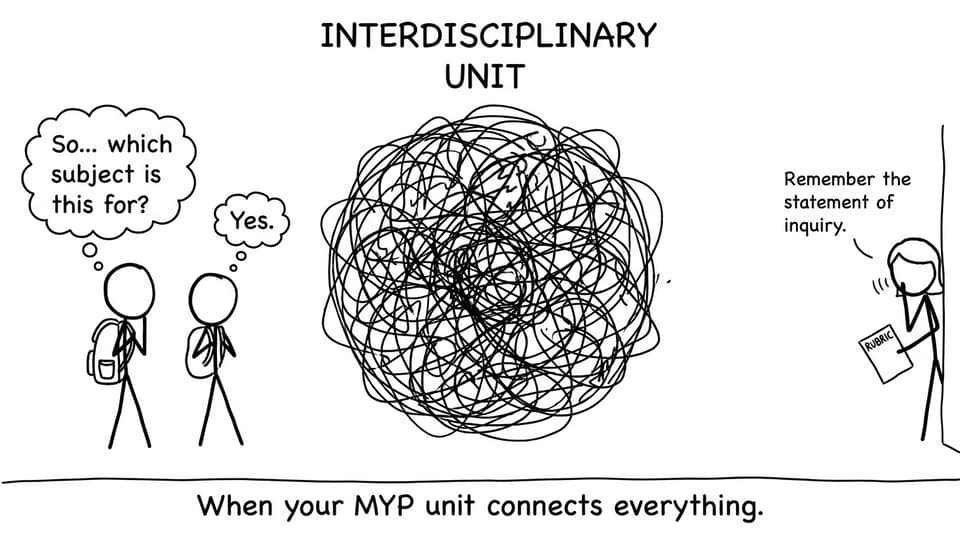
If you have ever walked into a lesson and thought, “Wait, why are we doing this in this subject?”, you already understand the problem that MYP interdisciplinary units are trying to solve.
In the MYP, learning is meant to feel like the real world: messy, connected, and full of problems that refuse to stay inside one subject box. The best interdisciplinary units (IDUs) do not just mix subjects for variety. They make your revision sharper because they force you to transfer skills: explaining like a scientist, arguing like a historian, modeling like a mathematician, and communicating like a writer.
For IB students preparing for exams, that transfer is not a “nice extra”. It is a competitive advantage.
A quick MYP checklist for interdisciplinary units
Use this as a quick design test. A strong MYP interdisciplinary unit usually has:
-
A shared key concept that genuinely fits both subjects
-
One clear global context that gives the unit a reason to exist
-
A tight Statement of Inquiry (SOI) you can repeat from memory
-
Assessment that maps cleanly onto criteria (and does not try to assess everything)
-
One or two shared ATL skills that are practiced deliberately
-
Student reflection that explains how subjects connected (not just what happened)
If even one of these is missing, the unit often becomes “two parallel projects” instead of true MYP interdisciplinary learning.
Why MYP interdisciplinary units matter for exam performance
Here is the quiet truth: exams reward students who can move flexibly between ways of thinking. Even when your assessment is not labeled “interdisciplinary,” success depends on it.
A data question in sciences is partly math and partly communication. A strong Individuals and Societies response is content plus reasoning plus structure. In the MYP, IDUs train you to notice those overlaps on purpose.
When you revise with that lens, your study time compounds. You stop memorising isolated facts and start building mental “bridges” you can walk across under pressure.
If you want a clean overview of what the programme expects, start with the Middle Years Programme (MYP) overview. Then use RevisionDojo’s Study Notes and Flashcards to keep the concepts and vocabulary stable across subjects.
Choose the right MYP concept and global context
The easiest way to spot a weak MYP IDU is this: the connection feels like a slogan. The strongest units start with a shared concept that forces both disciplines to contribute.
Pick a key concept that creates “necessary overlap”
Good key concepts for MYP IDUs include change, systems, relationships, and global interactions. They are broad, but not vague. They push you to ask: what does each subject uniquely reveal?
Anchor the unit with a global context
Global contexts keep the unit from drifting into academic trivia. They answer “why should anyone care?” in a way that motivates inquiry.
If you want a refresher on how contexts work in planning, use How Teachers Integrate Global Contexts in IB MYP Lesson Plans. For exam prep, contexts also help you generate examples, applications, and evaluation points quickly.
Write a statement of inquiry that actually guides learning
A strong MYP Statement of Inquiry is not a decorative sentence at the top of a worksheet. It is the thread you can pull during revision and still find the whole unit.
A practical test: if you removed the SOI, would your activities still make sense? If yes, your SOI is probably too generic.
Keep it clear and conceptual. Then build guiding questions that escalate: factual to conceptual to debatable. That structure mirrors how many exam questions also move: define, explain, evaluate.
Align MYP objectives, ATL skills, and assessment criteria
This is the part students feel most, even if they never see the planning document. When alignment is weak, tasks feel confusing. When it is strong, the unit feels fair.
Use criteria deliberately
Each subject has its own criteria, but interdisciplinary assessment uses its own MYP interdisciplinary criteria (A--D). Students do better when teachers avoid “assessing everything” and instead choose the smallest set that proves understanding.
If you are revising and want to decode what criteria language is really asking you to do, these guides help:
Pick 1--2 ATL skills and train them
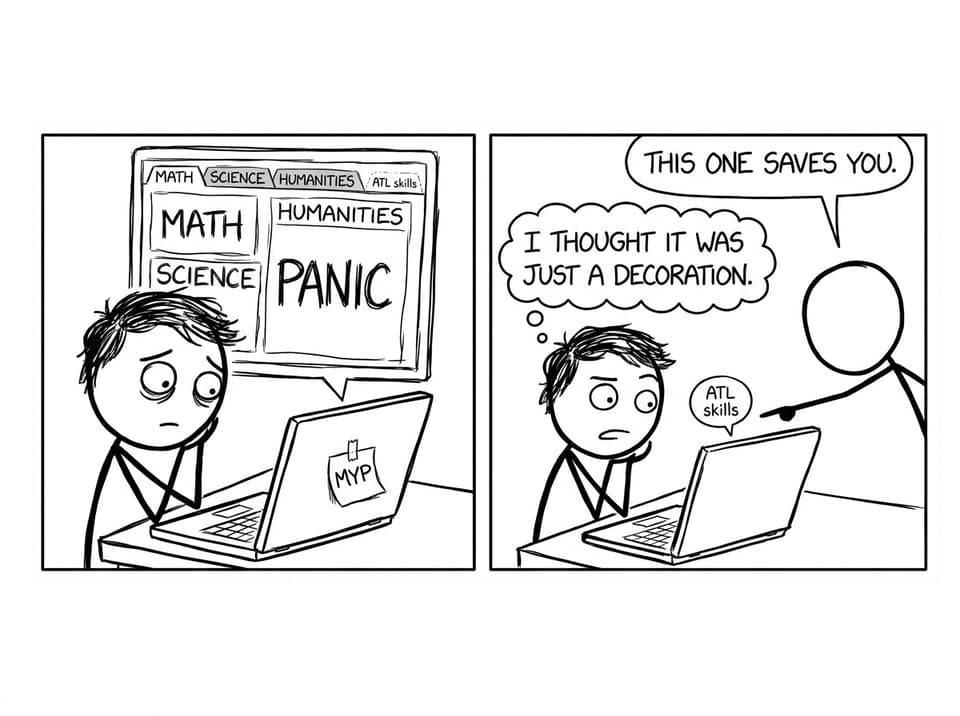
ATL skills are often named and then forgotten. In a high-quality MYP interdisciplinary unit, ATL is trained like a sport: repeated, coached, and reflected on.
For exam students, two ATL skills pay off constantly: critical thinking (linking evidence to claims) and communication (structure under time pressure).
Design learning experiences that feel real (and are revision-friendly)
Your unit activities should create “exam-ready evidence” of learning: explanations, models, arguments, and reflections that are easy to reuse when assessment season arrives.
Examples that work well in the MYP:
-
A case study that requires a scientific explanation and an ethical evaluation
-
A design task where math modeling shapes decisions, not just presentation
-
A mini-research investigation with a clear claim, evidence, and limitations
To make revision smoother, capture everything you produce and turn it into practice material. RevisionDojo makes that loop easier: build Flashcards from your unit vocabulary, use AI Chat to test your understanding, and then stress-test it with Questionbank-style practice.
For broader study systems, these help:
Assess holistically (and make reflection non-negotiable)
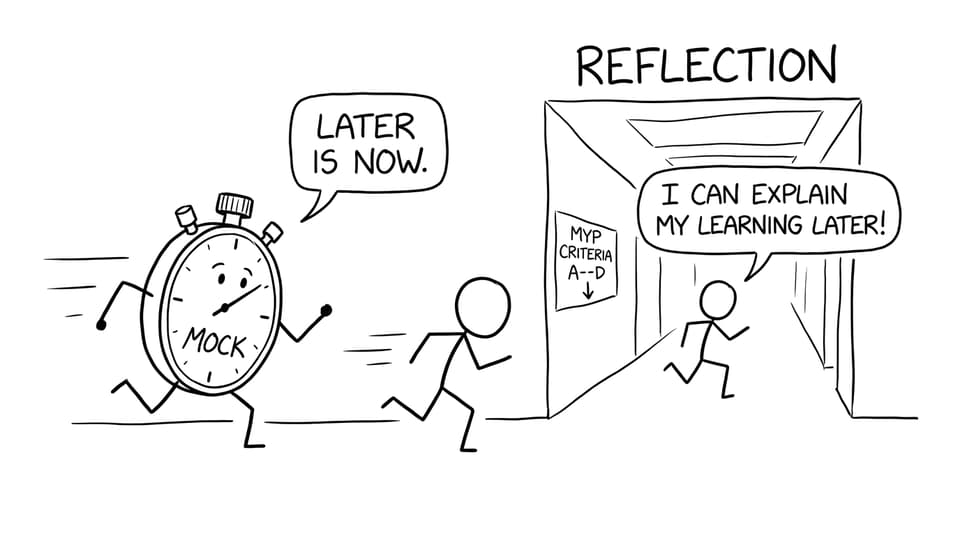
Reflection is where an interdisciplinary unit becomes visible in your writing. Without reflection, you may have done two subjects, but you have not shown integration.
In the MYP, strong reflection sounds like: “This is what Subject 1 contributed, this is what Subject 2 contributed, and this is how the combination changed my understanding.” That is also the tone that earns higher levels in many criteria descriptors: specific, evidence-based, and analytical.
If you want a model for structured reflection and criteria thinking, borrow the mindset from MYP: How to Get a 7 in the Personal Project. The habit is the same: map evidence to criteria, then explain decisions.
Conclusion: build MYP units like you build scores
The best MYP interdisciplinary units feel like someone finally admitted that the world is connected. They start with a shared concept, they stay anchored in a global context, and they end with assessment and reflection that proves integration.
If you are preparing for exams, treat every MYP interdisciplinary unit as revision material you are building in advance. Capture the concepts in Flashcards, test yourself with Questionbank practice, use AI Chat to pressure-test explanations, and rely on Grading tools and Mock Exams to see what holds up under time.
When you are ready to turn that connected learning into consistent results, RevisionDojo is the place to do it.