
The moment the choice stops being “prestige”
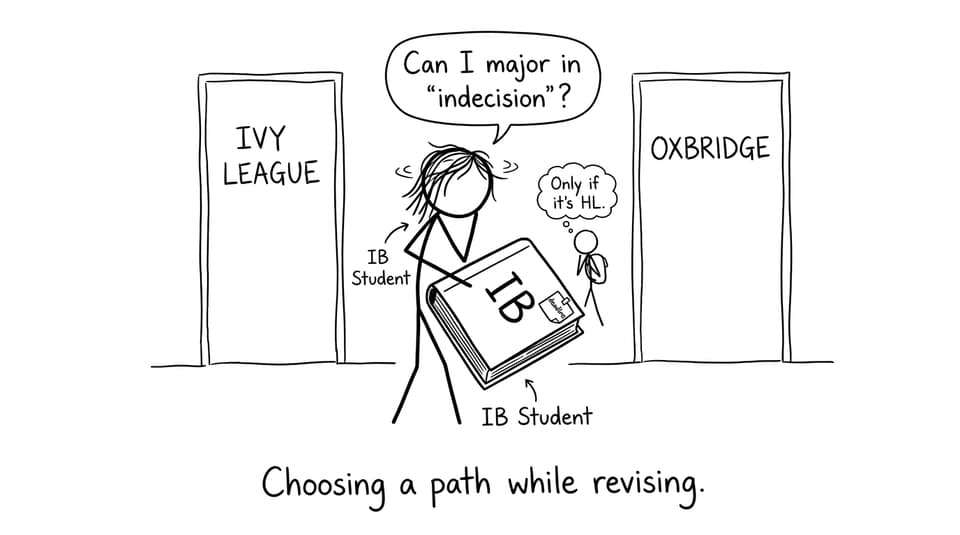
There’s a quiet moment most IB students recognize. You’re revising for exams, your tabs are multiplying, and suddenly someone asks: “So… Ivy League or Oxbridge?” It sounds like a compliment. It also feels like a trap.
Because the hard part isn’t figuring out which name looks better on a hoodie. The hard part is admitting what kind of learning energizes you, what kind of pressure sharpens you, and what kind of life you want on the other side of your IB exams.
Quick checklist for IB students deciding fast
Use this as your first filter (then go deeper):
-
Do you want breadth before specialization (Ivy) or depth from day one (Oxbridge)?
-
Do you perform best in writing-heavy holistic applications (Ivy) or academic interviews/tests (Oxbridge)?
-
Do you need strong financial aid options (often Ivy) or a shorter degree (often Oxbridge)?
-
Do you picture yourself working mainly in the US, the UK, or globally?
-
Can you keep IB exam preparation stable while juggling applications?
If you want to stabilize your revision while decisions pile up, build your routine around RevisionDojo for IB.
Admissions: holistic story vs academic proof
Ivy League admissions: “Who are you when nobody’s watching?”
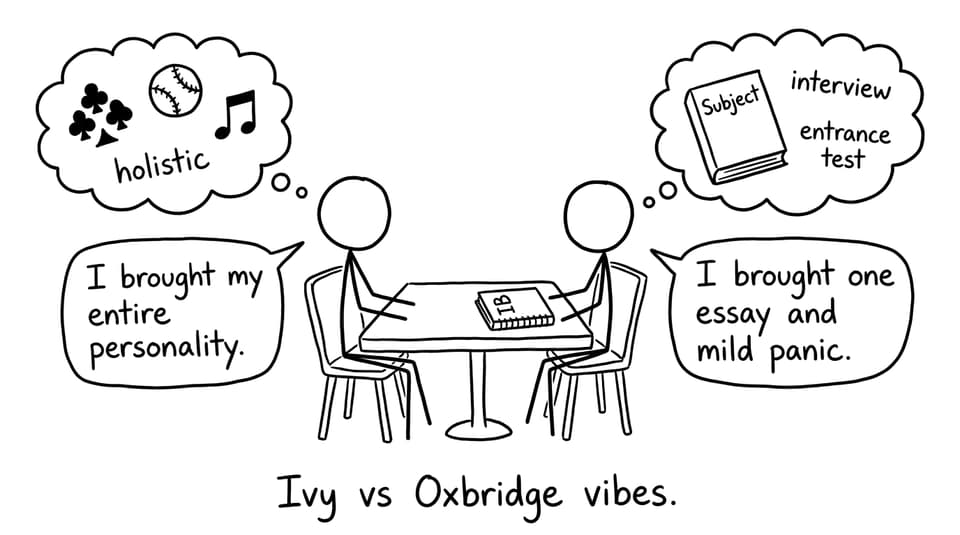
For many IB students, Ivy League applications feel like a portfolio of your whole life: grades, recommendations, essays, activities, impact, and fit. The point isn’t just that you can study hard. It’s that you can contribute in a distinctive way.
This is where consistent performance across your IB subjects matters, but so does your ability to explain your choices. If essays are your arena, your revision strategy should protect time for writing without letting exam readiness collapse. A reliable way to do that is to compress revision: use Digital IB Study Notes to learn faster, then drill weaknesses via the Questionbank.
Oxbridge admissions: “How well can you think in your subject?”
Oxbridge is more direct. You apply for a specific course. Your application revolves around academic fit: subject interest, evidence of super-curricular reading/thinking, predicted performance, and usually interviews and/or admissions tests.
That changes how IB prep should feel. You’re not only aiming for exam marks; you’re training how you talk and reason in your subject. After a tough concept, use Jojo AI Chat inside RevisionDojo to ask the kind of interview question that exposes gaps: “Why is this assumption valid?” “What would change if…?”
Academic structure: breadth vs specialization (and what that means for IB)
Ivy League: explore, then commit
The Ivy model often gives you more time to explore before choosing a major. That’s ideal if your IB subject mix reflects curiosity more than a single obsession. You can evolve.
Practical signal: if you love multiple areas and want room to pivot, the Ivy path fits that psychology.
Oxbridge: commit, then go deep
Oxbridge expects you to arrive ready to live inside one subject. Tutorials (Oxford) and supervisions (Cambridge) reward students who can read independently, write clearly, and defend ideas.
Practical signal: if your IB High Level subjects already point to one direction and you genuinely enjoy depth, Oxbridge can feel like relief: fewer distractions, more focus.
Teaching and assessment: continuous grind vs intense peaks
Ivy League courses often involve continuous assessment: papers, problem sets, participation, projects. Oxbridge often concentrates assessment more heavily, with intense independent work and high-stakes evaluation.
For IB students preparing for exams, this matters because it reveals your preferred stress pattern:
-
If you thrive on steady feedback loops, practice like that now: use the IB Flashcards with Spaced Repetition (SRS) daily, then add targeted practice.
-
If you do your best in high-intensity sprints, train stamina: sit timed sets using IB Predicted Papers or structured simulations like Online IB Mock Exams: Practice Anywhere, Anytime.
Cost, duration, and geography: the unromantic truth that decides a lot
-
Ivy League degrees are typically 4 years, with higher sticker prices but often stronger financial aid structures.
-
Oxbridge degrees are often 3 years (depending on course), with different funding realities for international students.
Location matters too. Networks tend to be strongest near where you study. If you want the US job market, Ivy connections can be a direct line. If you picture the UK/Europe (or international academia), Oxbridge can be a natural home.
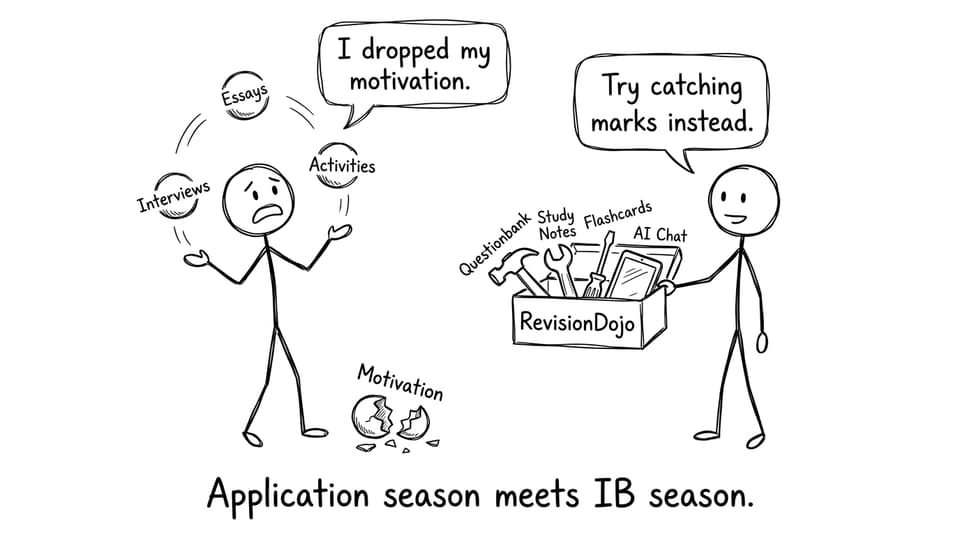
While you decide, keep IB marks predictable. The biggest application advantage is not a heroic last-minute surge. It’s steadiness you can prove.
Common mistakes IB students make (and how to avoid them)
-
Choosing prestige over fit. You’ll feel the mismatch by week three.
-
Underestimating Oxbridge intensity. If you dislike being questioned closely, interviews and tutorials may feel brutal.
-
Treating Ivy apps as a “side quest.” Holistic applications take time; protect your IB revision schedule.
-
Ignoring exam technique. Content knowledge isn’t enough. Use the workflow in IB Question Bank | How to Use It Effectively to turn understanding into marks.
Final thought: pick the path, then protect the IB foundation
Ivy League and Oxbridge both reward excellence. But they reward different kinds of excellence. Ivy League leans toward breadth, story, and community impact. Oxbridge leans toward depth, subject obsession, and intellectual stamina.
Whichever direction you choose, the most practical move right now is the same: keep your IB preparation calm, measurable, and repeatable. Build your system in one place, using RevisionDojo’s Questionbank, Study Notes, Flashcards, AI Chat, Grading tools, Predicted Papers, Mock Exams, Coursework Library, and Tutors. Then let your applications reflect a student who isn’t just ambitious, but ready.