

The moment you realize studying alone is expensive
Every IB student has a private myth: If I just sit with my notes long enough, it will click. Then a week passes. The same topic still feels slippery. Your motivation fades, and your “revision” starts to look like highlighting the same paragraph for the fifth time.
A good IB study group breaks that loop. Not by making studying more social, but by making your thinking visible. When someone asks, “Why?” you can’t hide behind familiarity. You either know it, or you learn it.
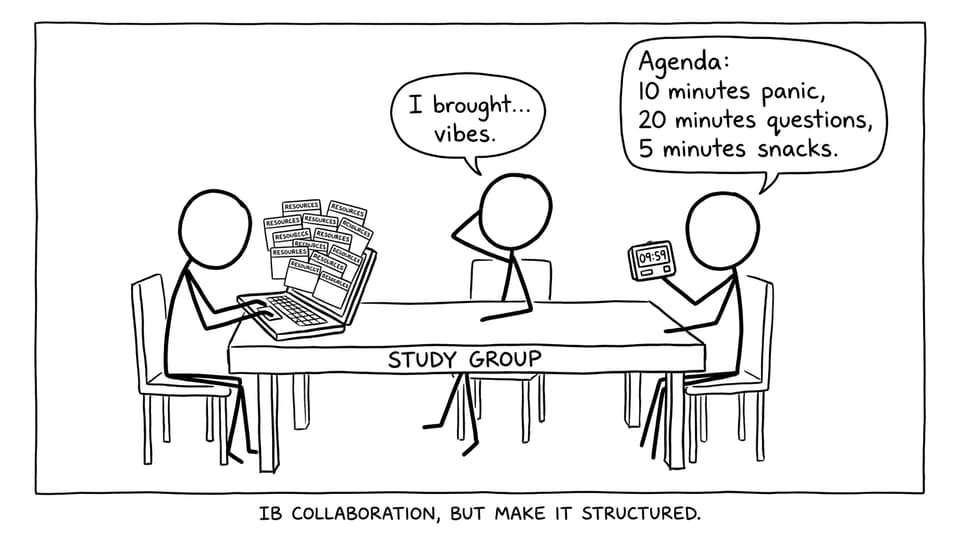
A quick checklist for an effective IB study group
Use this before you invite anyone:
-
Size: 3-5 students (small enough to stay sharp)
-
Goal: one topic, one paper skill, or one criterion per session
-
Roles: leader/timekeeper, explainer, skeptic, scribe (rotate weekly)
-
Materials: questions + markscheme logic, not just notes
-
Output: an error log, a mini-quiz, or a shared set of flashcards
If you want one “home base” for your group, start with the RevisionDojo for IB hub and agree on the same tools from day one.
Why collaborative learning works for IB (when it’s done right)
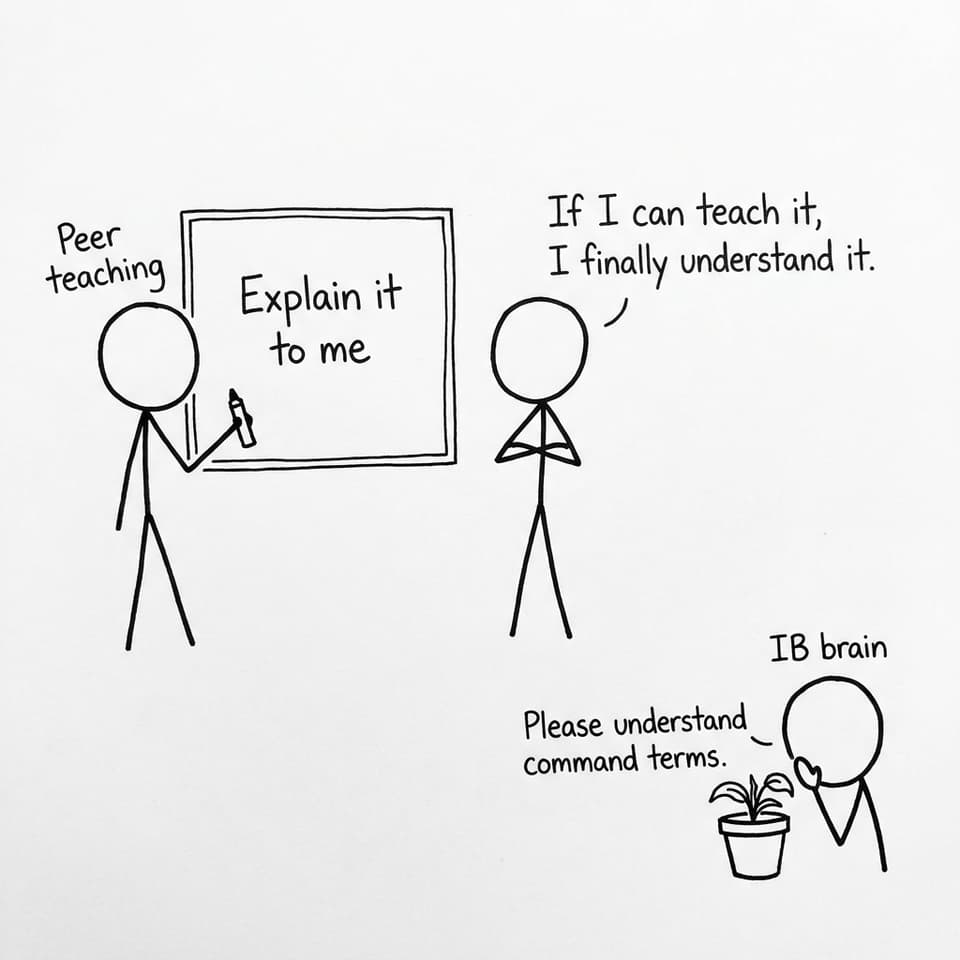
Peer teaching turns vague knowledge into usable knowledge
In the IB, understanding isn’t measured by how calm you feel reading. It’s measured by what you can produce under time. Explaining a concept forces you to choose words, sequence ideas, and connect cause and effect. That’s the difference between “I get it” and “I can score.”
To make peer teaching real, anchor it to something concrete: use a short section from Study Notes, then immediately switch to exam-style application with the Questionbank. Your explainer teaches for 6 minutes. Then everyone answers 3 questions on the same subtopic.
Diverse strengths stop you from revising randomly
A quiet truth about IB revision: most students keep revising what feels comfortable. In a group, someone inevitably says, “Wait, that’s not the command term,” or “That method won’t earn full marks.” Those interruptions are gold.
If your group spans subjects, even better. The student who’s strong in IB Maths can model structure and checking. The student who’s strong in IB Humanities can model evaluation and evidence. You’re borrowing mental habits, not just content.
Accountability is a force multiplier
A weekly meeting is a soft deadline. Not scary, just reliable. You show up with something prepared because you don’t want to waste your friends’ time. In IB, consistency beats intensity.
How to build an IB study group that doesn’t drift
Choose members by behavior, not just talent
Pick students who:
-
show up on time
-
are willing to be corrected
-
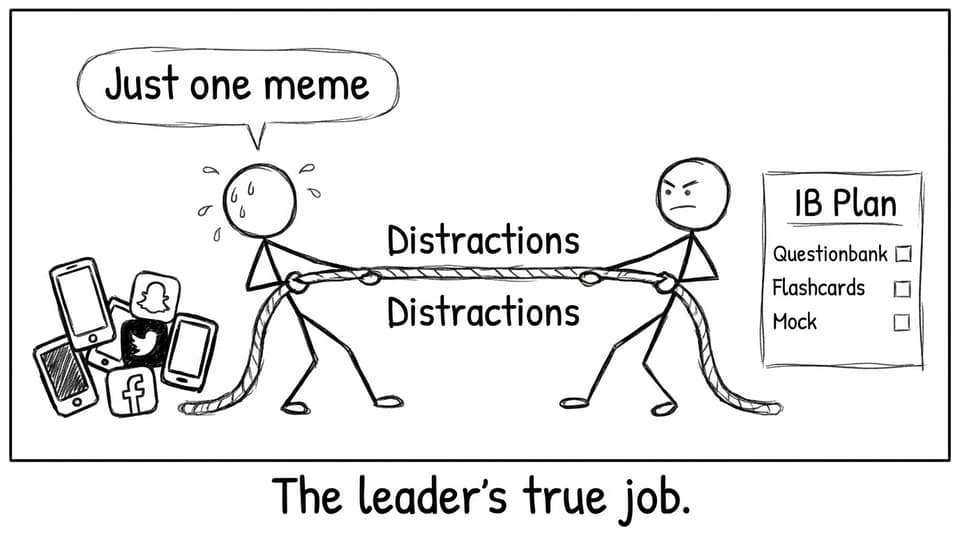
can focus for 25 minutes without checking their phone
Aim for balanced strengths, but prioritize good habits. A high-achiever who dominates the room can reduce everyone else’s learning. An average student who asks precise questions can raise the whole group.
Set expectations in writing (yes, really)
In your first meeting, agree on three rules:
-
Prep: everyone brings one question set, one confusion, and one “teach-back” point
-
Time: start and end on schedule
-
Proof: every session ends with an output (quiz, flashcards, error log)
For ready-made resources you can all use, share links like IB Flashcards with Spaced Repetition and decide which deck you’ll review before the next session.
A simple structure for high-output IB study sessions
Start with a “two-minute map”
One person summarizes the session goal in two minutes: “Today we improve Paper 2 evaluation,” or “Today we fix redox mistakes.” This prevents the classic IB group trap: talking about studying instead of studying.
Run the RevisionDojo loop together
A study group works best when it mirrors how marks are earned:
-
Clarify: use Digital IB Study Notes for fast, syllabus-aligned understanding
-
Apply: do a timed set from the Questionbank feature
-
Correct: use Jojo AI grading and feedback style review to find patterns
-
Retain: turn the mistakes into flashcards using the Flashcards feature
Once per week, add realistic pressure with IB Predicted Papers or a short timed block, then discuss decisions (what you skipped, what you spent too long on, where wording lost marks).
Assign roles that protect focus
Rotate these roles:
-
Timekeeper: enforces 25/5 focus blocks
-
Skeptic: asks “Where’s the evidence?” or “Is that actually what the question asked?”
-
Scribe: writes the shared error log and uploads key takeaways
Common IB study group problems (and fixes)
“We talk a lot, but my grade doesn’t move”
Fix: require a measurable output every session. One page of shared notes is not enough. You want marked questions, an error log, or a mini-quiz.
“One person is ahead and everyone else feels lost”
Fix: split into 2-minute micro-teaches. The advanced student teaches one slice, then everyone practices. If someone is still stuck, park it and use AI Chat later. RevisionDojo’s AI Chat and Grading tools are ideal for between-session unblocking, so group time stays for practice.
“We keep revising content but exam technique is missing”
Fix: schedule one weekly “exam rehearsal” meeting. Use Mock Exams and recovery strategies ideas: timed attempt, immediate review, then targeted drilling.
Conclusion: make your IB study group a system, not a hangout
The best IB study group isn’t built on motivation. It’s built on design: small membership, clear roles, timed practice, and honest feedback.
If you want your group to run smoothly, use RevisionDojo as the shared toolkit, Questionbank for exam-style practice, Study Notes for clarity, Flashcards for daily recall, AI Chat and Grading tools for feedback, and Predicted Papers plus Mock Exams for realistic rehearsal. Set your first meeting, pick one topic, and let the next 60 minutes create momentum you can actually measure.