


Your IA never feels like the biggest problem on Monday. Then it’s Thursday night, your exam calendar is screaming, and your IA document is still titled “Final_Final_v3”.
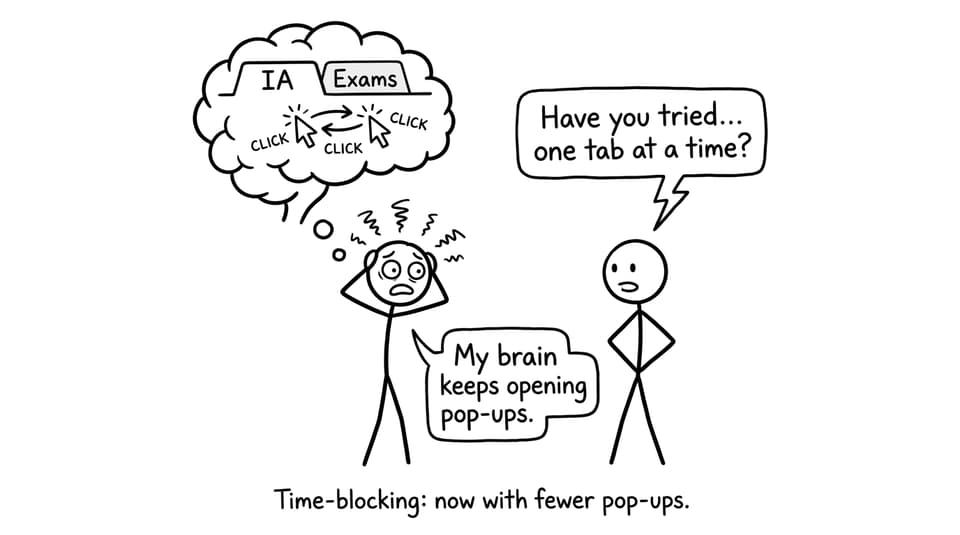
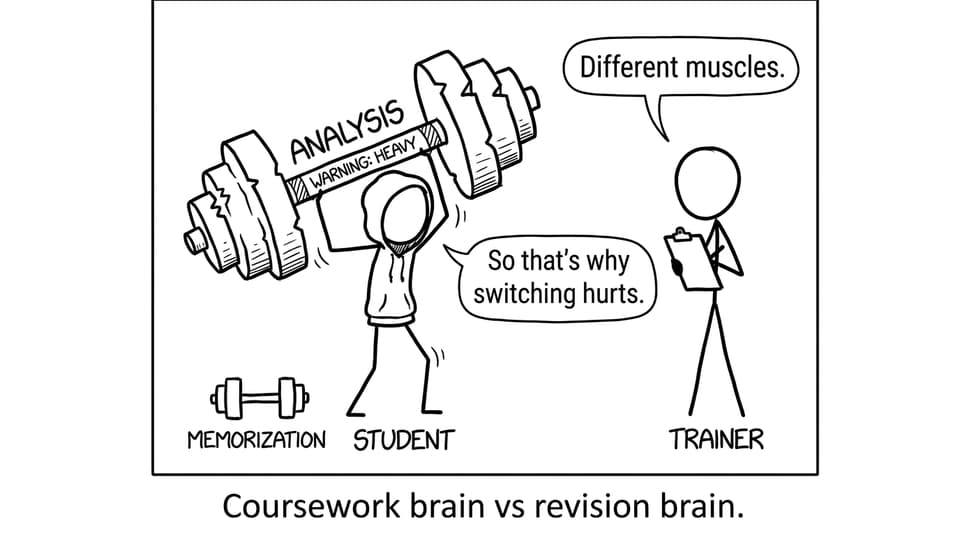
That tension is normal. The hard part of the IB isn’t just workload; it’s switching between IA thinking (slow, original, decision-heavy) and exam thinking (fast recall, repetition, timing). If you don’t build a system, your week becomes a series of emergency reactions.
The calm checklist for balancing an IA with exams
-
Lock one IA “next action” (not “work on IA”, but “write analysis paragraph for graph 2”).
-
Protect one daily exam “minimum viable revision” block.
-
Use time blocks to avoid constant context switching.
-
Align IA work with syllabus topics you’re revising anyway.
-
Accept uneven weeks, but keep the system running.
If you want a bigger coursework map, start with RevisionDojo’s Coursework Guides.
Why your IA keeps getting postponed (and how to fix it)
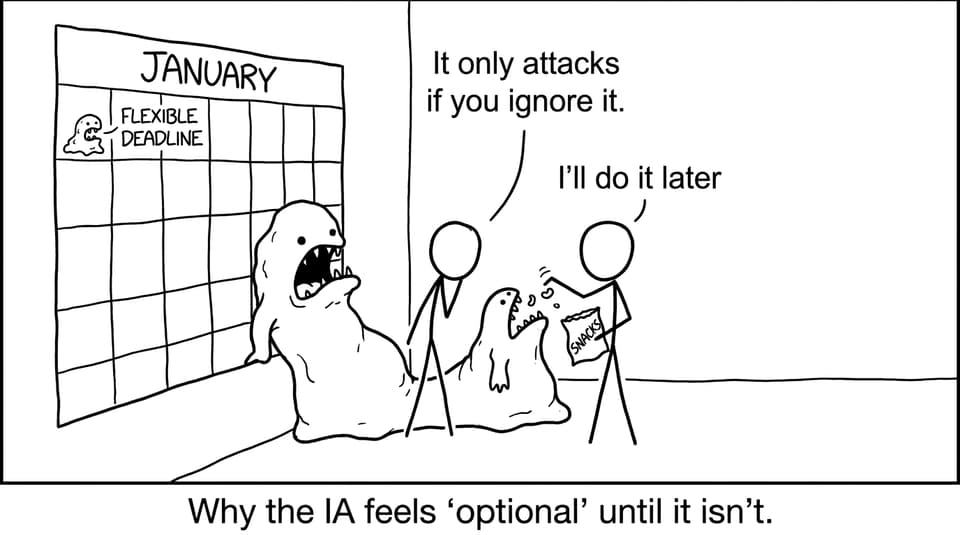
Exams feel fixed. An IA feels flexible. That “flexibility” is the trap: you subconsciously treat IA work like it can fit into leftover time. But leftover time in the IB is mostly crumbs.
Your fix is stage-based planning: treat your IA as a sequence of checkpoints, each with a clear output. RevisionDojo breaks this down well in How to Plan an IB IA Without Falling Behind. When your plan is built around stages (focus, evidence, analysis, evaluation, clarity), you stop relying on motivation.
Time-blocking that actually works for an IA and exam prep
The goal isn’t to “do everything every day”. The goal is fewer switches.
Try this simple weekly rhythm:
-
2 x IA blocks (60-90 min): one for analysis/evaluation, one for editing and criterion checks.
-
Daily exam baseline (30-45 min): flashcards + one short timed set.
-
One longer exam session (2-3 hrs): mixed practice under realistic timing.
On RevisionDojo, that baseline is easy to keep alive: use Flashcards for daily recall and the Questionbank for short timed practice sets. Your IA blocks can use AI Chat to get unstuck on the “what next?” moments without spiralling.
Make your IA reinforce exam revision (instead of competing)
A useful mindset shift: your IA is not “extra work” if it deepens the exact concepts you’re tested on.
Examples:
-
A science IA can sharpen data handling and evaluation language you’ll reuse in exam responses.
-
A humanities IA can strengthen argument structure, evidence selection, and critical reflection.
Use RevisionDojo’s Study Notes to quickly patch weak theory while you write, so your IA work doesn’t drift into confusion. And if you’re unsure what top-band work looks like, the IA Guides help you stay aligned with rubric expectations.
A final way to think about balancing your IA and exams
Balance isn’t equal progress every day. Balance is a plan you can return to when the week gets messy.
Give your IA two protected blocks. Keep exam revision alive with a daily baseline. Then use RevisionDojo to reduce friction: Questionbank for fast practice, Study Notes for quick clarity, Flashcards for recall, AI Chat for next steps, Grading tools for coursework feedback, plus Mock Exams and Predicted Papers to keep timing realistic.
If you want a clean starting point, begin with the RevisionDojo IA Guides and build your week around stages, not panic.


