


If you’ve ever walked out of an IB Math practice session thinking, “I understood it… but I couldn’t finish,” you’ve met the quiet conflict at the center of every high score.
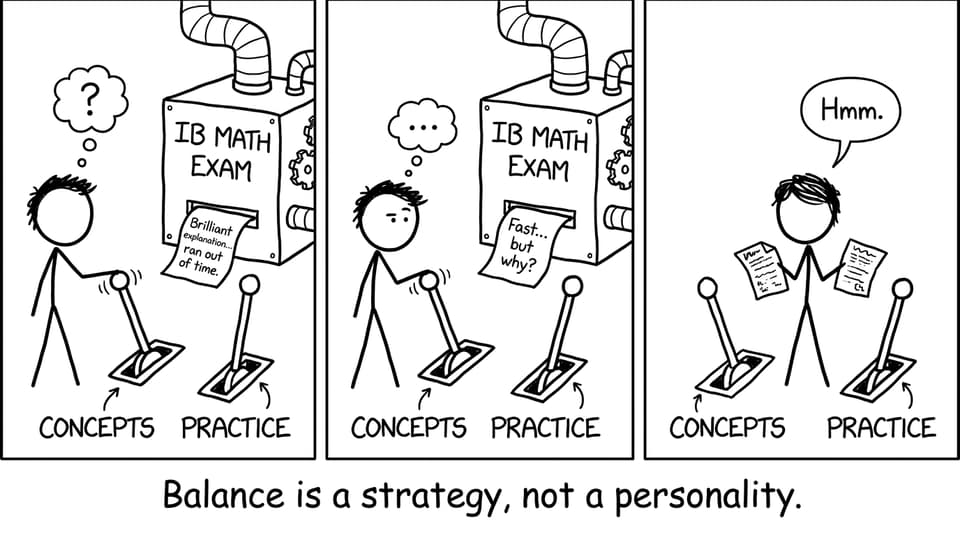
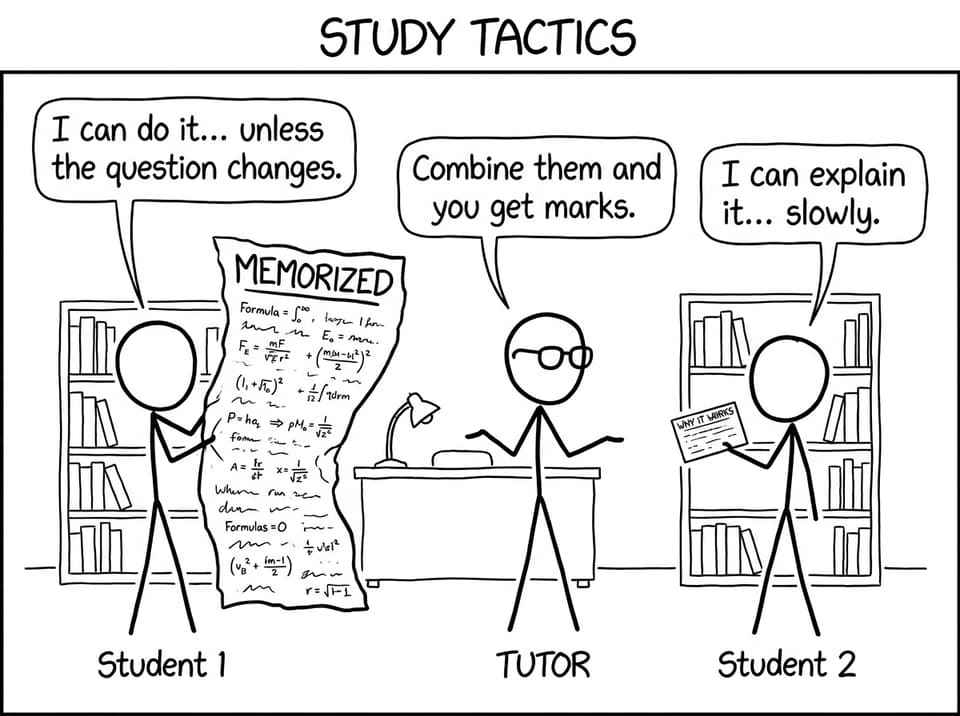
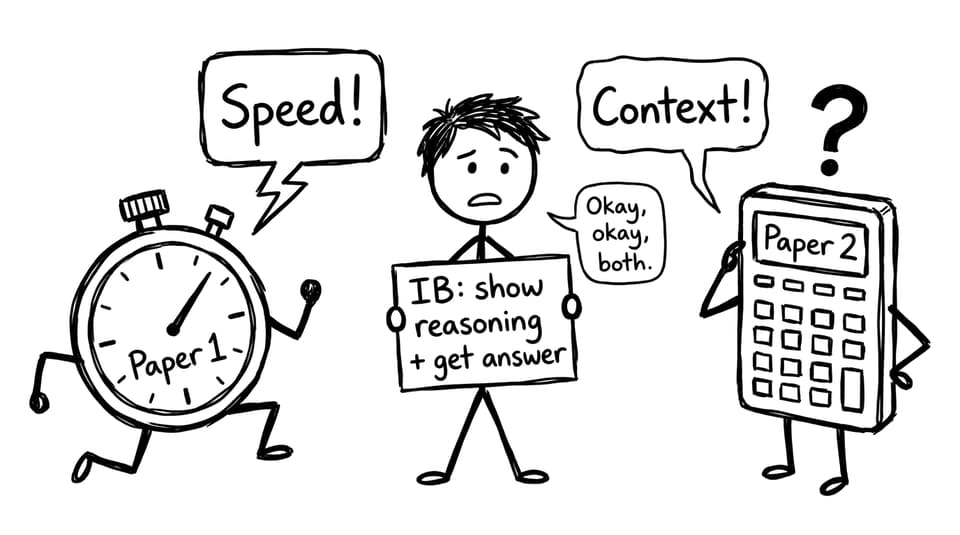
One side of you wants conceptual understanding: the calm, flexible ability to explain why a method works and adapt when the question changes shape. The other side wants applied skill: speed, accuracy, and the muscle memory to earn marks when the clock is loud.
The best IB students don’t pick a side. They build a bridge between them. This article shows you how to balance both in a way that feels sustainable, exam-realistic, and repeatable using RevisionDojo’s Study Notes, Questionbank, Flashcards, AI Chat, Grading tools, Predicted Papers, Mock Exams, Coursework Library, and Tutors.
The 10-minute IB balance check (do this before you revise)
Use this quick checklist to diagnose what you need today.
-
If you can’t start a question without looking up a method, you need more conceptual IB work (Notes + AI Chat).
-
If you know the method but make small errors, you need more applied IB work (Questionbank + feedback).
-
If you can do questions untimed but not timed, you need Mock Exams and pressure practice.
-
If you finish fast but lose marks for unclear steps, you need communication practice (solutions + Grading tools).
A good default loop is: Learn (concept) → Apply (questions) → Review (feedback) → Repeat (timed).
What “conceptual” and “applied” really mean in IB Math
Conceptual skill is the part of IB Math that lets you say:
-
“This is just a transformation of a function, so the domain changes like this.”
-
“This probability model fits because the trials are independent.”
-
“This calculus step works because of what the derivative represents.”
Applied skill is the part that lets you do it cleanly, under time pressure:
-
select the right method quickly
-
set up the correct algebra without drifting
-
manage calculator steps (where relevant)
-
write working that earns marks, not just answers
In both AA and AI, the exam rewards students who can recognize the idea and execute it reliably. The difference is emphasis: AA tends to lean more toward abstract reasoning, while AI tends to lean more toward modelling and interpretation. Either way, IB asks you to do both.
For structured coverage, start from your course hub: IB Mathematics Analysis and Approaches Resources and the main International Baccalaureate (IB) hub.
The “Concept → Apply” rhythm that makes IB Math stick
A small story you’ll recognize: you watch a solution video (or read a worked example), nod along, and feel confident. Then you open a new question and freeze. That isn’t laziness. It’s a missing step.
In IB revision, understanding becomes usable only after you apply it immediately, while the idea is still warm.
Here’s a practical structure:
Build the concept in 7 minutes
Use RevisionDojo’s notes to get the “why” without drowning in detail. If you’re AI-focused, pair concepts with real interpretation early. If you’re AA-focused, translate the idea into a few sentences you could write in an exam.
A great companion technique is the 15-minute review framework here: How to Review Each IB Math Topic in 15 Minutes.
Apply it in 20-30 minutes
Immediately do targeted questions from the RevisionDojo Questionbank (same topic, mixed difficulty). The goal is not volume for its own sake. The goal is to force your brain to recognize the concept in different disguises.
To set this up properly, use: How to Use the Questionbank for Targeted Math Revision and the feature overview: Questionbank.
How to train conceptual IB skill (without “just rereading”)
Conceptual strength in IB Math comes from active understanding, not passive exposure.
Use short explanations you can actually write in the exam
After each topic, write a 3-sentence “exam explanation”:
-
What is the object? (function, distribution, derivative)
-
What does it mean? (interpretation)
-
When do I use it? (trigger conditions)
Then turn those sentences into Flashcards so they show up again when you’re about to forget them.
Ask better questions with AI Chat
When you’re stuck, don’t ask “How do I do this?” Ask:
-
“What’s the fastest way to recognize this question type in IB?”
-
“What assumption am I making here?”
-
“What would a markscheme want to see written?”
That’s exactly where RevisionDojo’s AI Chat is most useful: it keeps you moving without turning your session into a 40-minute detour.
Use Notes as a map, not a home
If you want a clear system for using Notes efficiently across subjects, this helps: IB Subject Note Collections: Comprehensive Study Materials and Digital IB Study Notes: Access Anywhere, Anytime.
How to train applied IB skill (so marks show up on exam day)
Applied skill is built through repetition with feedback, plus a gradual increase in pressure.
Practice variety, not sameness
Within one topic, mix:
-
“straight method” questions
-
“interpretation” questions (especially in AI)
-
“twist” questions where the same concept appears with unfamiliar numbers, contexts, or steps
You can find topic-specific practice like calculus sets inside AA here: AA Calculus Questionbank or geometry sets here: AA Geometry & Trigonometry Questionbank. If you’re AI, you can drill core areas here: AI Number and Algebra Questionbank.
Add time pressure in layers
Don’t jump from untimed practice to full papers overnight. In IB prep, pressure should be trained like a skill.
-
Weekdays: 15-25 minute timed sets
-
Weekends: one longer timed session using Mock Exams or Predicted Papers
For a sustainable schedule, use: How to Study for IB Mocks (Without Burning Out).
The mistake review that keeps IB balance stable
Most students think they have a “math problem.” Often they have a review problem.
After each session, label every mistake as one of these:
-
Concept gap: you didn’t know what idea was being tested
-
Setup gap: you knew the idea but couldn’t translate it into steps
-
Execution gap: algebra, calculator, or arithmetic errors
-
Communication gap: unclear working, missing justification, or incomplete conclusion
Then match the fix:
-
Concept gap → Study Notes + AI Chat + 2 Flashcards
-
Setup gap → 3 similar Questionbank items + rewrite one full solution
-
Execution gap → slow practice + check steps + Grading tools feedback
-
Communication gap → compare your wording to markscheme logic and practice writing cleaner lines
This is where RevisionDojo’s connected system matters: Questionbank gives the repetition, Grading tools help you see how marks are awarded, and Tutors can step in when a pattern won’t budge.
Closing: make IB Math feel predictable
IB Math gets easier when it stops feeling like a personality test (“am I a concepts person or a practice person?”) and starts feeling like a system.
Build the bridge: conceptual clarity from Study Notes and AI Chat, applied fluency from the Questionbank, and exam calm from Mock Exams and Predicted Papers. Then use Flashcards, Grading tools, the Coursework Library, and Tutors to keep the loop tight when life gets busy.
If you want one simple next step: pick one topic today, learn it quickly, apply it immediately, and review your mistakes like an IB examiner would. Do that often enough, and “balance” stops being advice and becomes your default.