


If you have ever listened back to your draft and thought, wait… why does this sound familiar? you are not alone. In IB Music, plagiarism rarely arrives with dramatic intent. It shows up quietly, in a copied sentence from a journal article, a melody that leans too hard on a favourite track, or a DAW loop you barely touched because the deadline was loud.
The good news: avoiding plagiarism in IB Music is less about fear and more about building a system. Once your process is honest and well-documented, your work becomes calmer to submit, and easier for examiners to trust.
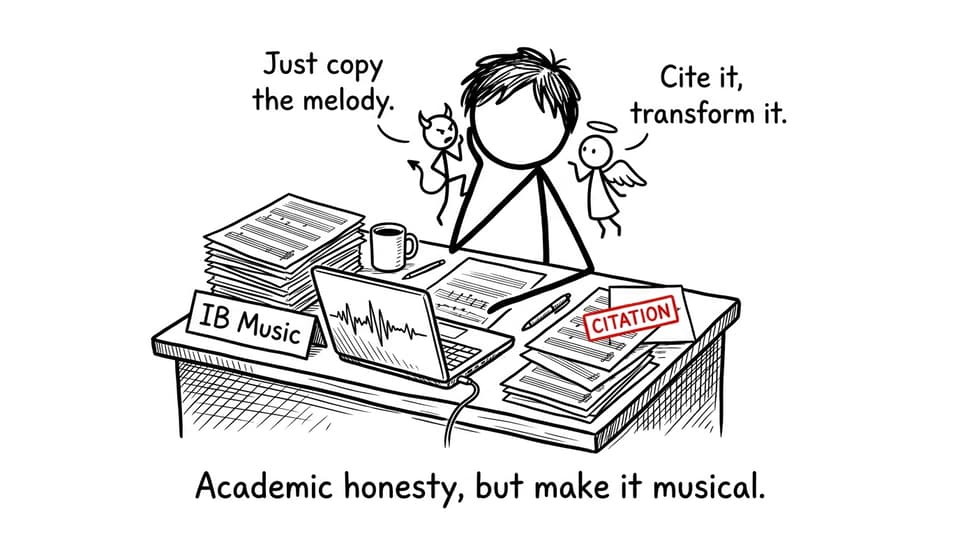
A quick checklist to avoid plagiarism in IB Music
-
Track every source while researching (book, article, score, recording, website).
-
Quote sparingly, paraphrase thoughtfully, and cite both.
-
Keep an influence log for every composition or arrangement.
-
Transform borrowed musical ideas (not just tempo or instrumentation).
-
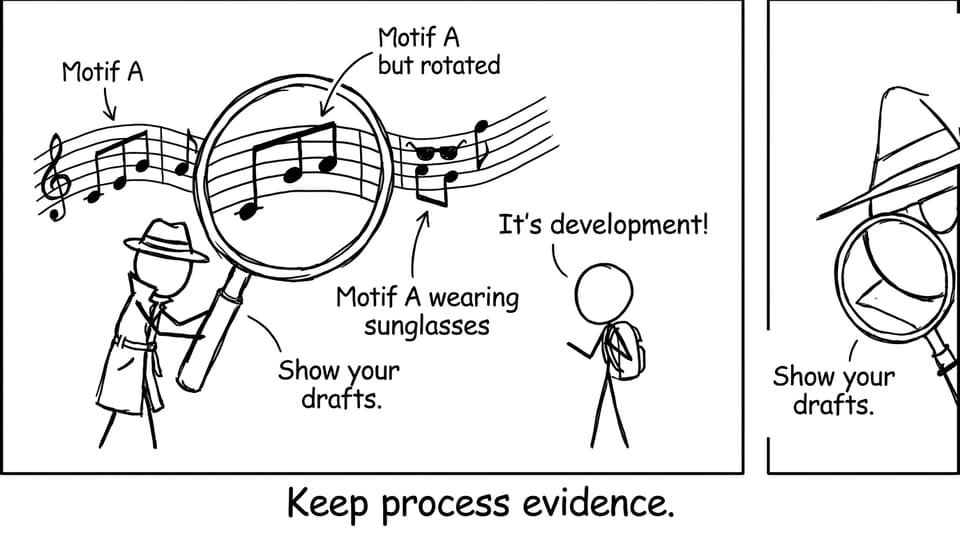
Save drafts: screenshots, MIDI versions, audio bounces, sketches, rehearsal clips.
-
Use technology and AI like a coach, not a ghostwriter.
For the broader rules behind this, it helps to read IB academic misconduct explained alongside your music-specific planning.
What plagiarism looks like in IB Music (it is not only text)
In IB Music, plagiarism can happen in two lanes:
Written research and reflection
-
Lifting analysis or phrasing from program notes, study guides, or articles.
-
Paraphrasing so closely that the sentence structure stays the same.
-
Using a specific idea (for example, a scholar’s interpretation) without credit.
If you need a reliable framework for referencing, keep how to cite sources correctly in your IA open while you write.
Musical creation and production
-
A melody, riff, bassline, or hook that is recognisably “the same song.”
-
Harmonic progressions copied without development and presented as original.
-
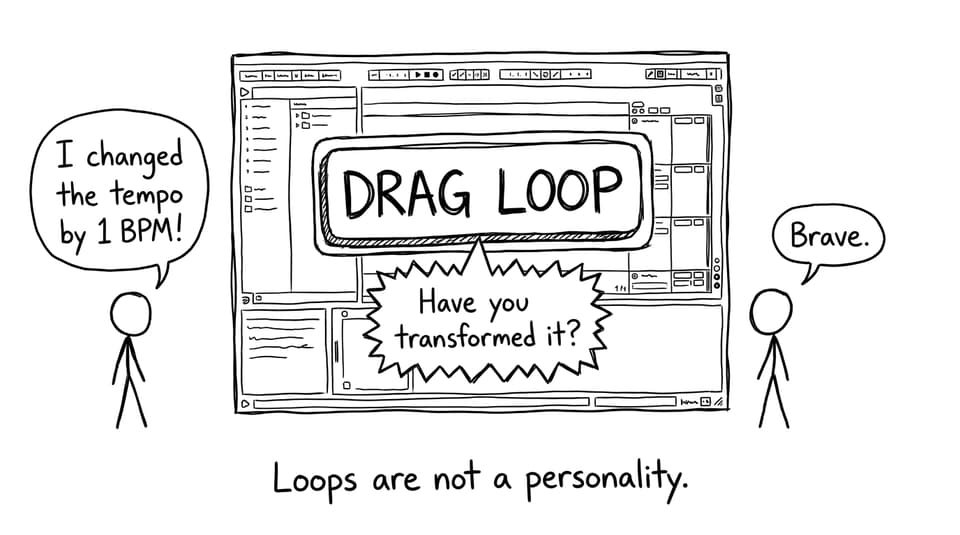
Stock loops and samples used with minimal change and no acknowledgment.
-
Submitting work created by someone else (including uncredited AI output).
RevisionDojo expands this ethical angle in integrity in IB Music: original composition and ethical performance, which is worth skimming before you finalise your portfolio.
How to cite research without ruining your writing voice
A common fear in IB Music is that citations will make your reflections sound stiff. They will not, if you treat them like stage directions: quiet, precise, and placed where they matter.
-
Use quotation marks only when the wording itself is essential.
-
Paraphrase by changing both wording and structure, then cite the source.
-
Cite recordings and scores too, not only articles.
For a deeper routine, 10 best practices for citing sources properly in IB EE and IA translates well to IB Music reflections and investigations.
How to stay original in IB Music composition (while still having influences)
No examiner expects you to compose in a vacuum. They expect you to show your work.
Here is a safe mindset: influence is allowed; imitation without transformation is risky.
Try this three-step “transform and explain” method:
Choose influences on purpose
Pick one or two clear reference points (a texture, form, rhythmic idea, production style). If you are unsure how wide your musical world can be, start with what is the IB Music course? a complete beginner’s guide.
Transform the material
Transformation looks like:
-
Reharmonising a motif into a different harmonic language.
-
Changing metre, phrase length, or contour (not just transposing).
-
Re-orchestrating with new counterpoint or texture.
-
Combining two influences into something neither source contains.
Write an honest program note
Say what influenced you and what you changed. Examiners reward clarity. If you want a criteria-focused view, read what examiners look for in IB Music compositions.
The simplest plagiarism shield: keep process evidence
When students get flagged, it is often because the final product appears from nowhere. In IB Music, your drafts are your credibility.
Save:
-
Early motif sketches (photo or scan).
-
MIDI exports and project versions.
-
Rough bounces labelled by date.
-
Listening notes with timestamps.
-
Short reflections after each session.
If you need a routine that makes this automatic, best study routines for IB Music coursework deadlines shows how to build weekly habits that produce evidence naturally.
Use tech and AI responsibly in IB Music
DAWs, notation software, and AI tools can support your learning, but IB Music still needs to sound and read like you.
-
If you use loops, edit and develop them, then acknowledge their role in your notes.
-
If you use AI, use it for planning, explanation, and feedback, not final assessed text or music.
RevisionDojo’s guidance in can you use AI tools for IB work without getting penalized? is a practical reference when you are unsure.
Closing: make your IB Music work easy to trust
The goal is not to sound like nobody else. The goal is to make your originality visible. In IB Music, that visibility comes from citations, honest influence notes, and a trail of drafts that shows your thinking.
If you want a cleaner way to build that trail, RevisionDojo helps you stay organised and examiner-aligned with its Study Notes, Flashcards, Questionbank, AI Chat, and rubric-aware Grading tools (including music rubrics). Add Mock Exams, Predicted Papers, a Coursework Library, and support from Tutors, and you get a system that rewards learning, without cutting corners.
Keep it original. Keep it documented. And let your IB Music portfolio sound like you.