
In IB Biology, genome organization is one of those topics that seems “obvious” until an exam question asks why a bacterium can respond in minutes while a human cell needs layers of permission slips.
A helpful way to remember it is this: prokaryotes treat DNA like a pocket notebook you can grab instantly. Eukaryotes treat DNA like an archived library, protected, indexed, and carefully controlled. Same goal (store information), very different systems.
IB Biology quick checklist: what examiners want you to compare
Use this IB Biology checklist to structure any “compare prokaryotes and eukaryotes” response:
-
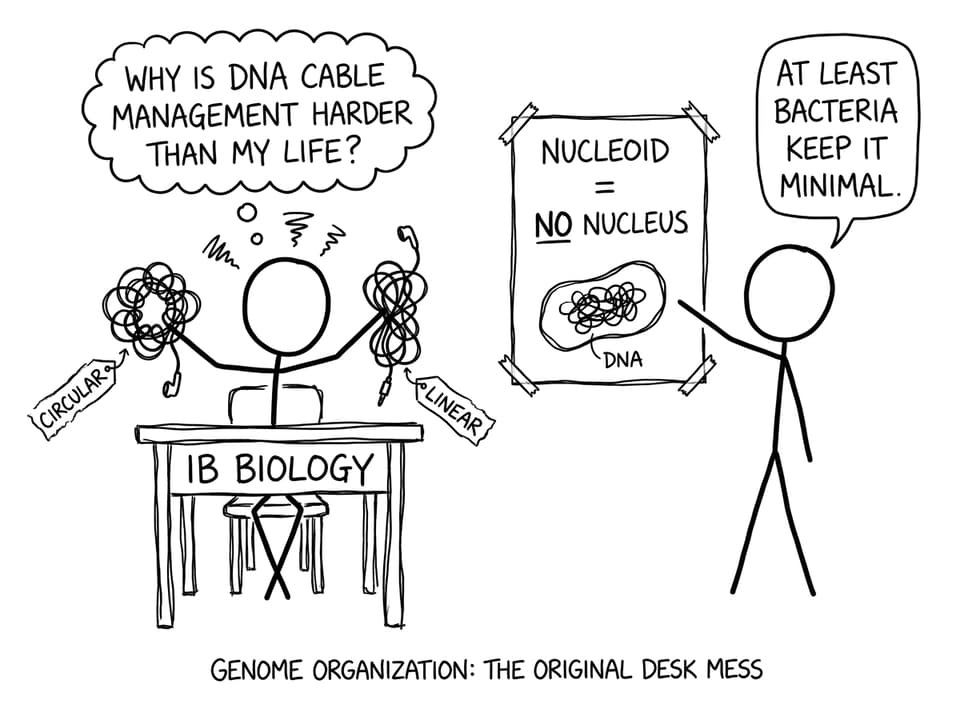
Chromosome shape: circular vs linear
-
Location: nucleoid (no nucleus) vs nucleus
-
Packaging: minimal proteins vs histones and chromatin
-
Extra DNA: plasmids common vs organelle DNA (mitochondria/chloroplasts)
-
Non-coding DNA: low vs high (regulatory + repetitive)
-
Gene expression timing: coupled vs separated with checkpoints
-
Division: binary fission vs mitosis/meiosis
For cell structure context, pair this with IB Biology Topic A2.2: Cell Structure.
Prokaryotic genome organization: fast, compact, and practical
Prokaryotes (bacteria and archaea) typically store most genetic information in one circular chromosome sitting in the nucleoid region. No nuclear envelope means the DNA is physically close to ribosomes.
That proximity matters for IB Biology: transcription and translation can happen at the same time. As soon as an mRNA strand is made, ribosomes can start translating it. This is one reason prokaryotes can adapt quickly.
Prokaryotic genomes are also compact. There’s relatively little non-coding DNA, and genes are often arranged to reduce wasted space and time.
Plasmids: the “bonus content” DNA
Many prokaryotes also carry plasmids, small circular DNA molecules with extra genes. These often code for traits that help survival (for example, antibiotic resistance or new metabolic pathways). In exam answers, plasmids are a great detail to show precision.
If you want a strong gene regulation example, connect genome organization to operons: How Operons Regulate Prokaryotic Genes.
For quick recall practice, use Flashcards for A2.2.5 Prokaryote cell structure - IB.
Eukaryotic genome organization: protected, packaged, and controllable
Eukaryotic genomes are usually larger and split across multiple linear chromosomes stored inside a nucleus. That separation creates an important IB Biology theme: more protection, but also more regulation.
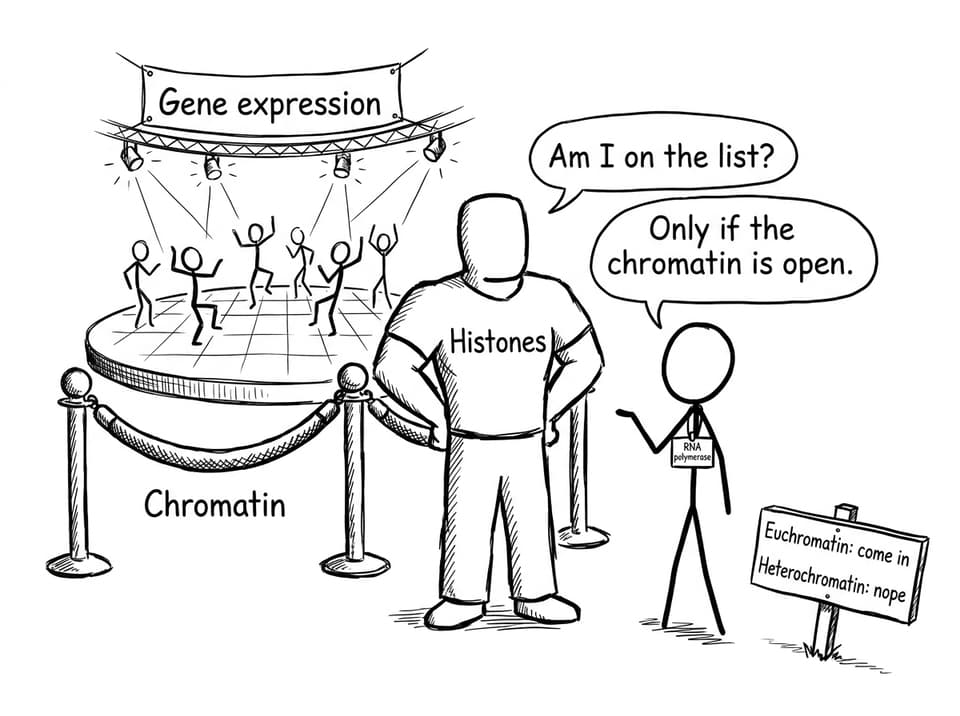
Eukaryotic DNA wraps around histone proteins to form chromatin. Packaging solves a physical problem (fitting DNA into the nucleus) and a biological one (controlling gene access). If a gene is tightly packed, it’s harder to transcribe. If it’s loosened, it’s more available.
To reinforce the “why,” read B2.2.2 Advantage of the separation of the nucleus and ... and, for HL depth, Notes for A1.2.13: Structure of a nucleosome (HL only) - IB.
Non-coding DNA: not “useless,” just not protein-coding
A classic IB Biology trap is calling non-coding DNA “junk” without nuance. Eukaryotes carry lots of non-coding regions, including sequences involved in regulation (enhancers/promoters), spacing, and chromosome structure, plus repetitive DNA.
For syllabus-aligned examples on genome size differences, see Notes for A3.1.9 Diversity of eukaryote genomes - IB.
Replication and division: speed vs coordination
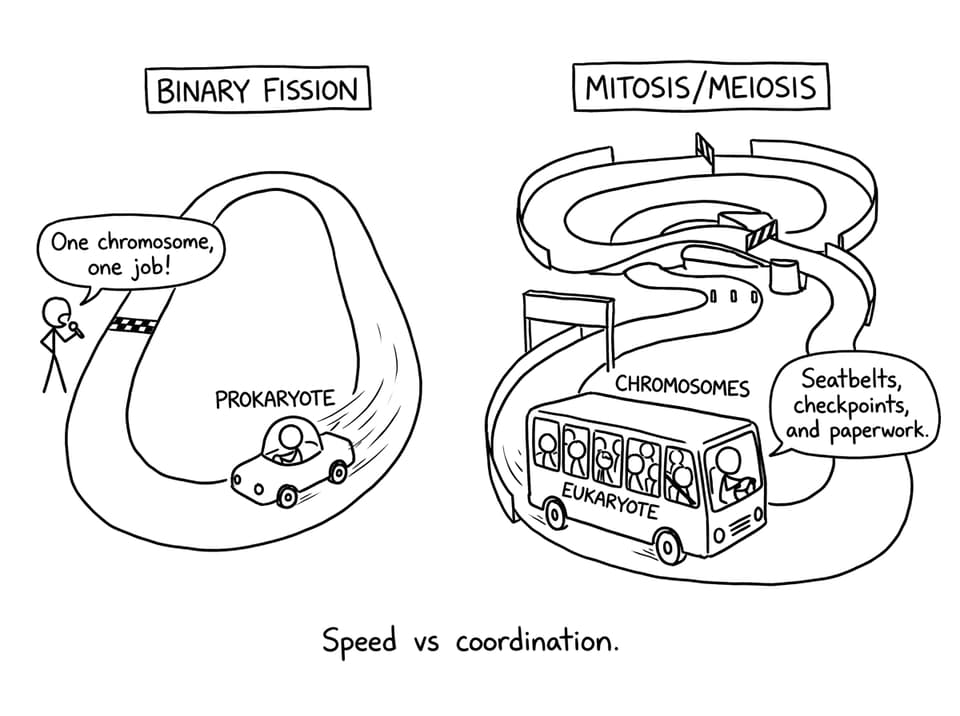
Prokaryotes usually replicate DNA and divide via binary fission, which is efficient because the genome is smaller and typically has a simpler organization.
Eukaryotes divide using mitosis (growth/repair) and meiosis (gametes). Because they’re moving multiple linear chromosomes, the process includes more checkpoints and machinery.
If you’re revising cell division as a linked concept, use D2.1 Cell and nuclear division Notes.
Bring it together with RevisionDojo
If IB Biology genome organization feels like a list of facts, you’re not alone. The turning point is practicing how those facts become explanations: speed vs control, coupling vs separation, compact vs regulated.
RevisionDojo helps you make that shift with exam-style practice in the Questionbank, crisp Biology Cheatsheets: Visual Study Guides, targeted Study Notes, Flashcards, AI Chat for “why” questions, and Grading tools to refine your wording. Add Predicted Papers, Mock Exams, the Coursework Library, and Tutors when you want full exam-condition confidence.
When you can explain how prokaryotic vs eukaryotic genome organization shapes gene expression and division, IB Biology stops being memorization and starts becoming logic.