

Choosing a university can feel like a family decision. But for an IB student preparing for exams, it often lands differently: one more high-stakes conversation added to a week already packed with deadlines, revision, and self-doubt.
Here’s the quiet truth many teens won’t say out loud: pressure usually isn’t created by one intense talk. It’s created by the feeling that every talk has a hidden outcome. That they’re being measured. That love is conditional on the “right” choice.
This guide is for parents who want to help without squeezing. And it’s also for IB students preparing for exams who want language and structure for those conversations, so university planning doesn’t become another stress test.
A quick IB checklist: guidance without pressure
If your household needs a simple rulebook, start here. This checklist keeps university choices supportive while protecting IB exam momentum.
-
Agree on a weekly “admin window” (30--45 minutes) for university planning.
-
Use questions that create clarity, not verdicts.
-
Talk about fit before prestige.
-
Make practical constraints transparent early (budget, distance, visas).
-
Keep the IB plan stable: small daily recall + targeted practice + one timed session weekly.
-
Build decisions from evidence (research, visits, conversations), not anxiety.
A surprisingly effective move: write these rules down and stick them on the fridge. The rules reduce mind-reading, which reduces stress.
Why IB students feel pressured (even when parents mean well)
Pressure is often accidental. Parents bring care; teens receive stakes.
The pressure of being “watched”
In the IB, students already feel assessed constantly: predicted grades, criterion language, teacher feedback, and comparison with peers. When university talk carries an implied “we’re evaluating you,” even supportive parents can unintentionally trigger defensiveness.
The pressure of timing
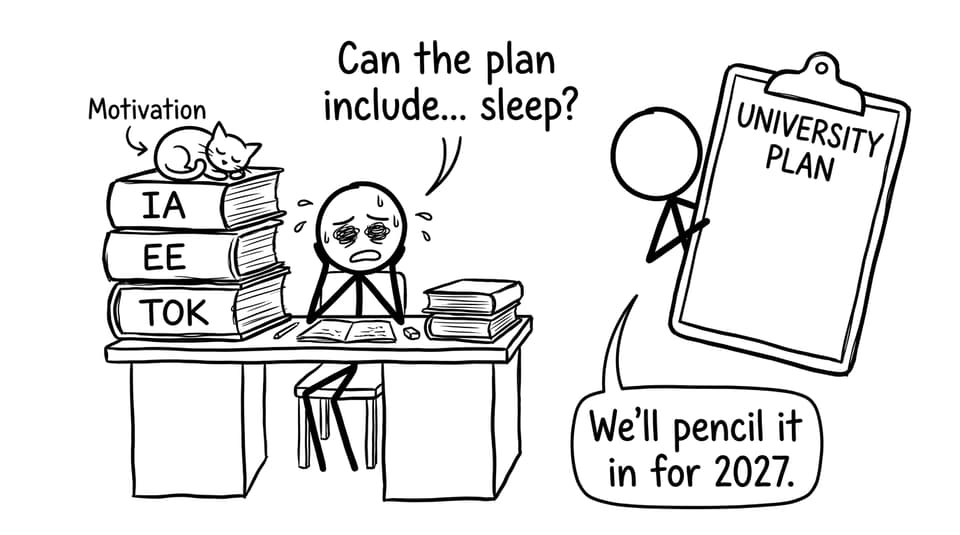
University planning competes with the most demanding parts of IB life: IAs, TOK, the EE, and exam preparation. When choices stack on top of academic load, teens don’t just feel busy. They feel like they’re failing at everything at once.
The pressure of identity
Many teens don’t have a stable answer to “Who am I?” yet. Asking them to pick a university can feel like asking them to lock in an identity permanently. In IB exam season, that can be terrifying, because uncertainty already feels like danger.
How parents can guide university choices without pressure (IB parent guide)
This is the heart of the IB parent guide: supportive structure, low emotional temperature, high clarity.
Listen first, then mirror back what you heard
Parents often want to be helpful by offering solutions quickly. Teens often need to feel understood before they can think clearly.
Try a simple pattern:
-
Ask: “What matters most to you right now?”
-
Reflect: “So you want a place that feels supportive, not overwhelming.”
-
Clarify: “What would ‘supportive’ look like day to day?”
This sounds small. But it signals respect, and respect makes honesty possible.
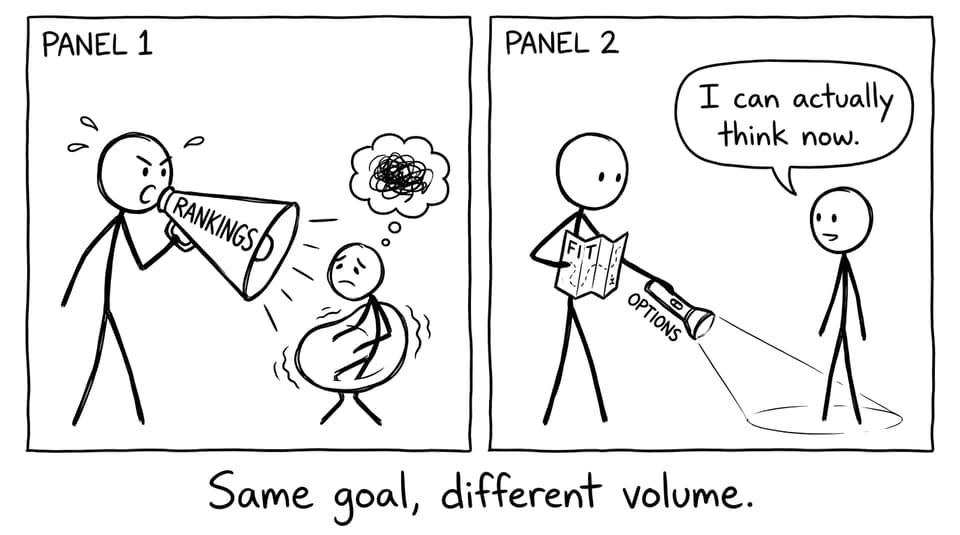
Frame the decision as “fit,” not “rankings”
Prestige is seductive because it looks like certainty. But for an IB student preparing for exams, certainty is already scarce. That’s why ranking talk can become emotional so quickly.
Shift the conversation:
-
Fit for learning style (discussion-heavy vs lecture-heavy).
-
Fit for pace (intense competition vs collaborative culture).
-
Fit for support (advising, mental health services, international student help).
-
Fit for life (city size, climate, distance, cost).
When parents consistently say “fit,” teens learn they won’t be punished for choosing what actually suits them.
Offer resources, not directives
A directive sounds like: “Apply here.”
A resource sounds like: “Here are three ways to explore; pick one.”
If you’re an IB student preparing for exams, resources also reduce decision fatigue because they narrow the next step.
Useful resource moves include:
-
“Let’s book one campus tour this month.”
-
“Want to talk to someone who studies that course?”
-
“Let’s compare two programs side-by-side on one sheet of paper.”
And when academic stress rises, keep the study side simple and evidence-based. RevisionDojo is built for exactly that kind of calm structure: Study Notes, Flashcards, and the Questionbank for daily momentum, plus AI Chat, Grading tools, Predicted Papers, and Mock Exams when performance needs to become measurable.
You can start from the central hub: RevisionDojo for IB.
Make the practical constraints explicit early
Parents worry about cost and safety. Teens worry about being controlled. The solution is transparency without ultimatums.
Try:
-
“Here’s the budget range. Let’s see what scholarships could change.”
-
“Distance matters to me. Tell me what you’re imagining, and we’ll plan around it.”
-
“If you want to apply abroad, let’s list the extra steps together.”
The tone is collaborative: “We’re solving a problem,” not “I’m shutting you down.”
Protect exam season with boundaries that feel fair
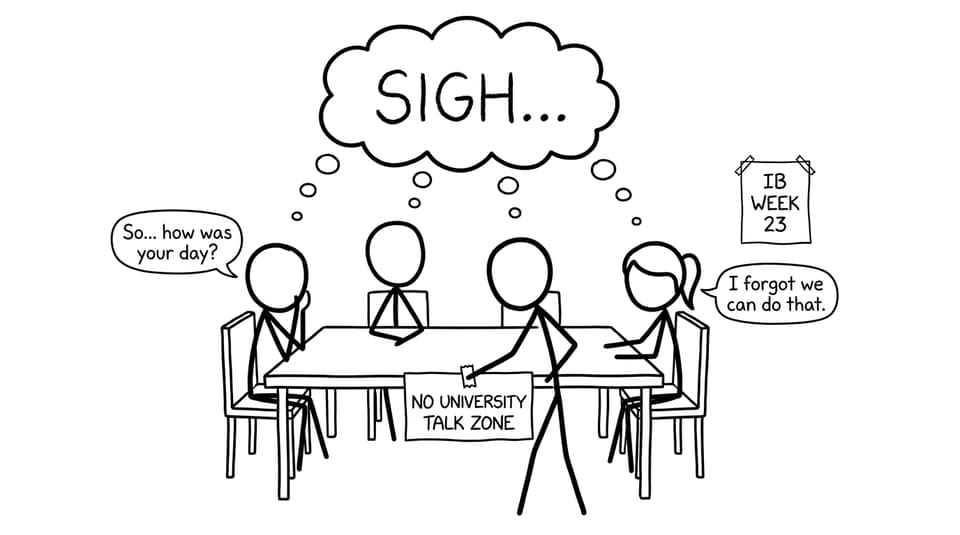
If you want one tactic that lowers household stress immediately: create a “university talk schedule.”
For example:
-
One planning block per week (Sunday afternoon).
-
No surprise university debates on school nights.
-
No “just one quick question” right before bed.
This matters because IB exam prep improves when revision is predictable. A strong weekly rhythm is easier with tools that reduce planning friction: daily practice sets in the Questionbank, short recall sessions with IB Flashcards, and a once-a-week rehearsal using IB Predicted Papers.
Common parent mistakes that quietly add pressure
These habits often come from love, but they land like weight:
-
Turning curiosity into interrogation (“So what’s your top choice today?”).
-
Comparing to other students (“Your friend already knows their major.”).
-
Treating university as a verdict on parenting.
-
Making every conversation about outcomes instead of process.
-
Adding more “help” when the teen is already overloaded.
A calm alternative is process talk: “What’s the next small step?” That language is friendly to both university planning and IB revision.
If you’re an IB student preparing for exams and you feel swamped, sharing one clear study plan can reduce family anxiety too. These guides help:
A closing note for IB families
The healthiest university conversations don’t feel like a negotiation. They feel like two people standing on the same side of the table, looking at the same map.
If you’re a parent, your strongest move is not controlling the outcome. It’s protecting your teen’s ability to think: calm questions, clear boundaries, practical transparency, and steady encouragement.
If you’re an IB student preparing for exams, remember this: your future isn’t decided by one application, and it definitely isn’t decided by one tense dinner conversation. Keep your week anchored in small, repeatable actions: recall with Flashcards, practice with the Questionbank, and build confidence with Predicted Papers and Mock Exams.
When you want everything connected in one place, RevisionDojo is built to support the full IB journey: Questionbank, Study Notes, Flashcards, AI Chat, Grading tools, Predicted Papers, Mock Exams, Coursework Library, and Tutors. Start here: RevisionDojo for IB.