
A quick story your examiner would approve of
On the first hot day of revision season, you notice two “students” in nature doing very different things. A lizard flattens its body on a warm rock like it owns the place. Nearby, a plant closes tiny pores to stop losing water. Neither looks dramatic. But both are making the same quiet decision: survive today so reproduction is possible tomorrow.
That is the heart of IB Biology ecology and evolution questions. When the environment pushes, organisms respond through adaptations shaped by natural selection. Some adaptations are visible (structure). Others happen inside the body (function). In exams, the difference matters, but so does how they work together.
Exam checklist: what to say in IB Biology answers
Use this quick structure whenever you see “adaptation” in IB Biology:
-
Name the selective pressure (heat, drought, predation, salinity).
-
Identify the type: morphological (structural) or physiological (functional).
-
Explain the advantage in survival and/or reproduction.
-
Add one specific example and link it to fitness.
For syllabus-aligned practice, start with B4.1 Adaptation to environment and the matching B4.1 notes.
Morphological adaptations: survival you can point to
Morphological adaptations are physical traits that change how an organism meets the world. In IB Biology, think “shape, surface, covering, or structure.”
A classic example is insulation: thick fur in Arctic mammals reduces heat loss, increasing survival in low temperatures. Another is water access: long root systems in desert plants increase surface area for uptake, improving the chance of maintaining turgor and growth.
Camouflage is the sneaky version of structure. Color patterns that match a habitat reduce detection by predators or prey, shifting survival odds even when everything else stays the same.
To tighten your examples, borrow syllabus language from B4.1.2 Adaptations of organisms to the abiotic environment and connect them to abiotic factors.

Physiological adaptations: survival that happens backstage
Physiological adaptations are internal processes: metabolism, osmoregulation, gas exchange control, and enzyme function. In IB Biology, these often score well because they show mechanism.
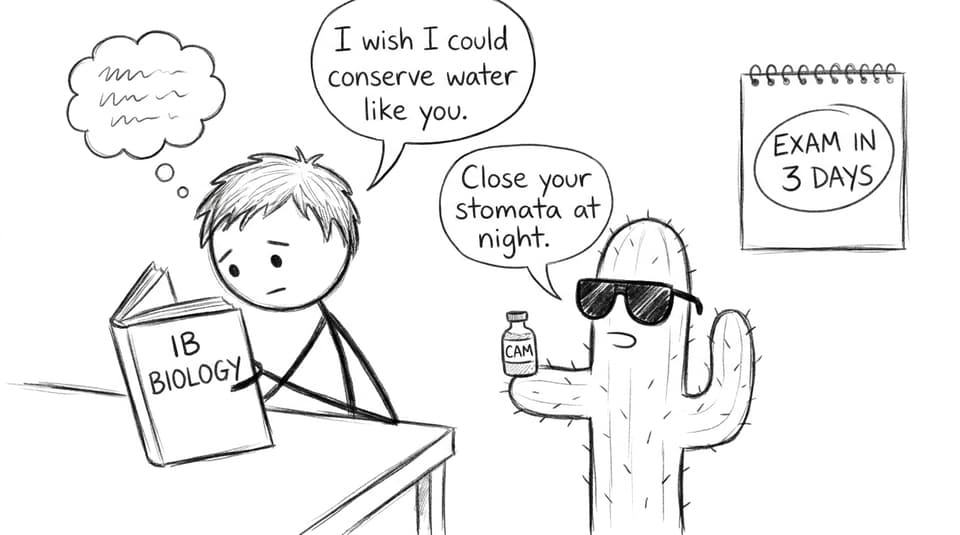
A desert animal conserving water by producing highly concentrated urine is a straightforward example: it reduces water loss while maintaining homeostasis. Plants regulating stomata to balance CO₂ uptake with transpiration is another: closing stomata limits water loss, but also affects photosynthesis rate.
You can also zoom into transport and exchange. Many features that look “structural” are paired with physiological outcomes. For a sharp cross-topic link, see Adaptations to increase surface area-to-volume ratio notes and explain how surface area supports diffusion and uptake.
The highest-mark idea: many adaptations come as a package
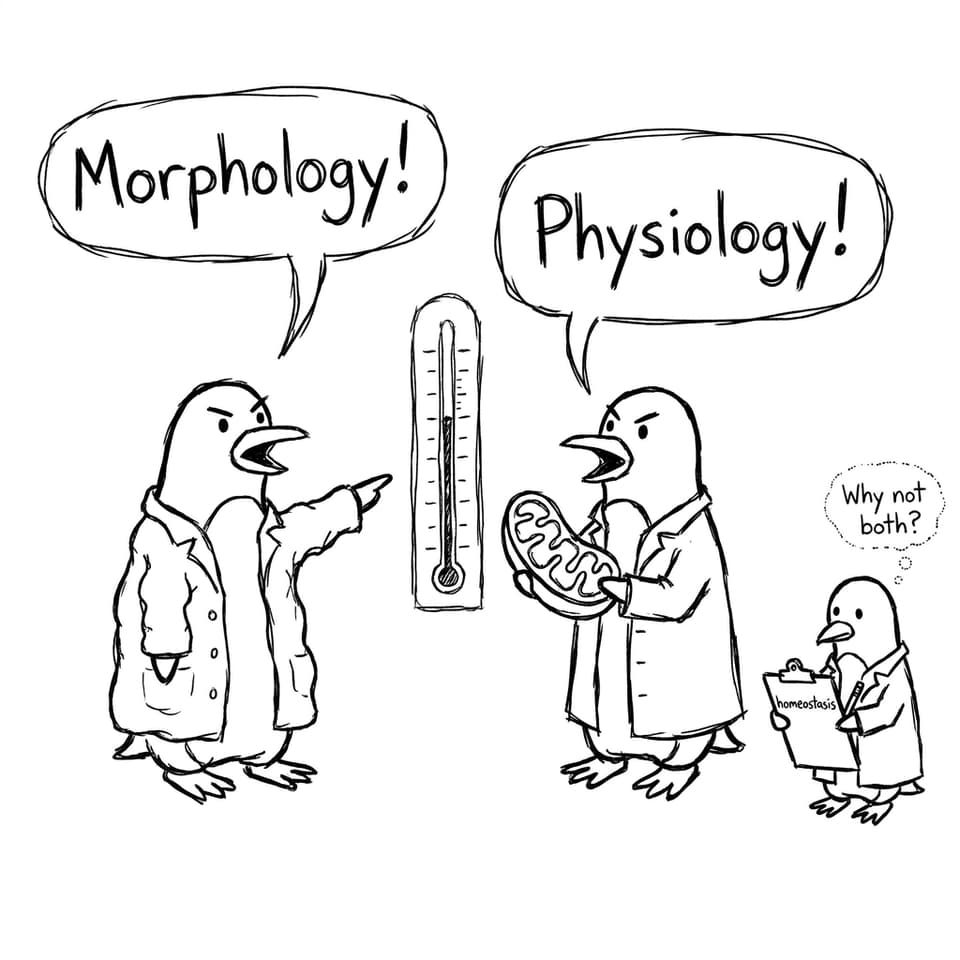
Strong IB Biology responses often show that structure and function cooperate.
A camel’s hump is morphological (fat storage). Using that fat for energy and producing metabolic water is physiological. Together, they reduce dependence on frequent drinking and improve survival in arid habitats.
Plants with thick cuticles (morphological) limit evaporation, while CAM-like timing of gas exchange (physiological) further reduces water loss. When you explain the combo, you’re basically describing how natural selection favors integrated solutions.
For broader evolution context, connect adaptations to selection pressures using D4.1 Natural selection and extend to changing environments with Evolution as a consequence of climate change (HL).
How RevisionDojo helps you practice this fast
When adaptations blur together in your head, practice fixes it. RevisionDojo’s IB Biology resources hub ties everything to the syllabus, and the B4.1 Questionbank lets you drill exam-style prompts with markscheme-aligned explanations.
If you want a broader strategy for exam practice, use IB Question Bank | How to Use It Effectively and then build a timed set with RevisionDojo’s Questionbank, Flashcards, Study Notes, AI Chat, and Grading tools. Add Predicted Papers and Mock Exams later to stress-test your recall.
Final takeaway
In IB Biology, adaptations are not just “cool features” to memorize. They are explanations for why some organisms persist when conditions get harsh. Learn to label morphological vs physiological, tie each to a pressure, and show the survival advantage. Then practice until it feels automatic.
If you want the fastest path to that confidence, use RevisionDojo’s B4.1 notes, Flashcards, and Questionbank to turn adaptation examples into exam-ready sentences, and keep your marks consistent when it matters.