


If you have ever walked into a language class expecting a tidy list of verb endings and walked out debating identity, media, and culture, you have already felt the difference.
In the MYP, Language Acquisition is not built like a staircase of grammar rules. It is built like a bridge. You are expected to cross from “knowing about a language” to “using a language to do something real,” even when your vocabulary still feels small. That can be disorienting at first, especially if you have experienced more traditional language programs where progress looks like memorise, test, repeat.
For IB students preparing for exams, understanding how MYP language acquisition differs matters because it changes how you revise. You do not just practise words. You practise decisions: purpose, audience, register, cultural context, and the criteria you will be assessed against.
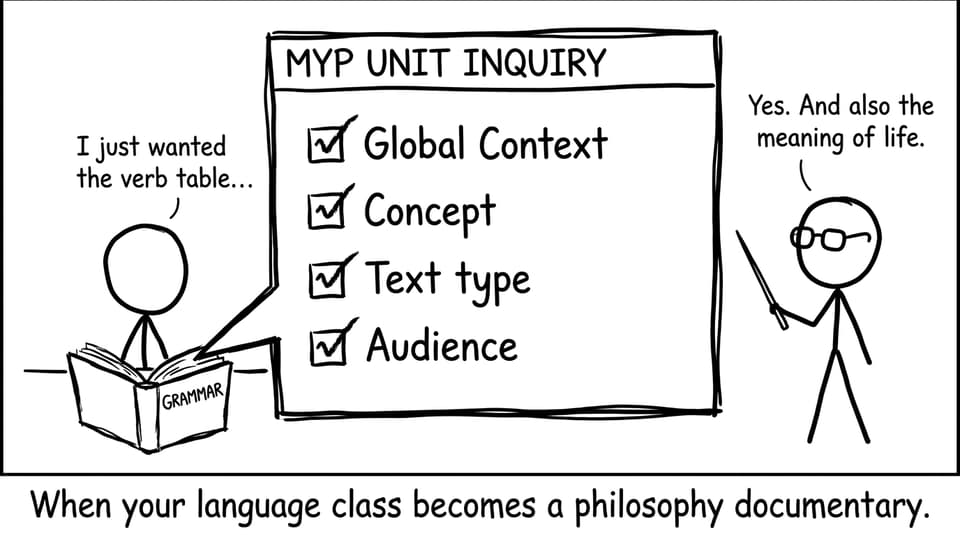
Quick checklist: the MYP differences to watch for
Use this as a fast lens before you revise any MYP language task:
-
Is the goal communication (message first) rather than perfect accuracy (rule first)?
-
What is the inquiry question or conceptual focus driving the unit?
-
Which Global Context is shaping the unit’s themes?
-
Which MYP criteria (A-D) will be used to grade the task?
-
What phase (1-6) expectations apply to your level?
-
What evidence will show cultural understanding, not just vocabulary knowledge?
If you want a broader picture of how the programme is designed, start with the Middle Years Program (MYP) hub and the IB MYP FAQ guide.
What Language Acquisition is trying to do in the MYP
Many language courses treat language as a subject you “complete.” The MYP treats language as a capability you grow. The point is to become a communicator who can function in real contexts, with real constraints.
That subtle shift explains why MYP tasks often feel more like life than like worksheets: a blog post, a campaign, a dialogue, a guide for new students, a response to a video, a scripted oral. In other programs, these might be “extra.” In the MYP, they are the main path.
If you want a detailed strategies piece that matches this approach, see Language Acquisition in IB MYP: Winning Strategies.
MYP vs traditional programs: what actually changes in class
Communication first, grammar as support
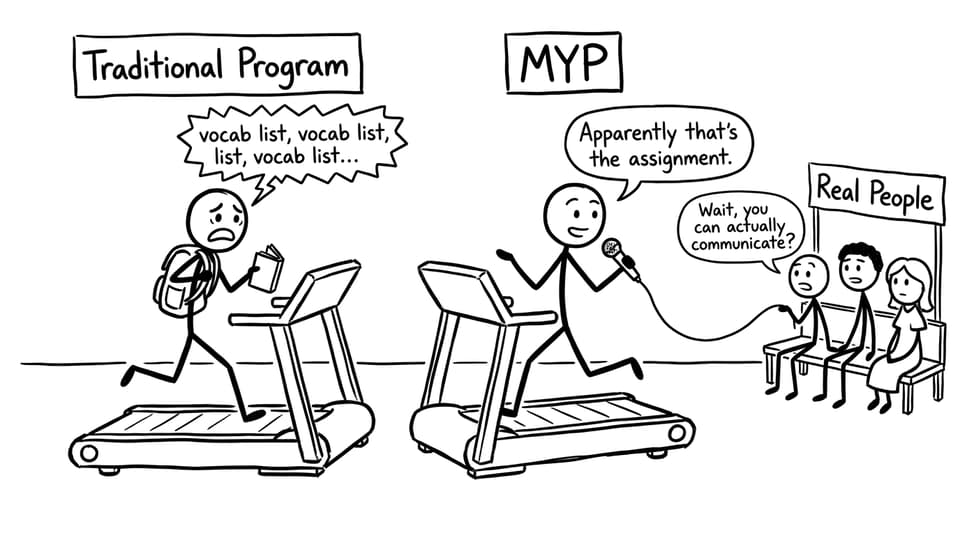
In many traditional programs, grammar is the syllabus. Vocabulary is the fuel. Communication is the reward you might get later.
In the MYP, communication is the syllabus. Grammar and vocabulary are still taught, but they are treated as tools you select to make meaning clearer. That means you can earn strong marks even while you are still imperfect, as long as your message is purposeful and your choices fit context.
For exam prep, this is huge: revise in chunks of meaning (opinions, comparisons, justifications, narrating events) rather than isolated word lists. Use grammar to sharpen what you already want to say.
Inquiry changes the way you practise
A traditional course might ask: “Can you use the past tense?”
A MYP unit might ask: “How does language shape identity?” or “How does media influence meaning?” The grammar shows up, but inside a bigger question.
This inquiry approach helps you build transfer. Instead of being good at one chapter, you get better at handling unfamiliar prompts because you have practised thinking, not just repeating.
To see how inquiry themes connect across the programme, revisit the IB Learner Profile traits developed in MYP.
Global Contexts make language feel “about something”
In many programs, culture is a short sidebar. In the MYP, culture is part of the engine.
Units connect to the six Global Contexts, which means your reading, writing, speaking, and listening are often tied to big human themes: identity, fairness, sustainability, expression, innovation, history.
That is why a MYP language task can feel like a humanities discussion with vocabulary constraints. If you want to understand the contexts quickly, read Six Global Contexts in IB MYP: Real-World Applications and, for project alignment, MYP Personal Project Global Contexts Explained.
Phases 1-6 create a different progression
Traditional programs often move as a class: Chapter 1, Chapter 2, Chapter 3.
The MYP uses phases (typically 1-6) so students can enter at a level that reflects what they can actually do. That makes the pathway more flexible and, ideally, more humane.
For revision, phases matter because they clarify what “good” looks like for you right now. If you are early phase, your goal is not to sound like a native speaker. Your goal is to communicate clearly with appropriate structures for your stage.
Assessment is the biggest difference (and the best revision clue)
The fastest way to misunderstand MYP Language Acquisition is to revise as if your score is mostly about correctness. It is not.
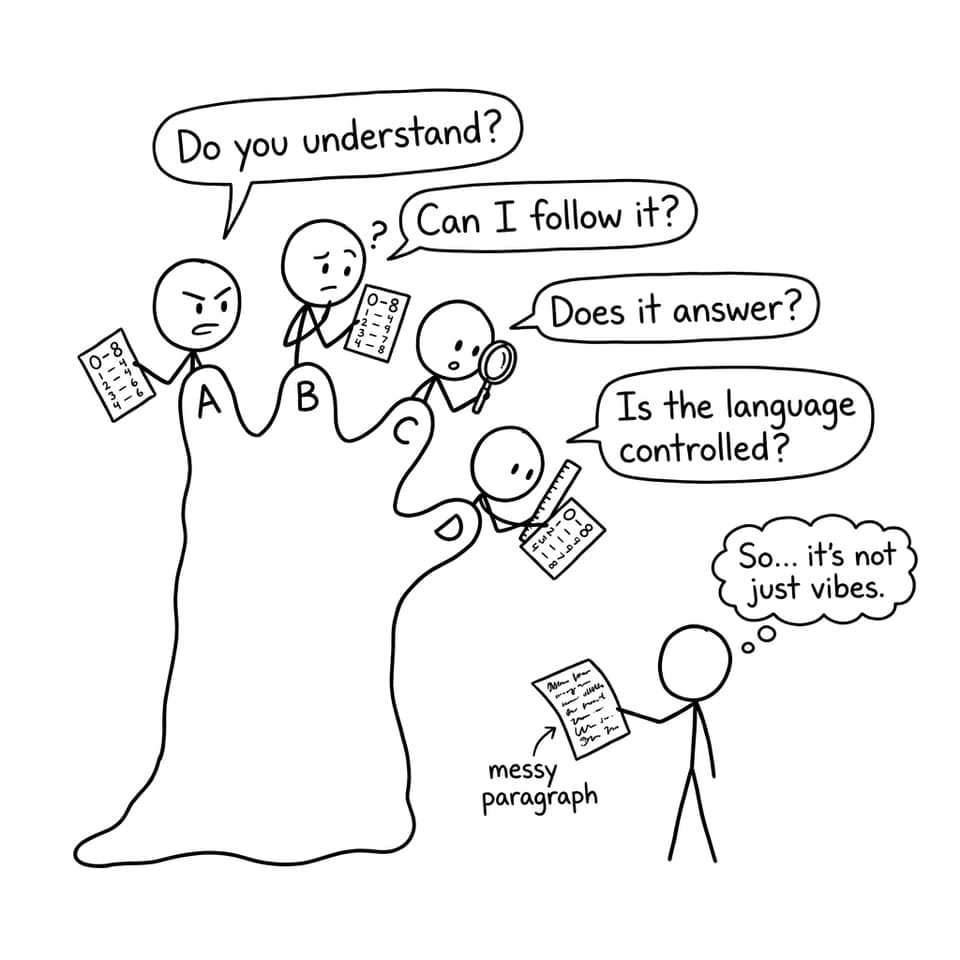
In the MYP, language tasks are graded through four criteria (commonly labelled A-D). The exact descriptors come from the subject guide, but the big idea is consistent: comprehension, response, production, and control.
Here is the mindset shift: you are not trying to “get everything right.” You are trying to produce evidence that matches the criterion descriptors.
For a grading overview, see How Are IB MYP Students Graded? Criteria Explained and, for broader assessment practice, Sample MYP Assessment Tasks for Every Subject Group.
How to revise MYP Language Acquisition like an exam student
This is where MYP becomes a real advantage. Because the programme is criteria-driven, you can build a predictable practice loop.
Build a criteria-first routine
Try this weekly structure:
-
One comprehension session (audio + short written): summarise, then answer in full sentences.
-
One production session (writing): choose a text type, set a timer, write, then improve.
-
One speaking session: record 60-90 seconds, listen back, rewrite a better version.
-
One review session: update your personal error log and convert repeat mistakes into Flashcards.
To plan your final month, you can borrow the pacing logic from MYP eAssessments: 30-Day Study Plan That Works.
Use RevisionDojo as your MYP language practice loop
RevisionDojo works best when it feels like a closed circuit:
-
Study Notes to clarify the idea behind a task quickly
-
Flashcards to keep high-utility phrases alive (connectors, opinion frames, register shifts)
-
Questionbank to practise under variety and pressure, not just familiarity
-
AI Chat to unblock confusion and generate targeted prompts (without losing an hour)
-
Grading tools to get rubric-aligned feedback on writing and speaking scripts
-
Mock Exams to train pacing and stamina
-
Predicted Papers to simulate full exam conditions where available
-
Coursework Library to see what strong work looks like, especially for format and tone
-
Tutors when you need a human to diagnose your pattern and reset your plan
If you want to centralise practice, start with the RevisionDojo Questionbank and explore the wider workflow via RevisionDojo App: The Smarter Way to Prep for IB Exams.
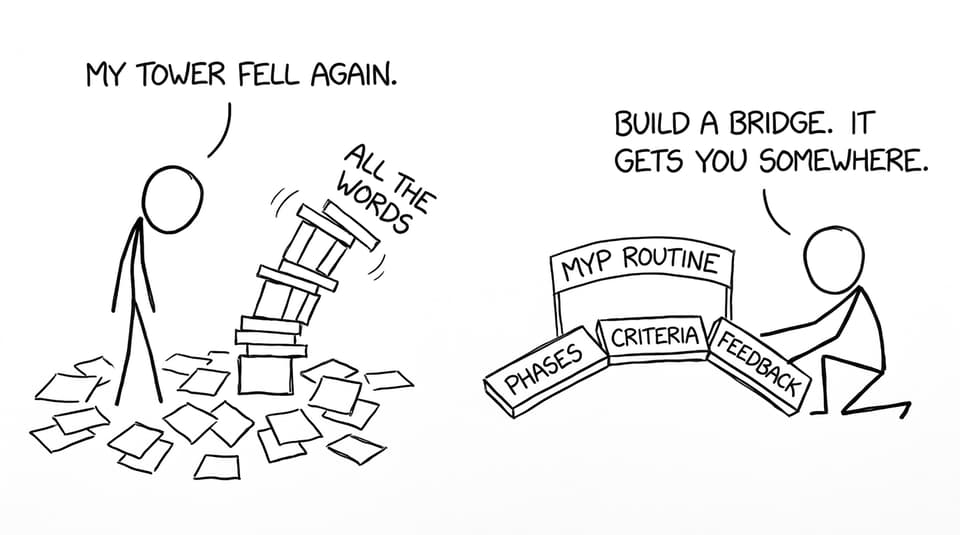
Closing: why this difference is good news
The MYP can feel demanding because it asks you to do more than collect language. It asks you to use language. But that is also why the programme works: it turns every unit into a rehearsal for real communication, not just a rehearsal for a test.
If you are preparing for exams, lean into what the MYP is already trying to teach you. Revise by criteria, practise with purpose, and build a loop of feedback you can run weekly.
When you are ready to make that loop simple, RevisionDojo gives you the full toolkit in one place: Questionbank, Study Notes, Flashcards, AI Chat, Grading tools, Predicted Papers, Mock Exams, Coursework Library, and Tutors. The goal is not to study more. It is to make every MYP practice session produce clearer evidence, stronger choices, and calmer exam-day confidence.