


When “fair” still feels random
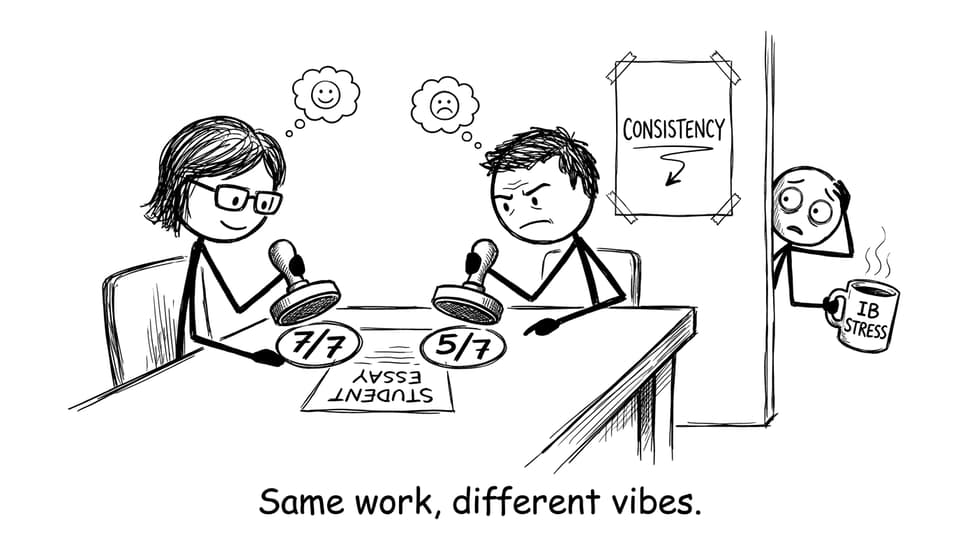
Two students can write answers of similar quality and walk away with different feedback. It is one of the quiet frustrations of the IB: the program aims for global standardization, yet internal grading can feel human, local, and sometimes inconsistent.
Here is the good news: when IB teachers build consistent grading habits, you benefit immediately. Your revision becomes simpler because you are no longer guessing what a “strong response” looks like. Consistency turns feedback into a map.
Quick checklist: how consistent IB assessment gets built
If you are an IB student preparing for exams, these are the signals that your department is taking consistency seriously:
-
Teachers refer to the same rubric language when they explain marks
-
Samples and exemplars are discussed before major assessments
-
Marking is moderated early (not “fixed” after grades are locked)
-
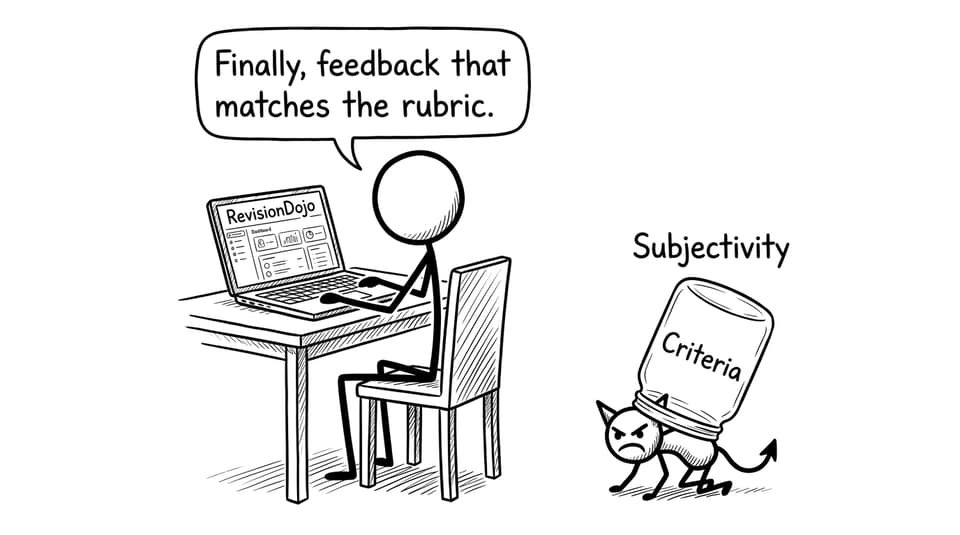
Feedback is linked to criteria, not vibes
-
Data is used to spot drift between classes and teachers
When you see these patterns, your preparation becomes more predictable. And predictable is powerful in the IB.
Why IB grading consistency is genuinely hard
The IB is built on criteria and professional judgment. That is the point. But judgment creates variation, even when teachers are experienced and well-intentioned.
Rubrics still leave room for interpretation
A descriptor can be clear in theory and slippery in practice. Teachers may disagree on what “sustained analysis” looks like in a borderline essay, or how much structure matters relative to insight. In the IB, those small differences add up.
Time pressure changes decisions
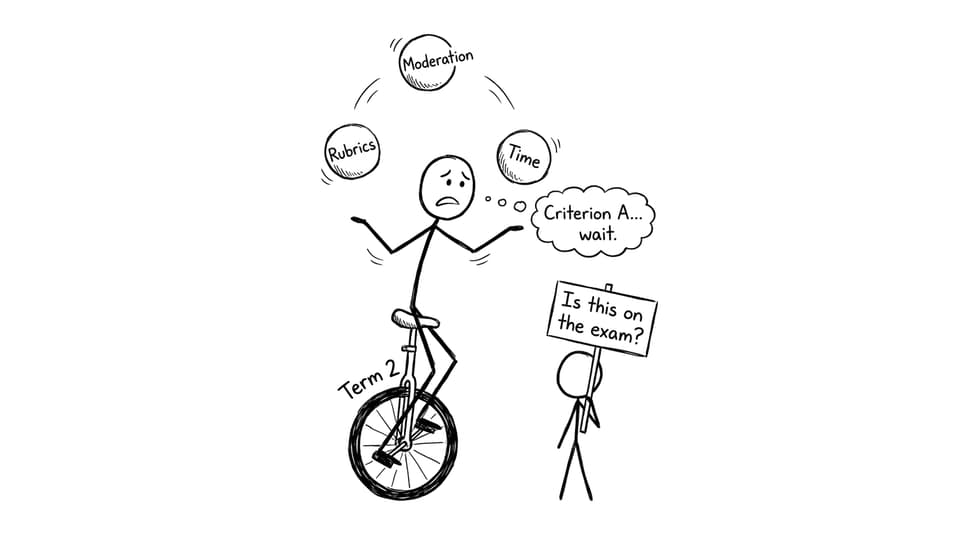
Marking at 5 p.m. on a Friday is not the same as marking fresh on a Saturday morning. Speed, fatigue, and workload affect consistency more than most people admit.
Departments cannot moderate everything
Cross-marking every script is ideal, but schools have limited time. Without a system, moderation becomes reactive: it happens after students already feel confused.
What consistent IB grading looks like (from a student’s seat)
You do not need to see the staff-room process to benefit from it. You just need to know what to ask for and how to use the outcomes.
Ask for “anchor” examples
A consistent IB department usually has a few benchmark responses that everyone agrees on. If feedback feels inconsistent, ask a simple question:
“Can you show me an example of what a 6/7 response looks like for this task?”
Then build your revision around that quality band.
Look for criterion-linked feedback
When feedback says “more detail” or “be clearer,” it is hard to act on. When it says “Criterion B: evaluation needs a counterargument plus evidence,” you can train that skill.
This is where tools matter. RevisionDojo is designed to make criterion language visible across your prep: Study Notes to clarify expectations, Flashcards to remember them, a Questionbank to practise them, and Grading tools to see how marks are justified.
If your revision is scattered, start with an all-in-one workflow guide like IB Revision Made Easy With RevisionDojo All-in-One.
How departments standardize IB assessment (and how you can copy it)
Teachers improve IB grading consistency with repeatable routines. You can mirror the same routines as a student.
Calibration before marking
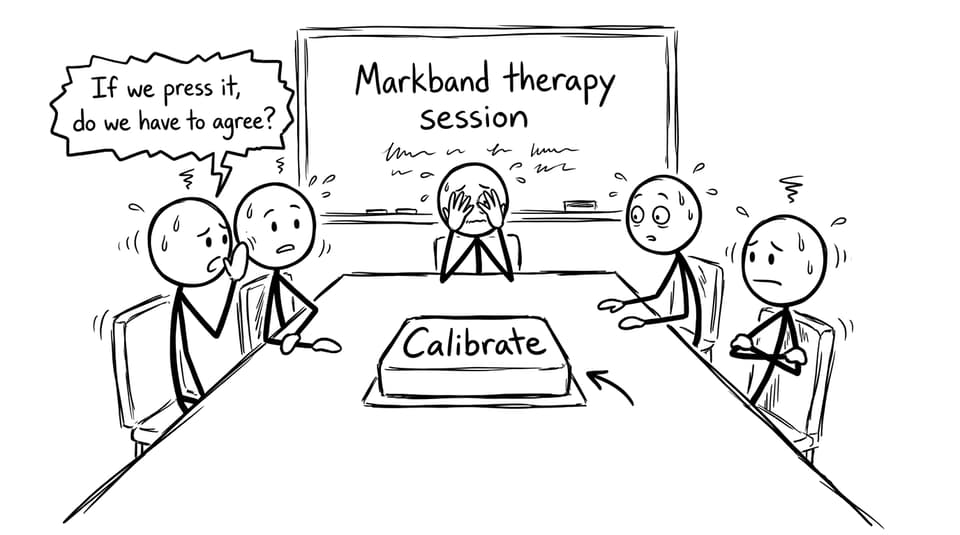
Teachers often mark a small set together to align their standards. You can do a student version of calibration by comparing your work against models and markband descriptors.
A practical method is to build a “criteria glossary” for each subject. This idea is explained well in Developing Consistent Departmental Language for Assessment.
Mark in rounds
Many teachers improve consistency by scoring one criterion at a time across all scripts. You can do the same with self-marking:
-
First pass: only focus on command terms and structure
-
Second pass: only focus on evidence and reasoning
-
Third pass: only focus on evaluation and conclusion quality
That approach pairs naturally with targeted practice in a question bank. If you want a clean workflow, use IB Question Bank | How to Use It Effectively.
Use data to catch drift
Departments look for patterns like one class scoring unusually low on a specific criterion. Students can do this too by tracking mistake types.
For the teacher-side logic (which affects you), see Using Data to Improve Internal Consistency in Assessment.
Where RevisionDojo fits: making consistency feel normal
The best IB students do not just work harder. They reduce uncertainty.
RevisionDojo helps because it turns “What does the rubric want?” into a daily habit:
-
Questionbank to practise exam-style prompts by topic and difficulty
-
Study Notes to learn in rubric-shaped language
-
Flashcards to lock in definitions, methods, and command terms
-
AI Chat to diagnose confusion quickly without losing momentum
-
Grading tools to connect feedback to criteria
-
Predicted Papers and Mock Exams to rehearse under timed pressure
-
Coursework Library plus the IB Coursework Grader to make coursework feedback clearer
-
Tutors when you need a human plan, not just more resources (see Top IB Tutors Worldwide: Access to the Best Educators)
To see how schools formalize these workflows, you can also explore Using RevisionDojo to Standardize Internal Assessments Across Departments.
FAQ
How can I tell if my IB teachers are grading consistently?
First, look at the language of feedback: consistent IB grading usually sounds like the rubric, not like personal preference. If two teachers describe your work using the same criterion wording, that is a strong sign. Second, ask whether there is moderation for major tasks; even light cross-checking can reduce drift a lot. Third, compare exemplar work that teachers recommend: if different teachers point to wildly different models, the standard may not be aligned yet. Fourth, notice whether borderline cases are discussed rather than decided in isolation. Finally, watch whether your department uses the same command-term expectations across classes, because that is often where inconsistency shows up first.
What should I do if feedback in the IB feels inconsistent across subjects?
Assume the problem is not you; it is usually translation. Each subject has its own assessment focus, so your job is to convert feedback into a skill you can practise. Start by collecting three recent comments and rewriting each one into an action: “add evaluation” becomes “add one counterclaim and weigh it with evidence.” Then practise that action repeatedly in exam-style questions, not just in notes. Use Flashcards to store your personal “feedback rules” so you do not forget them. If you want your practice to match marking logic, use a structured resource like RevisionDojo’s Questionbank and Grading tools so the loop stays criterion-based. Over time, you build your own consistency even when your environment is imperfect.
Does RevisionDojo replace teacher marking in the IB?
No, and it should not. Your school remains responsible for official IB assessment decisions, and teachers make final judgments. What RevisionDojo does is reduce the day-to-day uncertainty that students feel by making criteria, expectations, and exam-style practice more transparent. It gives you repeated exposure to rubric-shaped tasks through Mock Exams, Predicted Papers, and targeted Questionbank sets. It also helps you turn feedback into next steps using AI Chat, Study Notes, and Flashcards that connect to the same skills. When you arrive at class with clearer drafts and better practice evidence, teacher feedback becomes faster and more consistent because you and your teachers are speaking the same language.
The takeaway: consistency is a study advantage
In the IB, consistent grading is not just a teacher problem. It is a student advantage. The clearer the standard, the easier it is to train the exact skills that earn marks.
If you want to make your own preparation more consistent, even when school feedback varies, build one repeatable loop in RevisionDojo: Study Notes for clarity, Flashcards for recall, Questionbank for application, AI Chat for fast fixes, then Mock Exams and Predicted Papers for pressure practice. That is how IB effort starts turning into IB results.