IB Past Paper Analysis Without Overwhelm
The most stressful part of exam season isn’t always the content. It’s the feeling that you’re supposed to do everything, every topic, every question type, every paper, and still have energy left to think.
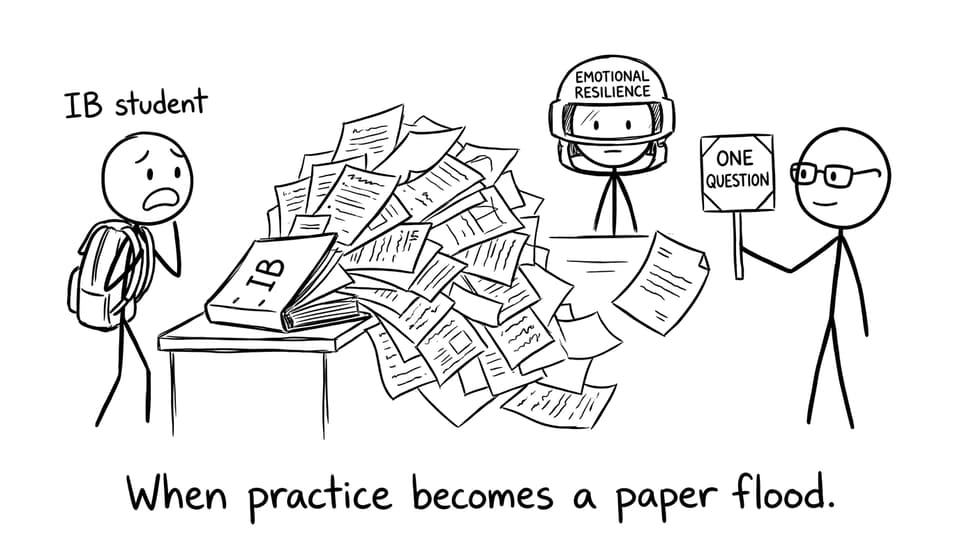
That’s why IB past paper analysis can either become the calmest part of revision (clear expectations, clear patterns, clear next steps) or the loudest (a never-ending stack that turns effort into exhaustion). For IB students preparing for exams, the difference is almost never “more practice.” It’s better structure.
This guide shows how IB teachers can integrate past paper analysis without overwhelming students, while still building the exact exam instincts the IB rewards: command term precision, mark-awareness, and honest reflection.
A quick checklist for IB past paper analysis that stays manageable
If you want the simplest “do this next lesson” plan, use this:
-
Use question-level practice before full papers.
-
Tie every attempt to one skill goal (not “finish the paper”).
-
Teach students to read IB command terms like instructions, not decoration.
-
Replace “mark and move on” with a short reflection loop.
-
Use peer review to reduce teacher marking load.
-
Track mistake patterns over time using RevisionDojo for Schools.
Why IB past paper analysis works (when it’s not a paper flood)
A good IB past paper analysis routine does three things at once:
-
It shows how the IB phrases what it wants (and how often it repeats that phrasing).
-
It reveals what earns marks: structure, precision, evaluation, and relevance.
-
It converts vague revision into measurable progress: “I improved at this question type under this timing.”
But a bad routine turns into mechanical completion: students write, teachers mark, everyone feels busy, and nobody gets calmer. The fix is to treat each paper like a dataset. The goal isn’t “more.” The goal is “extract the pattern.”
If students need a structured home base for this, point them to RevisionDojo for IB so practice, notes, and feedback don’t live in five separate places.
Start small: IB question-level drills beat full-paper marathons
The most teacher-friendly change is also the most student-friendly: shrink the unit of practice.
Instead of assigning a full IB paper, assign a single question type with a single goal.
-
For essay-based subjects, do 10 minutes of planning only: thesis, two claims, evidence placeholders.
-
For data response, do one question focused only on “what the graph is saying.”
-
For source analysis, do one paragraph that must explicitly reference provenance and purpose.
This reduces overwhelm because students can win more often. It also creates cleaner feedback because you’re assessing one skill at a time.
To scale this quickly, students can drill targeted sets in the IB Question Bank: Thousands of Practice Questions and then bring one annotated example back to class for discussion.
Model examiner thinking: teach students how the IB reads
Many IB students don’t lose marks because they don’t know the topic. They lose marks because they answer a different question than the one being asked.
So the teacher move that matters most is simple: narrate your reading.
When you model a question, slow down and make your thinking visible:
-
Circle the command term.
-
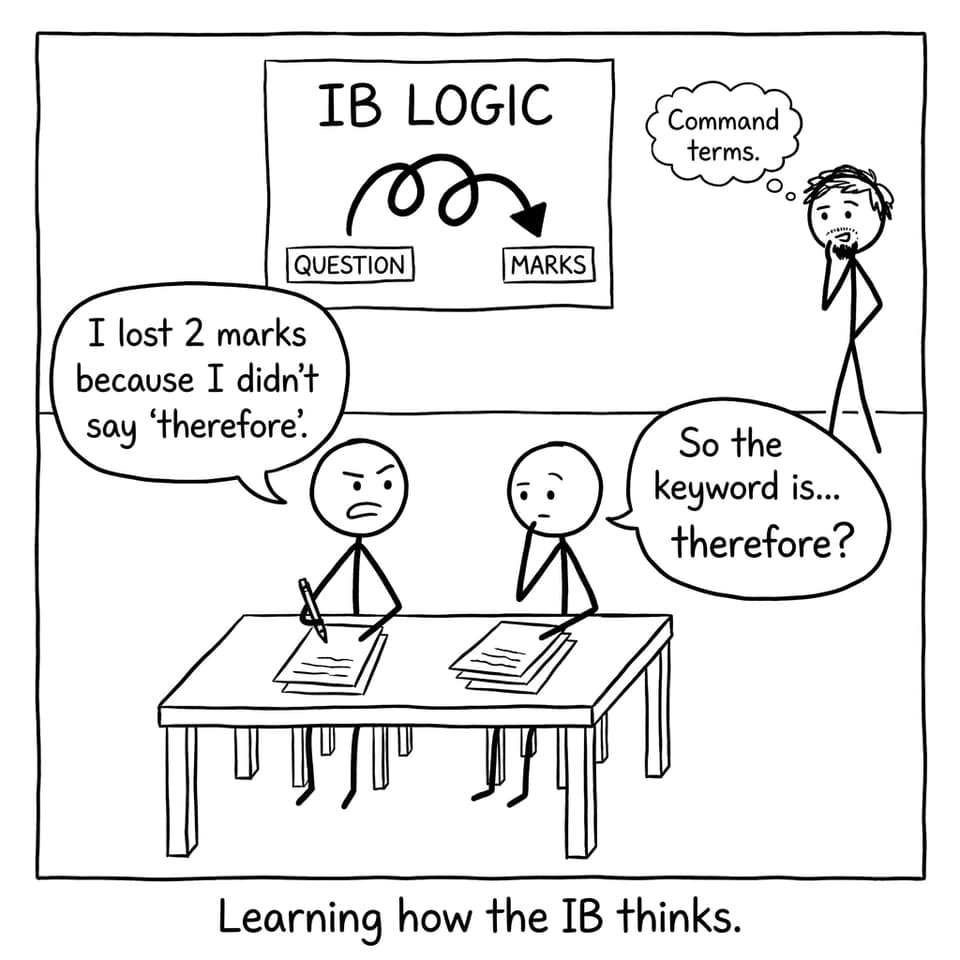
Translate it into an action: “evaluate = judge + justify with criteria.”
-
Look at marks and infer scope: “6 marks = two developed points, not six facts.”
-
Identify the hidden trap: “to what extent” demands a conclusion, not a summary.
This is where IB past paper analysis stops feeling like punishment and starts feeling like learning a language.
Make reflection the default: the IB error log that actually helps
Most students check the mark, feel something (pride or panic), and move on. That’s emotional, not strategic.
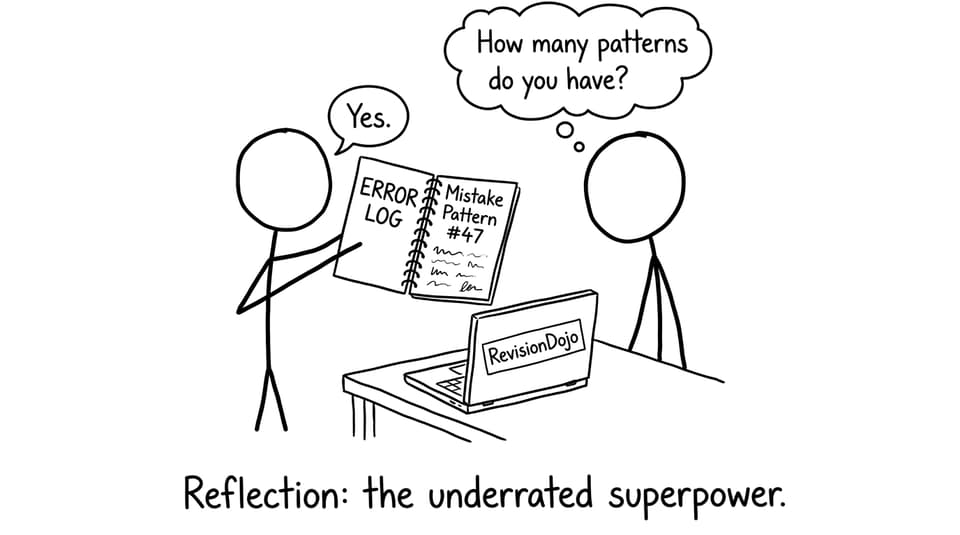
A sustainable IB past paper analysis system uses a repeatable reflection loop. After each question, students answer:
-
What kind of issue was it: knowledge gap, command term, structure, or timing?
-
What is the pattern name? (Example: “Explains but doesn’t evaluate.”)
-
What is the one fix I will test next time?
This matters because it builds self-coaching. It also prevents overwhelm because students stop seeing hundreds of “mistakes” and start seeing five recurring categories.
For a smoother workflow, students can pair reflection with Jojo AI Chat to ask, “What does this command term require?” or “How would a top-level response structure this?” Then they can lock the fix into memory using IB Flashcards with Spaced Repetition (SRS).
Use group review to increase learning and reduce marking
Teachers worry that IB past paper analysis means infinite marking. It doesn’t.
A high-impact, low-load routine:
-
Put students in pairs with a simple rubric excerpt.
-
Swap anonymized responses.
-
Ask them to highlight:
-
where the command term is satisfied,
-
where the response earns marks,
-
where it misses the question.
-
Then you, the teacher, do one thing only: curate the “common mistake gallery” for the class. This turns feedback into a shared language. Students remember it longer because they said it out loud.
If students struggle to find the “right shape” of answers, you can point them to structure-first support like Digital IB Study Notes You Can Access Anywhere, so they patch understanding before reattempting.
Build routines: small IB past paper analysis, every week
Overwhelm often comes from surprise. If past paper work only appears in the final weeks, it feels like a crisis.
Instead, normalize it early with low-stakes repetition:
-
10-minute starter once a week: one question, timer on.
-
Homework: one paragraph rewrite using feedback.
-
Fridays: “markscheme reading” lesson where students learn what earns marks.
This also helps students preparing for exams keep a steady pace. If they want a broader weekly loop, link them to 10 Proven Study Techniques for IB Students and the broader archive at All Revision Tips Posts.
Use markschemes as teaching tools, not secrets
A markscheme isn’t just an answer key. In IB revision, it’s a map of how marks are awarded.
To avoid overwhelm, don’t dump the whole markscheme at once. Teach students how to read it:
-
Identify “must-have” points vs “nice-to-have” depth.
-
Notice how wording matters: vague claims often score less than specific, evidenced ones.
-
Practice “self-mark first, then compare” to build accuracy.
This shifts student mindset from “I got it wrong” to “I didn’t hit the marking requirement.” That’s a solvable problem.
Keep balance: the best IB exam prep protects energy
A quiet truth: too much IB past paper analysis can make students numb. They stop thinking and start surviving.
So set limits:
-
One heavier timed session per week.
-
The rest is targeted drilling, reflection, and reattempting.
-
Rotate in lighter but effective tools: daily recall with flashcards, short concept patching with notes, and focused practice sets.
Students who want a clear routine can follow the system described in The Ultimate Guide to IB Revision: Strategies and Tips for Success and keep it anchored inside RevisionDojo’s Questionbank, Study Notes, Flashcards, AI Chat, Grading tools, Predicted Papers, Mock Exams, Coursework Library, and Tutors.
FAQ
How many full papers should IB students do without burning out?
For most IB students preparing for exams, the healthiest approach is to do fewer full papers but review them deeply. Full papers are useful for stamina, timing, and decision-making under pressure, but they’re expensive in energy and time. A common pattern that works is one timed paper (or half-paper) each week during the final stretch, then smaller targeted practice sessions between. What matters is that every timed attempt generates a short list of recurring mistake patterns. If a full paper doesn’t lead to clear next steps, it becomes noise rather than progress. Teachers can reduce burnout by planning full-paper work as a rehearsal, not a daily habit.
What should teachers do if students feel demoralized by low scores?
Low scores are often a data problem disguised as an identity problem. In IB past paper analysis, teachers can reframe marks as information: “This is what the examiner needed, and this is the next fix.” Start by separating mistake types: knowledge, command term interpretation, structure, and timing. Students often discover they are not “bad at the subject,” they’re missing one repeatable habit like evaluation or clear definitions. Then set a micro-goal for the next attempt, such as “hit the command term in the first sentence” or “use two criteria for evaluation.” Track improvement by patterns, not by raw marks, because patterns change faster and feel more controllable. Over time, the student learns that confidence comes from evidence, and evidence comes from structured practice.
How can IB teachers integrate past paper analysis without doubling their marking load?
The key is shifting from teacher-only marking to a feedback ecosystem. Use peer marking with clear rubrics and model answers so students learn what “mark-worthy” looks like. Collect only one targeted piece per student (for example, the conclusion paragraph or the evaluation section) instead of marking everything. Run whole-class “common error” feedback, because many students repeat the same misunderstanding and don’t need individualized comments. Encourage self-marking first, then teacher verification on a small sample, which builds student accuracy over time. Finally, use tools that speed up feedback loops: RevisionDojo’s Questionbank and Grading tools can help students get faster, markscheme-aligned guidance so teacher time is spent on strategy, not volume.
Conclusion: IB past paper analysis should feel like clarity, not chaos
The best IB past paper analysis doesn’t feel like drowning in papers. It feels like learning how marks are made, one command term, one pattern, one reattempt at a time.
If you’re an IB student preparing for exams, ask your teacher for a smaller unit of practice: one question, one goal, one reflection. And if you’re a teacher, build the loop so students can practice, get feedback, and track patterns in one place through RevisionDojo for Schools. That’s how IB revision becomes repeatable, calm, and genuinely effective.

