


If you have ever promised yourself you would start revising early, then blinked and found yourself two days from an IB deadline, you already understand the real problem.
It is not that you do not care. It is that effort is invisible when no one is watching.
In the IB, teachers want you to become independent, but students often experience “independence” as being left alone with six subjects, core requirements, and a calendar that never stops moving. Accountability is the bridge between those two realities. When teachers build that bridge well, you feel less chased, more supported, and strangely calmer.
A quick IB checklist for accountability (steal this)
If your teacher does these consistently, your independent learning improves fast:
-
Clear weekly goals (tiny, specific, checkable)
-
Short feedback cycles (same week, not “sometime later”)
-
Visible progress (what got done, what did not, and why)
-
A repeatable routine (same days, same format)
-
A way to practise and review mistakes (not just “revise notes”)
This is exactly where platforms like RevisionDojo help, because they make progress and patterns visible across the IB week.
Why IB students struggle with accountability (even smart ones)
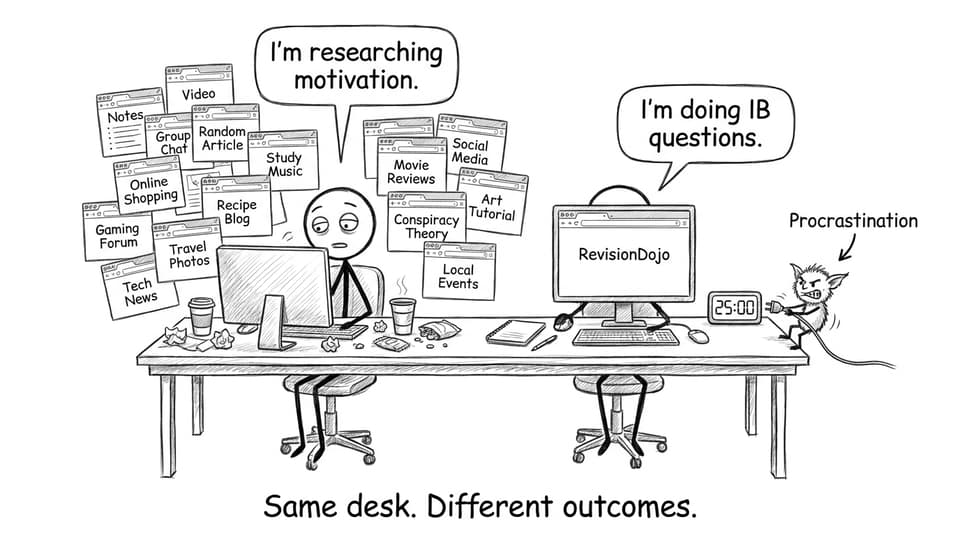
Most accountability problems are not motivation problems. They are design problems.
In the IB, the workload is wide (six subjects) and deep (essay writing, data analysis, problem solving, reflection). So students default to what feels urgent, not what is important. That means:
-
You revise in bursts, not systems.
-
You confuse time spent with progress made.
-
You avoid topics that give you low confidence.
-
You get feedback too late to change your habits.
Teachers cannot follow you home, and they should not have to. But they can create structures that make independent learning more likely than last-minute panic.
IB routines teachers can use to build independent learning
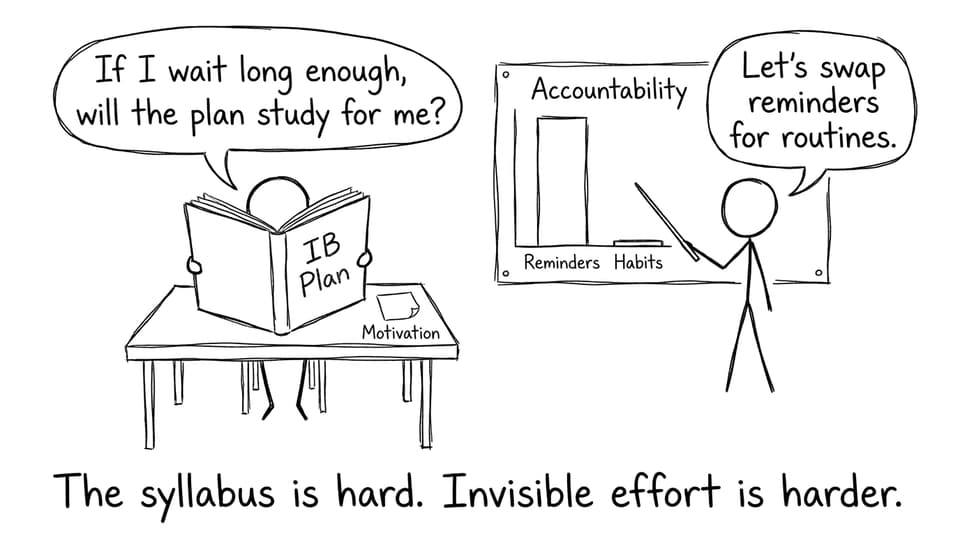
Replace reminders with routines
When a teacher constantly reminds you, it feels supportive in the moment, but it quietly trains dependency. A better approach is a fixed rhythm: same day, same task type, same reflection.
A simple IB-friendly routine looks like this:
-
10 minutes: learn one micro-topic (notes)
-
15 minutes: active recall (flashcards)
-
20 minutes: targeted practice (questions)
-
5 minutes: reflection (what changed, what to do next)
On RevisionDojo, this loop is natural because Study Notes can feed into Flashcards, then into the Questionbank, with AI Chat to unblock confusion in the moment. If you want a clear example of how question practice becomes a feedback loop, share this with your teacher: IB Question Bank: How to Use It Effectively.
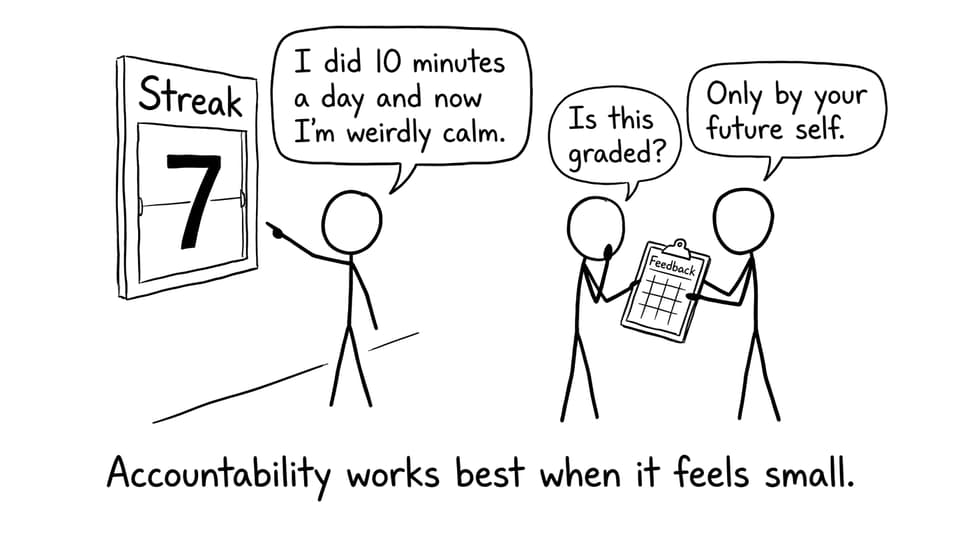
Make IB progress visible (so effort counts)
Independent learning fails when you cannot see progress. Teachers can fix this by making progress measurable and discussable.
That can be as simple as: “This week, you will complete two focused topic sets and one timed section.” Or it can be structured with analytics and dashboards through RevisionDojo for Schools: RevisionDojo for Schools.
Students also benefit when progress is broken down by topic, not just by test score. RevisionDojo’s content hubs and organised resources support that topic-first approach, especially when paired with IB Subject Note Collections and the main IB Notes hub.
Use accountability conversations, not accountability speeches
The most effective teacher question is not “Why didn’t you study?”
It is: “What did you practise, what happened, and what will you change?”
That conversation is easier when practice is tracked. When you do targeted practice in a question bank, the discussion can focus on patterns: command terms, weak topics, timing, recurring errors. RevisionDojo is designed for this kind of calm, data-based check-in: Comprehensive IB Question Bank: Thousands of Practice Questions.
Build independent learning with small stakes and fast feedback
Independence grows when the cost of being wrong is low, but the feedback is immediate.
Teachers can do this by assigning short weekly practice and using tools that return feedback quickly. RevisionDojo’s Grading tools and AI Chat are useful here because they shorten the distance between attempt and correction. For teachers working on feedback culture specifically, this is a strong companion read: How IB Teachers Can Turn IA Feedback into Learning Opportunities.
Rehearse exam performance without making it dramatic
A quiet truth: many IB students “know the content” but lose marks under time pressure.
Teachers can build accountability by scheduling regular timed practice. RevisionDojo supports this with Mock Exams and Predicted Papers that students can sit as rehearsals, then review with a tight improvement loop. Two useful references:
This is not about stress. It is about familiarity.
How you can use teacher-built accountability (as an IB student)
Even if your teacher sets the structure, you still control the outcome. Try this:
-
Treat your weekly goal like a minimum standard, not an aspiration.
-
Use Flashcards for recall, not rereading: IB Flashcards with Spaced Repetition.
-
Use Study Notes to clarify fast, then immediately practise.
-
After each session, write one sentence: “Next time, I will…”
Over time, you become the kind of IB student who does not need a panic to start moving.
FAQ
How does accountability help IB students become independent learners?
Accountability turns “I should study” into “I did the work, and here is the evidence.” In the IB, that evidence matters because the workload is too complex to manage with memory and good intentions alone. When teachers create weekly goals, visible progress checks, and short feedback loops, your studying becomes a routine instead of a reaction. Independent learning is not the absence of support; it is the presence of a structure you can run without someone pushing you each day. Over time, you start making decisions based on data: weak topics, accuracy trends, timing issues. That is how independence becomes practical, not inspirational.
What should an IB teacher track to improve student accountability without micromanaging?
The goal is not to track everything, but to track the few signals that predict outcomes. Frequency of practice (how often you engage), focus (which topics you choose), and follow-through (whether you review mistakes) are usually enough. Teachers can also check whether students are balancing recall and application: notes, flashcards, and question practice. A tool like RevisionDojo helps because it can surface patterns without public shaming or constant reminders, and it lets teachers intervene early with low-effort conversations. The best accountability feels like coaching, not surveillance. It should always lead to a specific next step, not a vague warning.
How can I stay accountable in IB if my teachers do not provide much structure?
Start by borrowing structure from a platform and making it boring on purpose. Pick one subject per day, one topic, then run a short loop: Study Notes, Flashcards, Questionbank, and a two-minute reflection. If you want timed rehearsal, add one weekly Mock Exam or a paper section, then review your mistakes the same day. Make your progress visible to yourself: a checklist, a streak, or a calendar of sessions completed. If you get stuck, use AI Chat or ask a tutor one precise question instead of spiralling for an hour. The IB rewards consistency more than intensity, and accountability is the system that protects consistency.
Conclusion: IB independence is built, not expected
The IB is full of smart students who do not fail from laziness. They fail from invisible effort, unclear routines, and feedback that arrives after the moment has passed.
Great teachers build accountability so you can practise independently without feeling abandoned. Great students accept that structure and run it daily.
If you want the simplest way to make IB accountability real, build your loop inside RevisionDojo: Questionbank, Study Notes, Flashcards, AI Chat, Grading tools, Predicted Papers, Mock Exams, Coursework Library, and Tutors when you need a human plan. Start here: RevisionDojo.