Introduction
Two weeks into the IB Diploma, you start noticing a pattern.
In Chemistry, you can hide behind rules. In Math, you can hide behind steps. In History, you can hide behind structure: thesis, evidence, evaluation.
But in IB Languages, there’s nowhere to hide.
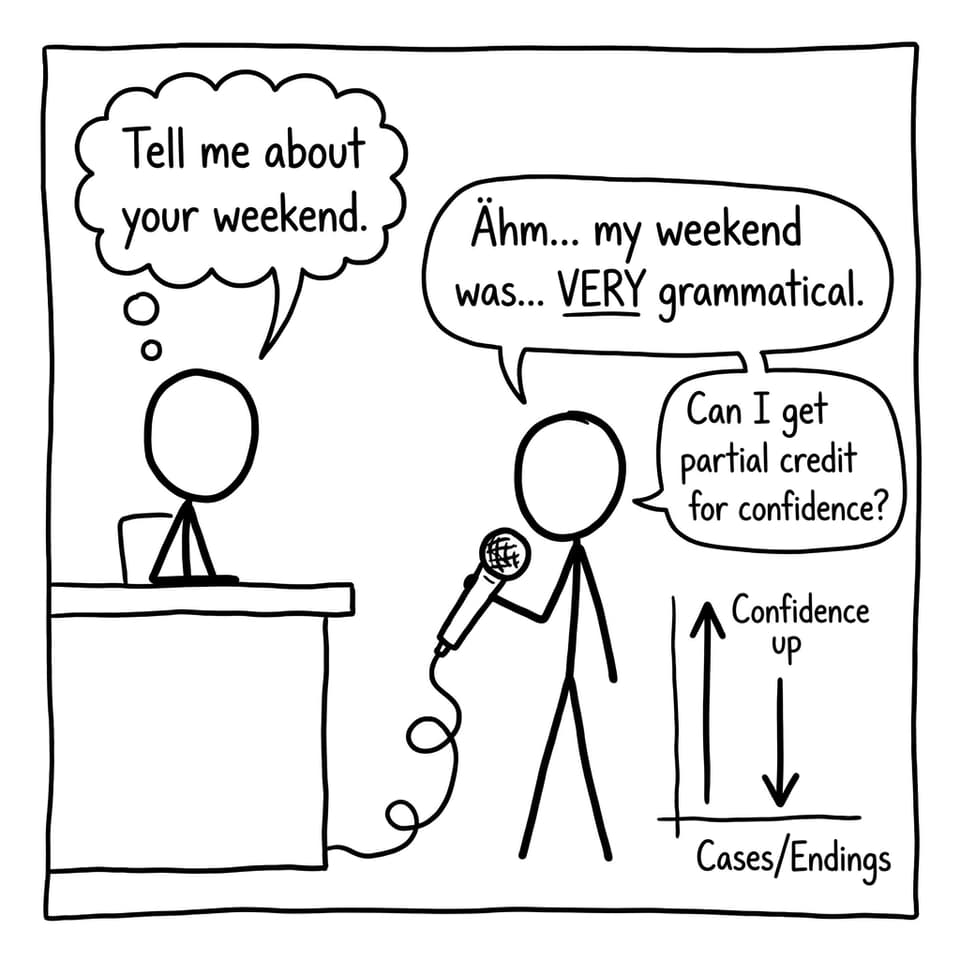
The first time your German teacher asks a simple question: Was hast du am Wochenende gemacht? Your brain doesn’t produce an elegant sentence. It produces static. And that’s the moment many students decide German Ab Initio must be “harder” than other IB subjects.
The calmer truth is this: IB German Ab Initio is difficult in a different direction. It doesn’t demand advanced prior knowledge, but it does demand regular contact, small risks, and a tolerance for sounding slightly wrong while you grow.
This guide compares German Ab Initio to other IB subjects and explains what “hard” really means in IB Languages, so you can plan your revision like an adult, not like a panicked rumor.
Quick reality check (a mini checklist)
If you’re trying to judge German Ab Initio fairly, check these boxes:
-
You understand the exam components and weightings (so you’re not revising blindly).
-
You’re practicing all four skills: reading, listening, writing, speaking.
-
You’re building vocab by theme, not by random lists.
-
You’re doing timed practice early enough that timing stops being scary.
-
You have a feedback loop (teacher, peer, tutor, or AI feedback) to correct recurring mistakes.
On RevisionDojo, this is easiest when you combine Study Notes, Flashcards, the Questionbank, AI Chat, Mock Exams, Predicted Papers, Grading tools, the Coursework Library, and Tutors into one routine rather than scattering your effort across ten tabs.
If you haven’t looked at the structure yet, start here: IB German Ab Initio Exam Format (2025 Guide).
What makes Ab Initio “hard” in IB Languages?
German Ab Initio is built for beginners. That’s not marketing. It’s the design: controlled themes, practical text types, and assessment that rewards communication.
Yet IB Languages ask you to build something unusual: a skill that only improves through use. You can’t “understand” your way into fluency the way you can understand photosynthesis or supply-and-demand.
That’s why German Ab Initio feels hard for students who are otherwise very strong:
-
Progress is slow and invisible. You improve in tiny increments, then suddenly notice you can read a paragraph without translating every word.
-
Mistakes are public. In speaking tasks, you hear yourself being imperfect.
-
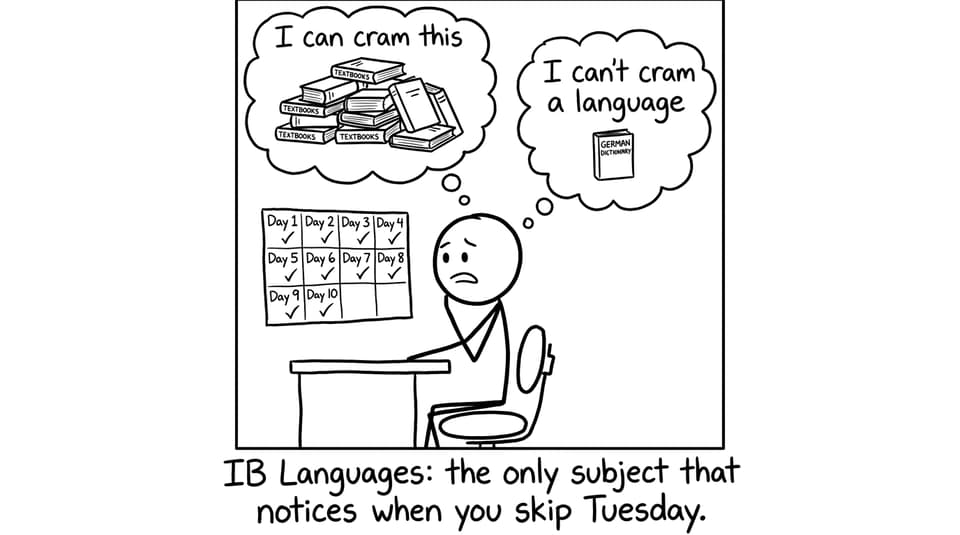
Forgetting is fast. Skip a week, and the language quietly slips.
So the difficulty isn’t that German is “more advanced.” The difficulty is that IB Languages require consistency, not heroics.
If you want a resource plan that matches that reality, use: What Study Resources Are Best for IB German Ab Initio?.
How hard is IB German Ab Initio compared to Group 4 sciences?
Compared to Biology, Chemistry, or Physics, German Ab Initio usually feels less content-heavy. There isn’t a massive syllabus of definitions, mechanisms, and calculations.
But the trade-off is emotional and behavioral, not intellectual:
-
Sciences reward cram-friendly bursts (not recommended, but possible). You can often raise a grade with a focused weekend on weak topics.
-
IB Languages punish long gaps. A weekend sprint helps, but it doesn’t replace daily exposure.
In practice, students who enjoy predictable marking and single “right” answers often find sciences mentally cleaner. German can feel messy because there are many ways to say something, and you’re judged on how well you choose.
If you’re the kind of student who likes to measure improvement, RevisionDojo’s Questionbank and analytics can make language progress visible: Questionbank.
How hard is IB German Ab Initio compared to Group 3 humanities?
Humanities subjects (History, Economics, Geography, Global Politics) ask for argument, structure, and depth.
German Ab Initio asks for clarity.
That might sound easier until you meet the real constraint: you must be clear with limited vocabulary. In humanities, you can often talk your way around a gap with sophisticated phrasing. In IB Languages, your range is smaller, so every word matters.
The writing also feels different:
-
Humanities essays are long and analytical.
-
German Ab Initio writing is shorter and more practical (email, blog, diary entry), but it still demands accuracy, appropriate register, and coherent structure.
A strong way to reduce difficulty is to master the writing format early: How Can I Prepare for IB German Ab Initio Paper 1? (2025 Guide).
How hard is IB German Ab Initio compared to IB Mathematics?
Math difficulty is often front-loaded: if you don’t understand a method, you can’t proceed.
German difficulty is more evenly spread: you can always say something, but the grade depends on how accurate and appropriate it is.
Students who enjoy patterns sometimes do surprisingly well in German because grammar is full of systems: word order, verb position, cases, adjective endings. It can feel like a puzzle.
But the hard part is that the puzzle isn’t only on paper. You must solve it while speaking.
If grammar is what intimidates you most, focus on the topics that actually move your marks: What Grammar Topics Are Most Important in IB German Ab Initio? (2025 Guide).
How hard is German Ab Initio compared to other IB Languages?
This is where labels confuse people.
-
Language B courses are designed for students with prior experience. They tend to demand more nuance, more complex texts, and a stronger range.
-
Ab Initio is designed for beginners, but it still assesses four skills and still expects control.
So German Ab Initio is typically more accessible than Language B, but it’s not an “easy 7.” It’s simply a course where the starting point is lower and the growth curve is the point.
If you want a clean hub to see what’s available for this course, start with: German ab initio - IB Resources.
The specific things that make German Ab Initio feel hard
Most students aren’t overwhelmed by one big concept. They’re slowly worn down by a few recurring friction points in IB Languages:
Speaking anxiety (the pressure of being heard)
The oral isn’t only a test of German. It’s a test of staying calm while your brain searches for words.
The fix is not “be confident.” The fix is repetition under mild pressure: timed picture description, predictable follow-up questions, and a bank of reusable phrases.
A practical roadmap is here: How to Succeed in the IB German Ab Initio Oral Exam (2025 Edition).
Vocabulary that arrives in themes, not lists
German Ab Initio is organized around themes, so vocab arrives in clusters: identity, experiences, social organization, sharing the planet.
That’s great for context, but confusing if you learn words without sentences.
To reduce difficulty, study vocab in “mini scripts” you can reuse in writing and speaking. RevisionDojo’s Flashcards are perfect for this because you can build cards that include the whole phrase (not just a translation), then review them daily.
For theme strategy, use: IB German Ab Initio Core Themes and What Themes Are Most Challenging in IB German Ab Initio? (2025 Guide).
Grammar accuracy (especially word order and endings)
German grammar can feel like it has too many levers. But the secret is that exam success doesn’t require mastering everything.
It requires mastering the basics well enough that you can communicate clearly under time pressure.
That’s where RevisionDojo’s AI Chat and Grading tools help: you can write a paragraph, get corrections, and learn the pattern behind your mistakes instead of repeating them.
What makes German Ab Initio easier than people expect
German Ab Initio has hidden advantages within IB Languages:
-
Clear exam formats: practical writing tasks and predictable skills.
-
Communication matters: you can score well even if you aren’t perfect, as long as your message is clear.
-
Shorter writing: you’re not producing 1,500-word essays.
-
High payoff from small habits: 10 minutes a day is genuinely powerful for languages.
If you want to build those habits into exam readiness, RevisionDojo’s workflow articles are useful: How to Study for IB Mocks (Without Burning Out) and RevisionDojo App: The Smarter Way to Prep for IB Exams.
A simple weekly plan that makes IB Languages feel manageable
Here’s a realistic schedule for German Ab Initio that pairs well with heavy subjects:
-
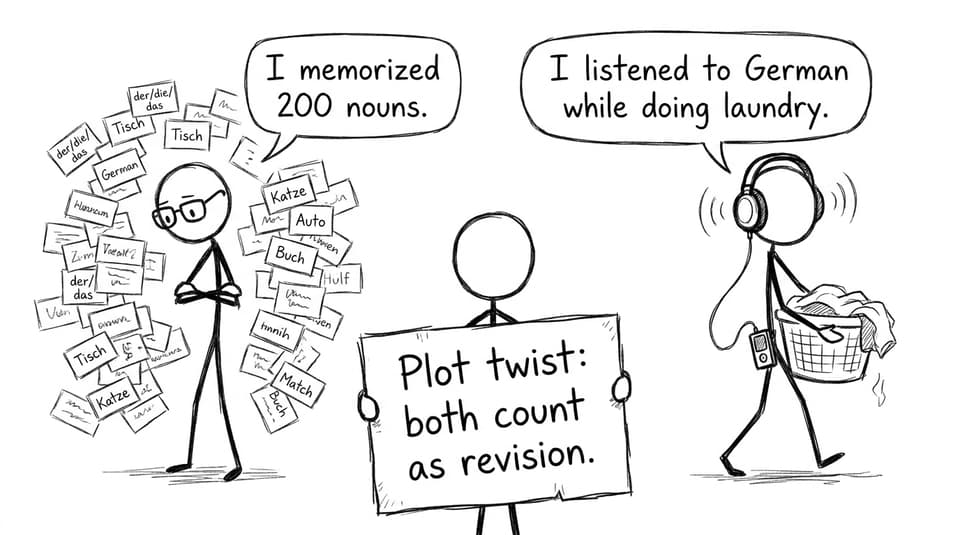
Daily (10-15 min): Flashcards (theme phrases + verb forms + connectors).
-
3x per week (20-30 min): Listening + short transcript work (underline recurring structures).
-
2x per week (30-45 min): Writing task segments (intro + connectors + one paragraph), then self-correct.
-
1x per week (15-25 min): Oral rehearsal (picture description + follow-ups).
-
Every 2 weeks: A timed mixed-skills set using RevisionDojo’s Mock Exams and Predicted Papers to make timing and nerves familiar.
If you’re wondering how predicted sets fit without becoming a distraction, this explains it well: IB Predicted vs Specimen Papers: What They Mean and IB Predicted Papers by IB Examiners.
Closing: so, how hard is it really?
IB German Ab Initio isn’t harder than other subjects because the content is more advanced.
It’s harder because IB Languages reward what most students neglect: small practice, repeated often, with feedback. If you accept that early, German becomes predictable. You stop fearing the oral because you’ve rehearsed it. You stop fearing writing because you have templates and phrases. You stop fearing listening because you’ve trained your ear.
If you want that calm momentum, build your German revision inside RevisionDojo’s all-in-one system: start with German ab initio - IB Resources, learn with Study Notes, drill with Flashcards, apply with the Questionbank, then rehearse the real thing with Mock Exams and Predicted Papers. That’s how IB Languages stop being a mystery and start becoming a score you can train for.