Some subjects feel hard because they are hard.
Others feel hard because they are unfamiliar.
That difference matters more than most IB students realize when they compare IB Languages. You might open a Chinese B text and feel like you’re staring at meaning through frosted glass: characters you can’t “sound out,” tones that change the entire sentence, and listening clips that move faster than your brain.
Then you look at a friend doing Spanish B. They complain too, but at least the words look like words.
So how hard is IB Chinese B compared to other IB Languages like French, Spanish, or German? The honest answer is that Chinese B has a steeper first hill, but a surprisingly smooth road once you build the right habits. And because the assessment structure across Language B subjects is similar, the smartest way to judge difficulty is to compare the skill demands, not the vibe.
Quick checklist: what makes Chinese B feel “hard” in IB Languages
Use this as your fast diagnostic. If 4+ boxes are true for you, Chinese B will feel harder at the start than other IB Languages.
-
You learned using the Latin alphabet and rely on “sounding out” new words
-
You haven’t trained tones deliberately (you just hope people understand)
-
Your reading speed depends on recognizing cognates (information/información)
-
You avoid handwriting characters because typing feels safer
-
Most of your exposure is classroom-only (not audio/video outside class)
-
You don’t yet have a theme-based vocabulary system for Language B
If you want a structured place to start, the IB Chinese B hub on RevisionDojo organizes practice by skill so the course stops feeling like one giant blur.
The real comparison: why Chinese B feels different from other IB Languages
Across IB Languages, students often compare “difficulty” like it’s one number. But Language B difficulty comes from friction points: what slows you down under time pressure.
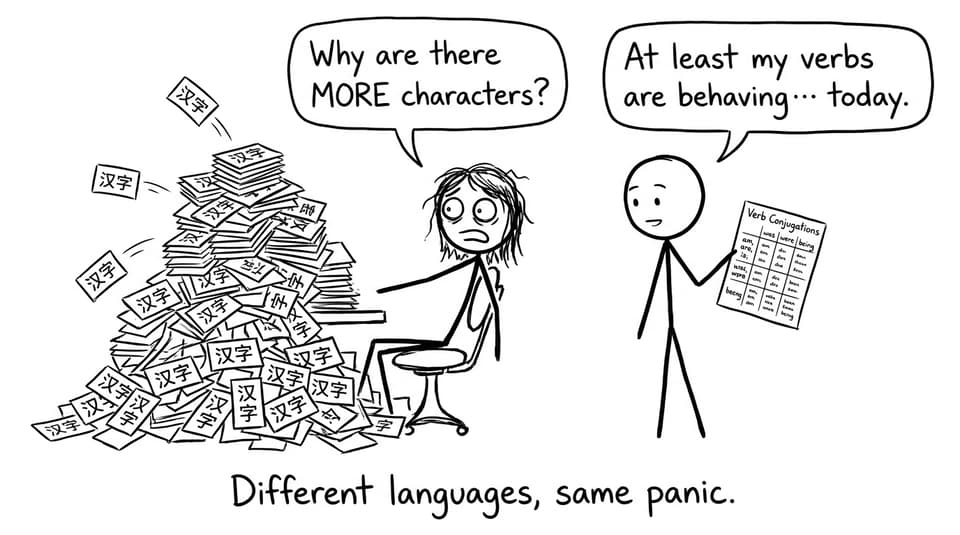
The writing system: characters change the entire learning curve
In French, Spanish, and German, you can often guess pronunciation and approximate meaning. Chinese characters remove that shortcut.
Chinese B requires consistent recognition of 汉字, which means your progress is tightly linked to daily exposure. The upside is that reading becomes less about conjugation accuracy and more about pattern recognition and context.
A practical way to keep the character load manageable is to build vocabulary in clusters (theme words + useful sentence frames). RevisionDojo’s Flashcards feature helps you keep those clusters alive through spaced repetition, which is exactly what character retention needs.
Pronunciation and tones: small changes, big consequences
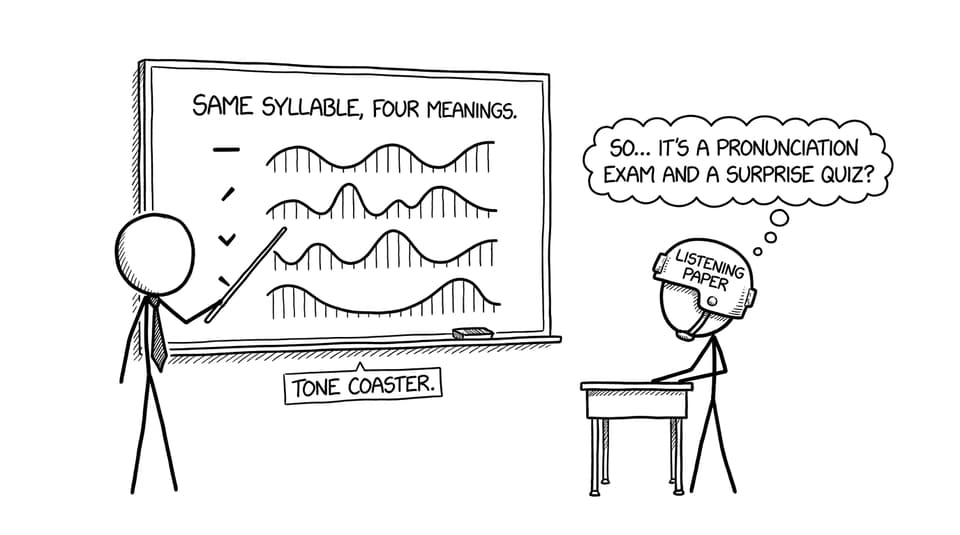
Tones are the Chinese B tax. For many students, tones feel like an extra skill layered on top of “normal language learning.” In many European IB Languages, pronunciation matters, but it usually doesn’t flip meaning as sharply.
The good news: tone accuracy improves fastest when you practice it in short, repeatable drills, not long, heroic speaking sessions. Pair a few tone-focused phrases with weekly oral practice and you’ll feel the shift.
Where Chinese B is actually simpler than other IB Languages
Chinese B is not “hard everywhere.” Many students eventually find it calmer than European IB Languages in two key areas.
Grammar: fewer moving parts, more control
French, Spanish, and German often demand constant attention to:
-
verb conjugations
-
tense consistency
-
noun gender
-
adjective agreement
-
case endings (especially German)
Chinese grammar is comparatively streamlined: meaning is carried through word order, time expressions, and particles rather than heavy inflection. That means once you learn the basic structures, you can reuse them across many topics with less risk of “one tiny ending” collapsing the whole sentence.
Writing clarity: communication beats perfection
Across IB Languages, the exams reward clear communication. Chinese B can feel forgiving here once you have reliable sentence patterns. If you can produce clean, theme-linked paragraphs with accurate core vocabulary, you can score well even without sounding like a native speaker.
For criteria-focused exam prep, RevisionDojo’s Questionbank is useful because it nudges you toward what examiners actually reward: relevance, clarity, and control.
What stays the same across IB Languages (and why that matters)
Students sometimes assume Chinese B is a completely different universe. Structurally, it’s still Language B, meaning the course is organized around the same foundations across IB Languages:
-
the five prescribed themes (Identities, Experiences, Human Ingenuity, Social Organization, Sharing the Planet)
-
the same big skill categories: reading, listening, writing, speaking
-
an assessment mindset that values purposeful communication
If you want to make those themes feel less abstract, read The Five Core Themes of IB Chinese B Explained and turn each theme into a small “phrase bank” you can actually use.
A fair difficulty comparison: Chinese B vs French/Spanish/German B
Here’s the most honest way to compare IB Languages: ask what kind of work you’ll do most often.
Chinese B is memorization-heavy
-
characters and meaning
-
reading recognition speed
-
listening discrimination (especially near-sounding syllables)
You can’t rely on cognates the way you can in Spanish or French. That’s why consistent flashcards and short reading reps matter more.
European Language B is rule-heavy
-
conjugation drills
-
agreement accuracy
-
grammar exception handling
Students often feel “always one mistake away” from losing marks, especially in writing.
So Chinese B is typically more demanding early on, but it can become more predictable later. In many European IB Languages, the start feels smoother, but accuracy pressure persists.
How to make Chinese B feel easier (without studying more hours)
You don’t need endless resources. You need a loop that matches what IB Languages exams measure.
Build a simple weekly routine
-
Characters (daily, 10 minutes): review + write a small set; don’t let the pile grow
-
Listening (3x/week, 15 minutes): train for gist first, detail second
-
Reading (2x/week, timed): scan for meaning; stop translating every word
-
Writing (1x/week, full task): one text type, one theme, then edit for clarity
-
Speaking (1x/week, low stakes): record yourself and improve one thing
To align that routine with the actual exam, use IB Language B Exams: Format, Timing, Strategy. Then zoom in on Chinese-specific planning with How to Revise Effectively for IB Chinese B Exams.
Use RevisionDojo like a system, not a library
The best IB Languages prep feels boring in the right way: repeatable.
-
Use the IB Chinese B reading and listening practice areas to simulate time pressure.
-
Turn mistakes into daily recall with Flashcards.
-
Ask quick “why is this wrong?” questions with AI Chat, then fix the same pattern in your next response.
-
When you write, use Grading tools to tighten register and structure.
-
As exams get closer, build stamina with Mock Exams and Predicted Papers, and use Tutors when you want human feedback.
If you want a curated starting point, Best Resources for IB Chinese B Students lays out a minimal stack.
Closing: choose the right struggle, then make it repeatable
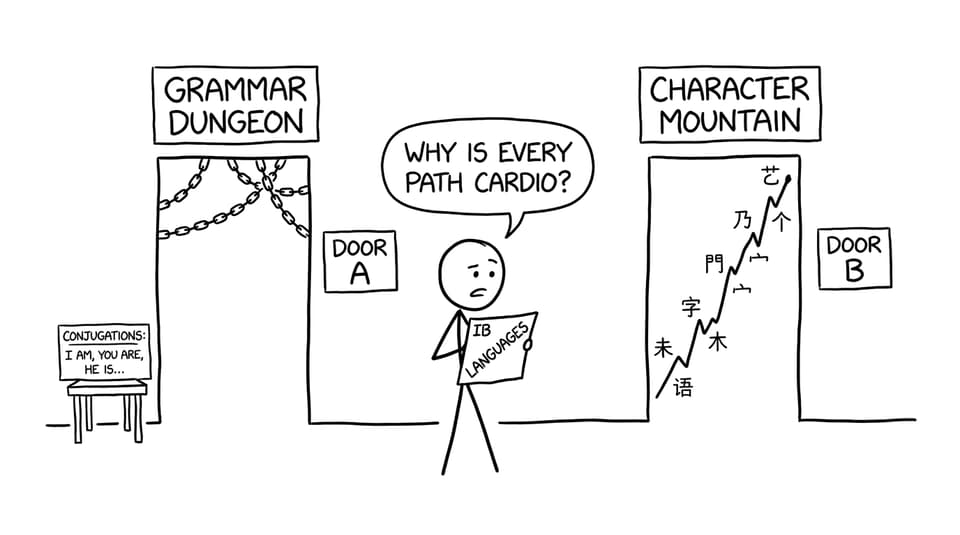
IB Chinese B can feel tougher than other IB Languages when you’re staring up at Character Mountain and wondering if everyone else got a map. But difficulty is not just about content; it’s about whether your practice matches the skill.
If you build daily character recall, weekly timed reading and listening, and one honest writing feedback loop, Chinese B becomes less mysterious and more mechanical. And in IB, “mechanical” is good, it means you can reproduce the performance when it counts.
To make that routine easier to sustain, start with the IB Chinese B hub, add Flashcards for retention, and use the Questionbank to turn weaknesses into targeted practice. That’s how IB Languages stop being something you “hope goes well,” and start being something you can train.



