
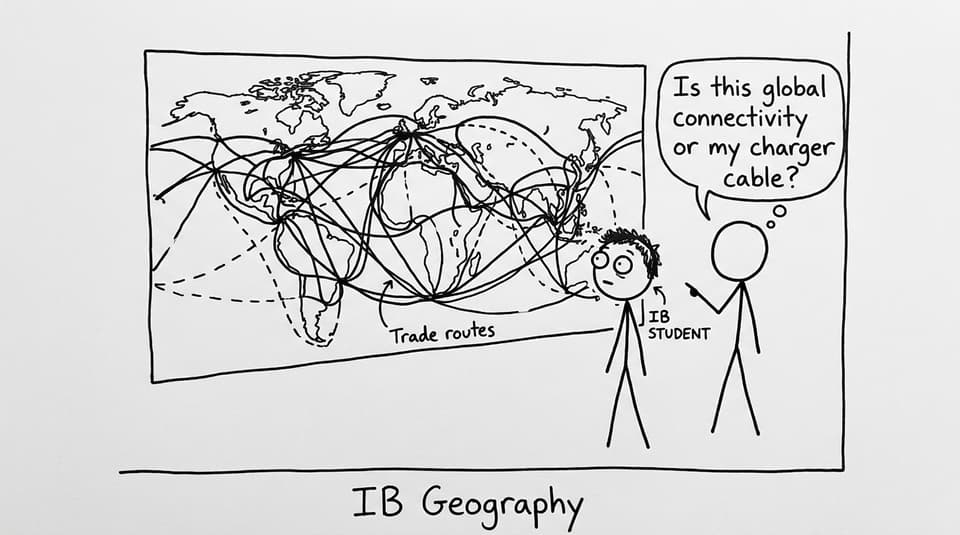
Transport infrastructure is the quiet force behind almost every “global” moment you’ve ever noticed: a phone assembled across three continents, a holiday that begins with a boarding pass, a food shortage made worse by a blocked corridor. In IB Geography, this is exactly the point: global connectivity isn’t magic. It’s built. Roads, railways, ports, airports, and shipping lanes decide which places become hubs, which places wait, and which places get left out.
Quick exam checklist for IB Geography
When you see “transport infrastructure” in a question, train yourself to hit these angles fast (and then evaluate):
-
Flows: goods, people, capital, information
-
Friction of distance: time and cost of moving
-
Hubs and corridors: gateways, chokepoints, logistics clusters
-
Uneven development: who benefits, who pays, who is bypassed
-
Power and vulnerability: control, disruption, resilience
-
Sustainability trade-offs: emissions, land use, externalities
For targeted practice, build answers with IB Geography resources on RevisionDojo and drill exam-style prompts using the Power, Places and Networks Questionbank.
How transport infrastructure boosts trade and global networks
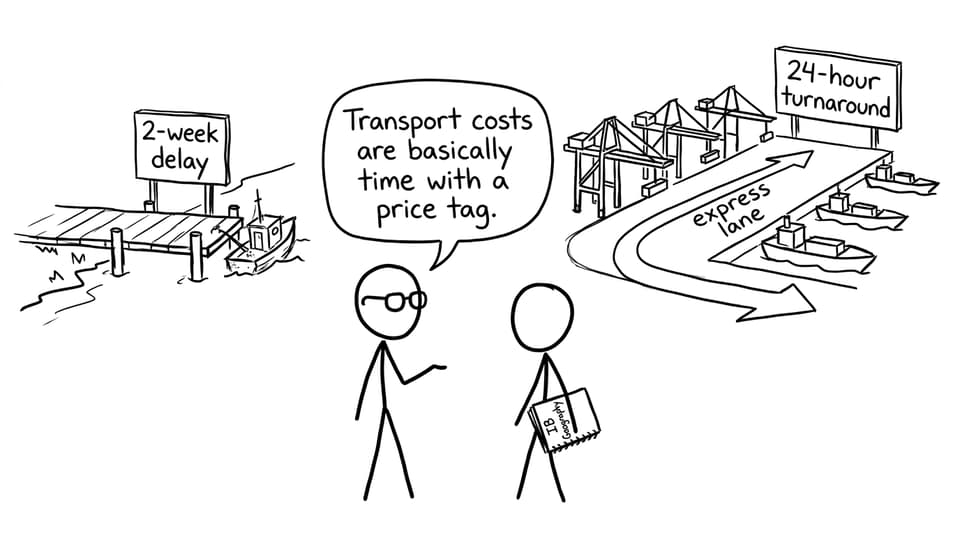
In IB Geography, global connectivity often shows up as trade intensity: how quickly and cheaply a product can move from producer to consumer. Efficient ports, rail freight, airports, and intermodal terminals reduce delays and lower transport costs. That cost reduction isn’t just a business detail; it changes comparative advantage and can make entire regions competitive.
The places that get this right often become logistics hubs: they attract warehouses, finance, insurance, and skilled workers. Over time, connectivity becomes self-reinforcing: better infrastructure pulls in more investment, which funds even more infrastructure.
If you want extra context, pair this with RevisionDojo’s 4.2 Global networks and flows Questionbank so you can practise linking networks to real exam command terms.
How transport infrastructure shapes migration, tourism, and opportunity
Global connectivity isn’t only containers. It’s also people: business travel, tourism, education, and migration. Airports and high-speed rail compress time and shrink perceived distance. A city with strong international links can pull in multinational companies and skilled migrants, growing its global influence.
In contrast, weak transport infrastructure can trap regions in high costs and low access. In IB Geography, this connects directly to uneven development: peripheral regions may have resources and talent, but without reliable corridors to markets, they struggle to convert potential into growth.
To revise this with a broader urban lens, use Urban Growth and Infrastructure Development notes.
How transport infrastructure creates power, chokepoints, and risk
Transport infrastructure also rearranges power. Control over strategic corridors (think major ports, canals, air hubs, rail gateways) can influence supply chains and diplomatic leverage. In IB Geography, you can frame this as network centrality: some nodes matter more, so disruptions there ripple globally.
This is why examiners like evaluation. Greater connectivity raises efficiency, but it can also increase vulnerability: a strike, conflict, extreme weather, or policy change can interrupt flows and expose how dependent the system has become.
For a connected concept, read Why Do Some Places Become Global Hubs?.
The sustainability trade-off IB Geography expects you to evaluate
Here’s the uncomfortable part: expanding transport infrastructure can raise emissions, habitat loss, congestion, and air pollution. Shipping, aviation, and road freight all contribute to greenhouse gases. So the best IB Geography answers do two things at once:
-
Explain how infrastructure improves global connectivity.
-
Evaluate whether that connectivity is equitable and sustainable.
RevisionDojo helps you practise that balance using its Study Notes, Flashcards, and AI Chat prompts, then sharpen exam technique with the Geography Flashcards and examiner-style practice.

Conclusion: make connectivity exam-ready with RevisionDojo
Transport infrastructure shapes global connectivity by controlling cost, time, and access, and that means it shapes trade, migration, power, inequality, and sustainability too. If you can explain the mechanism and then evaluate the trade-offs, you’re writing the kind of IB Geography response that scores well.
To turn this into marks, use RevisionDojo’s Questionbank, Study Notes, Flashcards, AI Chat, Grading tools, Predicted Papers, Mock Exams, Coursework Library, and Tutors starting from the IB Geography topic page and the IB Geography tag hub.