


The three-way tug-of-war in IB Business Management
In IB Business Management, operations management can feel like watching someone spin three plates at once: cost, quality, and speed. The moment you push one plate higher, another starts to wobble. That tension is not a flaw in the system; it is the system. And examiners love it because it’s where real decisions live: what to prioritize, what to sacrifice, and how to reduce the sacrifice with smarter processes.
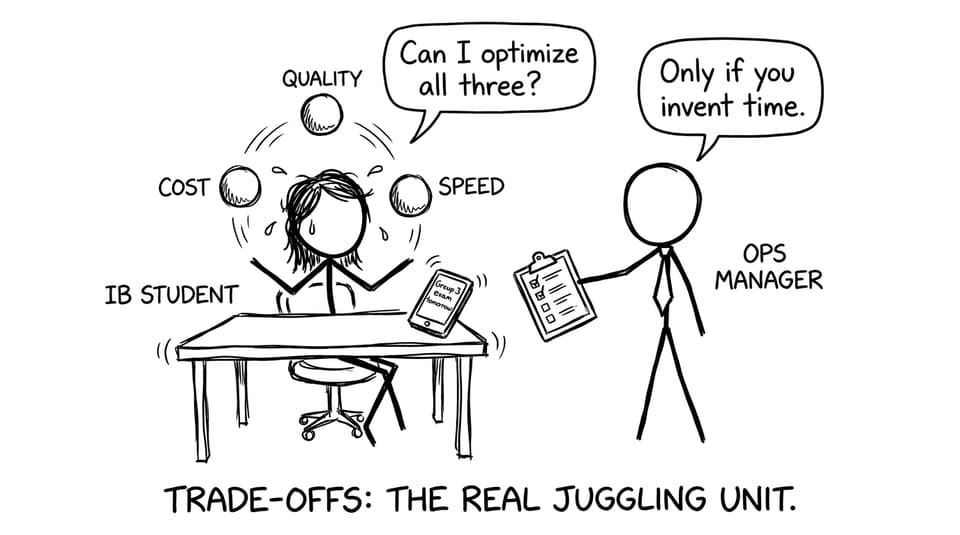
If you can explain this clearly in IB Business Management, you’re not just memorizing definitions. You’re thinking like an operations manager.
Quick checklist: what operations management actually does
Use this mini-checklist in IB Business Management responses (especially 6-, 10-markers):
-
Control costs by cutting waste and improving efficiency
-
Protect quality through quality assurance and consistent processes
-
Improve speed by reducing delays (lead time) and smoothing workflow
-
Evaluate trade-offs based on the target market and strategy
-
Use tools and tech to raise performance without exploding costs
For the syllabus foundation, revisit 5.1 Introduction to operations management and 5.1.1 The Role of Operations Management.
Cost: competing without quietly breaking your business
In IB Business Management, “cost” is rarely about being cheap. It’s about staying profitable while meeting expectations. Operations management lowers cost by redesigning processes so the business uses fewer inputs for the same (or better) outputs.
Common cost-control moves you can mention:
-
Lean production to remove waste (time, defects, excess inventory)
-
Better inventory management to reduce storage and spoilage
-
Smarter workflow design to reduce movement and waiting
When you need exam practice on this topic, the Operations management unit hub helps you connect ideas across Unit 5.
Quality: the hidden cost of “almost good enough”
Quality is the quiet multiplier. If quality drops, costs often rise later through returns, complaints, repairs, and reputation damage. In IB Business Management, operations management protects quality by building consistency into the system rather than relying on individual effort.
Ways to show quality management in your answers:
-
Quality assurance (designing quality into processes)
-
Standardization and staff training to reduce variation
-
Continuous improvement approaches (e.g., Kaizen, Six Sigma as HL extensions)
To revise quickly, use 5.1 Introduction to operations management Flashcards and 5.1.1 The Role of Operations Management Flashcards.
Speed: lead time is a promise you either keep or break
Speed shows up in IB Business Management as lead time, delivery reliability, and responsiveness. Customers notice waiting more than they notice a slightly lower price. Operations management improves speed by removing bottlenecks and smoothing the flow of work.
Speed strategies include:
-
Better scheduling and capacity planning
-
Layout changes to reduce movement and delays
-
Automation where it makes sense
But speed isn’t free.
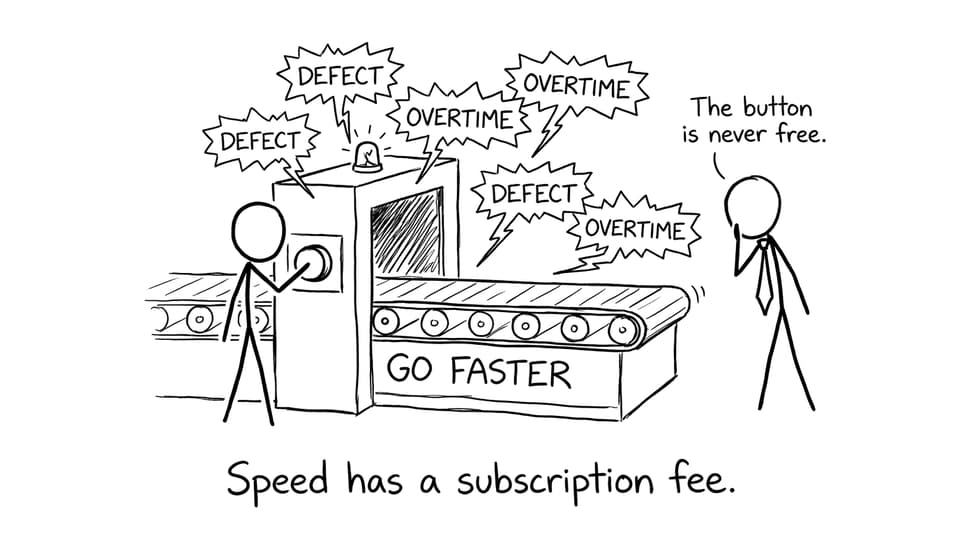
Pushing for speed can create overtime costs, stress errors, and quality problems. In exam answers, that insight often separates analysis from evaluation.
The core idea: trade-offs (and how businesses reduce them)
The most exam-worthy phrase in IB Business Management here is trade-off analysis. Businesses decide what matters most to their customers:
-
Fast food might prioritize speed + cost, with “acceptable” quality
-
Luxury brands prioritize quality, accepting higher costs and slower output
-
Tech firms may prioritize speed to market, then improve quality through updates
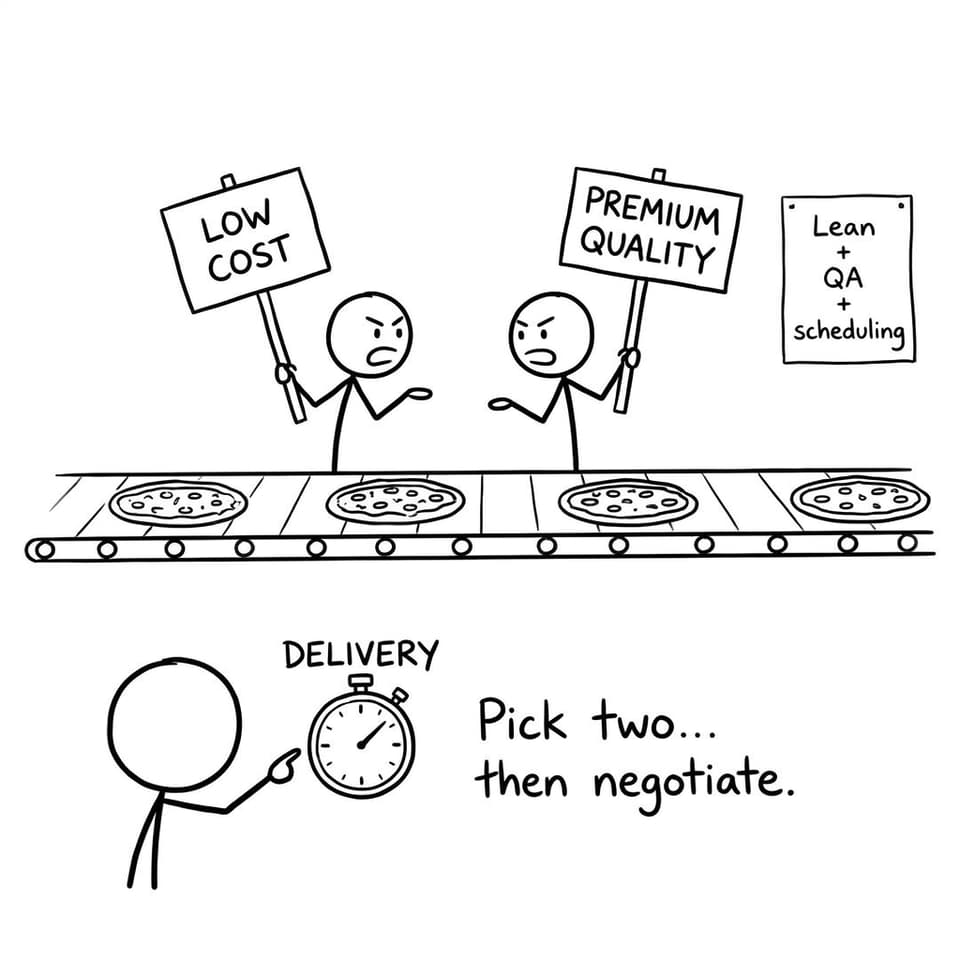
The sophisticated point is that firms also try to reduce trade-offs using process improvement and technology (data systems, better forecasting, improved planning). That’s where operations becomes strategic, not just “factory stuff.”
To sharpen exam technique while you revise content, use How to Maximize Your Score in IB Business Management and Understanding the IB Business Management 10 Marker Rubric.
Final takeaway (and how to revise it fast)
Operations management helps businesses balance cost, quality, and speed by making trade-offs explicit, improving processes, and aligning operations with what customers truly value. If you can explain that triangle clearly, you’re already answering IB Business Management the way examiners want.
To lock it in, revise Unit 5 with RevisionDojo’s IB Business Management resources, then practise with the Questionbank, build timed practice using the Exam builder, and tighten your structure with AI Chat and Grading tools. Add Flashcards, Study Notes, Mock Exams, Predicted Papers, and the Tutors feature when you need speed, accuracy, and feedback in the final stretch.


