


The moment a message starts to change
In IB Business Management, students often treat communication like a simple arrow on an organization chart: sender to receiver, done. But real businesses are messier. A message is rarely just “sent”; it’s interpreted, condensed, delayed, reworded, and sometimes quietly reshaped to fit the structure it travels through.
That’s why exam questions about organizational structure aren’t really about drawing charts. They’re about predicting what happens to information when it moves through hierarchy and authority.
If you can explain how communication flows differently in different organizational structures, you can usually unlock stronger analysis and evaluation for IB Business Management.
Quick checklist: what examiners want you to compare
Use this checklist in IB Business Management answers when comparing structures:
-
Speed: how fast information travels
-
Accuracy: how much distortion happens
-
Direction: top-down, bottom-up, or two-way
-
Formality: formal vs informal channels
-
Employee voice: how easy it is to give feedback
If you need a clean refresher on structure first, start with RevisionDojo’s 2.2 Organizational structure hub.
Tall structures: clear channels, slow movement
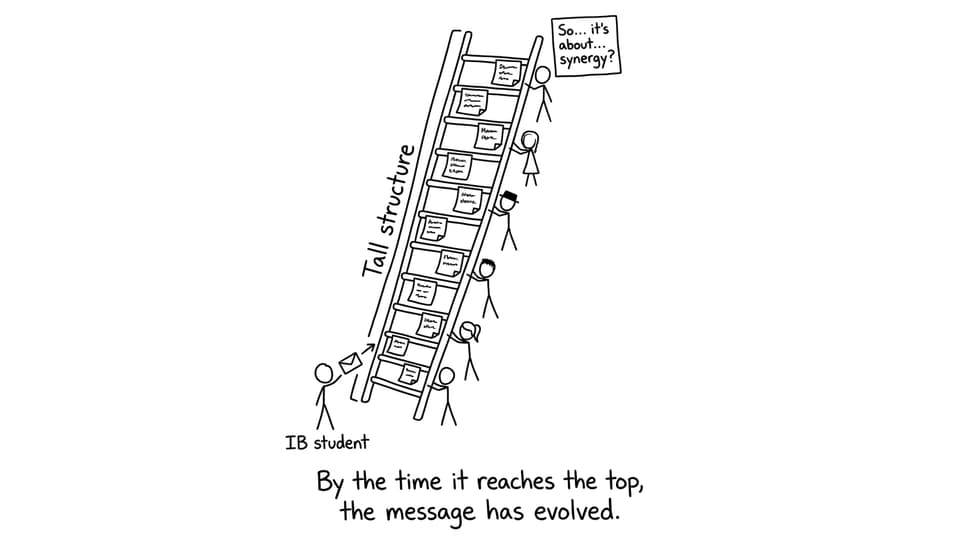
In a tall (hierarchical) structure, communication usually follows the chain of command. A message moves up or down level-by-level, which creates clarity (everyone knows who to report to) but often reduces speed.
For IB Business Management, the key analysis is that each layer can act like a filter. Managers may summarize information, soften bad news, or add their own interpretation. That can protect senior leaders from overload, but it increases the risk of distortion.
A useful link for this topic is RevisionDojo’s Types of organization charts notes.
Flat structures: fast feedback, coordination risk
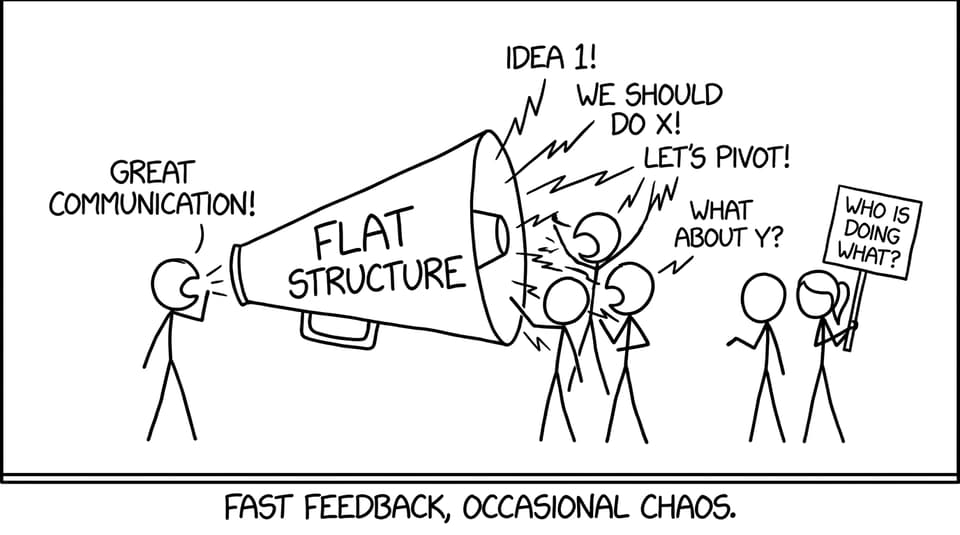
In a flat structure, there are fewer layers between staff and leadership. Communication tends to be more direct, quicker, and more informal. That often improves collaboration, because people don’t need permission to share ideas across teams.
But IB Business Management exam answers score higher when you show the trade-off: wide spans of control can create confusion. If roles aren’t clear, communication can become noisy, duplicated, or inconsistent.
To practise real exam-style prompts on this area, use RevisionDojo’s 2.2 Organizational structure Questionbank.
Centralized vs decentralized: who controls the message?
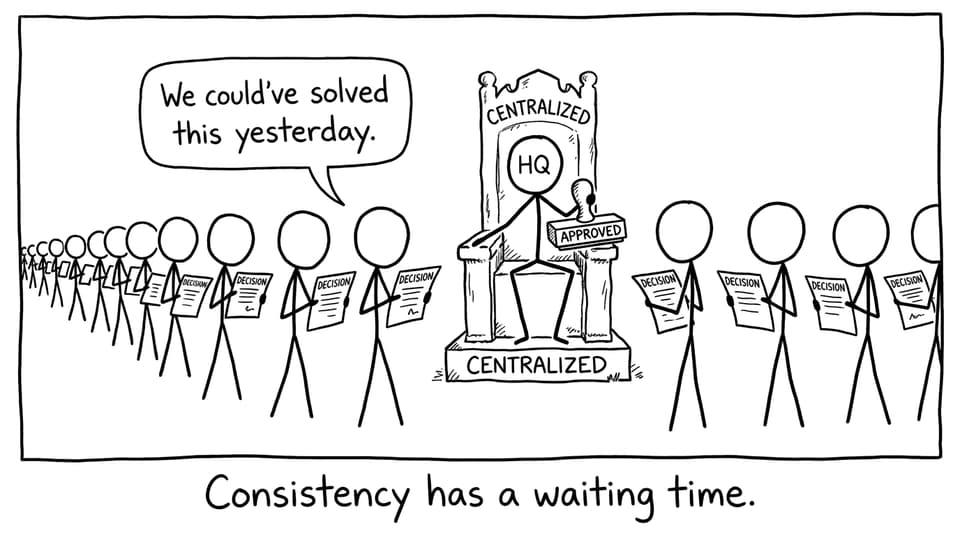
In centralized structures, decisions and authority sit at the top. Communication tends to be top-down: leaders issue instructions, policies, and targets. This can create consistency in branding and strategy, which is a strong evaluative point in IB Business Management.
However, centralized systems often weaken bottom-up feedback. Frontline staff might hesitate to speak openly, or the structure might slow how quickly problems reach decision-makers.
In decentralized structures, decision-making is pushed down to departments, regions, or project teams. Communication is usually more two-way and responsive. Teams can adapt messages to local needs, which supports innovation and motivation. The downside is coordination: different units may communicate in different ways, and the organization can lose alignment.
For communication theory support, RevisionDojo’s 2.6 Communication hub and Formal and informal communication notes are ideal.
Exam tip: add structure-specific examples
In IB Business Management, examples lift your answer from description to analysis:
-
Tall structure example: a large manufacturer where safety reports must pass through supervisors and department heads.
-
Flat structure example: a small tech startup where developers speak directly to the founder.
-
Centralized example: a global retail chain with strict rules sent from HQ.
-
Decentralized example: a multinational where regional managers adapt marketing and staffing.
To strengthen weaknesses fast, use RevisionDojo’s 2.6 Communication Questionbank and review common pitfalls in Barriers to communication notes.
Closing: turn structure into marks
Communication flow isn’t a minor detail in IB Business Management; it’s the mechanism that explains why some structures feel fast, others feel safe, and others feel frustrating.
If you want to practise writing sharper, structure-based analysis, RevisionDojo is built for it: targeted Study Notes, rapid-fire Flashcards, exam-style Questionbank practice, and AI Chat to test your understanding. Combine that with Grading tools, Mock Exams, Predicted Papers, and the Coursework Library, and you can revise the way examiners actually assess.
Explore the full IB Business Management resources hub and the IB Business Management tag archive to keep your IB Business Management revision focused and exam-ready.


