


When one message turns into five approvals
In IB Business Management, “organizational structure” can sound like a neat box diagram. But in real workplaces, structure decides whether a good idea travels like a paper plane or like a passport application.
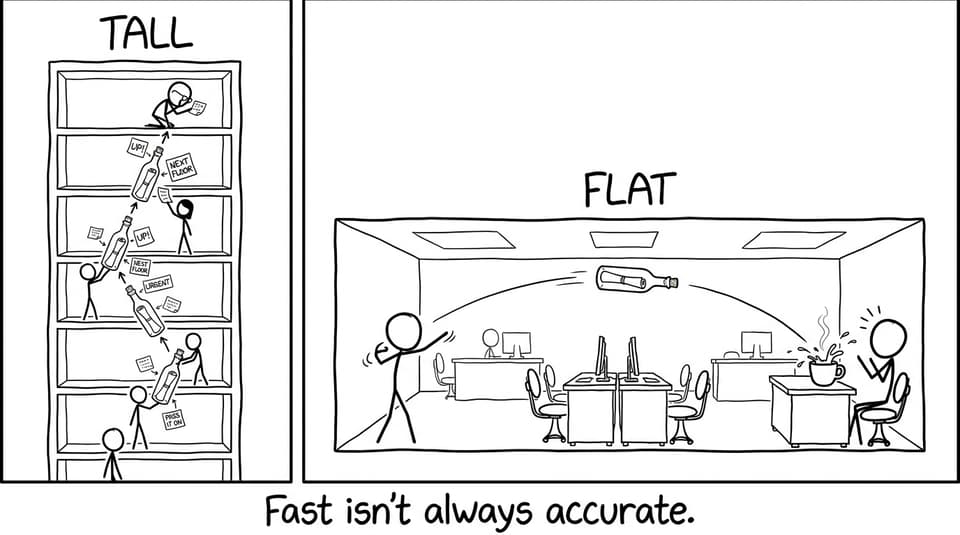
Imagine an employee notices a small problem: a customer complaint trend, a safety issue, a broken process. In a tall structure, the idea often climbs step by step, collecting edits and delays. In a flat structure, it may reach the decision-maker quickly, but land in a noisy room where everyone has an opinion. Same idea, different teamwork.
To lock this topic for exams, connect IB Business Management theory to one simple question: How does the structure change how employees work together?
Quick checklist for exam answers (use this every time)
When you compare tall and flat structures in IB Business Management, aim to mention:
-
Hierarchy levels (many vs few)
-
Span of control (narrow vs wide)
-
Communication speed (slower vs faster)
-
Employee autonomy (lower vs higher)
-
Coordination and control (stronger formal control vs flexible coordination)
-
Teamwork pattern (within departments vs cross-functional collaboration)
For syllabus-aligned definitions and diagrams, use 2.2 Organizational structure and the focused 2.2.2 Types of organization charts notes.
Tall structures: teamwork with clear lanes (and slower traffic)
A tall structure has multiple layers of management. That usually creates a clear chain of command, which can make teamwork feel orderly: people know who is responsible, who approves, and who coordinates.
In IB Business Management terms, tall structures often lead to:
-
Specialization: teams become experts in their department’s tasks.
-
Predictability: routines are consistent, which helps large organizations.
-
Clear accountability: easier to identify who is responsible when something goes wrong.
But tall structures also change how employees work together in quieter, more limiting ways. Collaboration tends to stay inside departments because formal reporting lines discourage “skipping levels.” Communication can become filtered as it moves up and down, which slows decisions and can reduce initiative.
If you want strong examples and practice prompts, the 2.2 Organizational structure Questionbank is ideal for building evaluation points (advantages vs disadvantages) in exam style.
Flat structures: teamwork with speed (and occasional confusion)
A flat structure reduces management layers, so employees are closer to decision-makers. That usually creates faster communication and more informal teamwork. People share information more easily across roles, and employees may feel trusted to act.
In IB Business Management, flat structures often support:
-
Faster decisions: fewer layers to consult.
-
More empowerment: employees take initiative and own outcomes.
-
More cross-functional teamwork: collaboration across departments is easier.
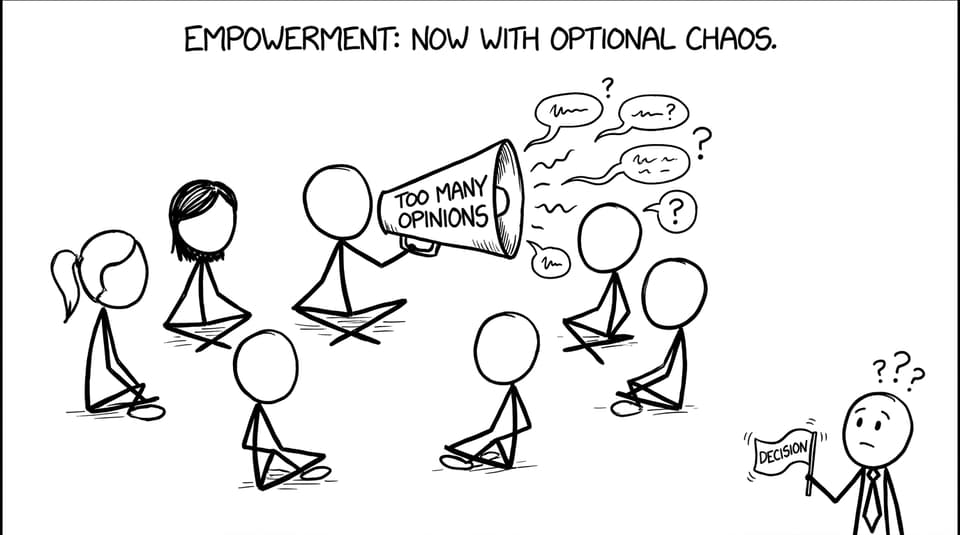
However, flat structures can also make teamwork messy. With fewer managers, roles may blur. Employees can waste time negotiating responsibilities, and managers may become overloaded (wide span of control). In an exam, that trade-off is where evaluation lives.
To strengthen your “depends on context” conclusion, pair this topic with 2.2.3 Appropriateness of organizational structures notes, which helps you explain why one structure fits one business but not another.
Decision-making: authority vs participation
One clean way to compare structures in IB Business Management is to tie them to decision-making:
-
Tall structures often lean centralized: authority sits higher, so employees collaborate through formal processes.
-
Flat structures often lean decentralized: authority is pushed downward, so employees collaborate through discussion and initiative.
This links naturally to leadership. A tall structure often matches more directive leadership, while flatter structures frequently need leaders who can coordinate without micromanaging. See Leadership styles notes (2.3.3) and the wider Unit 2 HR notes to connect structure to people-management in essays.
Final exam takeaway
For IB Business Management, tall and flat structures are not “good vs bad.” They are trade-offs that reshape teamwork: tall structures create clarity and control but can slow collaboration; flat structures create speed and ownership but can increase ambiguity.
If you want to revise this efficiently, build the theory with IB Business Management resources, then test it with RevisionDojo’s Questionbank, tighten definitions with Study Notes and Flashcards, and pressure-test your explanations with AI Chat and Grading tools. When you’re ready, use Mock Exams and Predicted Papers to practice writing balanced, evaluative answers that score.