


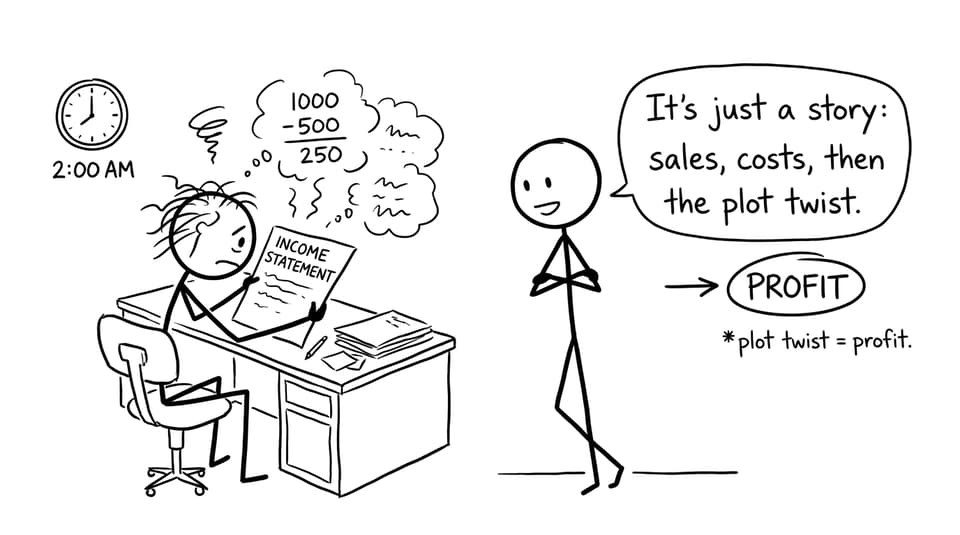
If you have ever looked at a business and thought, “So… is it actually doing well?”, you are already asking the right IB Business Management question. The income statement (also called the statement of profit or loss) is where the business answers you in numbers. Not with vibes. Not with marketing. With evidence.
In IB Business Management, income statements matter because they turn day-to-day activity into a clear performance story: what came in, what went out, and what was left.
What an income statement helps you see (quick checklist)
-
Revenue: how much the business earned from sales
-
Costs/expenses: what it spent to generate that revenue
-
Profit or loss: whether it created value (or destroyed it) in that period
-
Trends: what is improving or slipping over time
-
Signals for stakeholders: what investors and lenders infer from performance
For the syllabus home base, keep Unit 3 nearby: Financial Management overview notes.
Revenue: the “top line” that explains demand
Revenue is the starting point because it shows what customers were willing to pay for. In exam terms, revenue helps you discuss demand, effectiveness of promotion, and pricing strategy. If revenue rises, it may signal market growth, better brand positioning, or successful sales tactics. If it falls, it can hint at competitive pressure or weak market orientation.
In IB Business Management, you can strengthen analysis by linking revenue movement to context (seasonality, new competitors, changes in consumer income). If you need the formal vocabulary fast, use the IB Business Management Key Definitions.
Costs and expenses: where efficiency is revealed
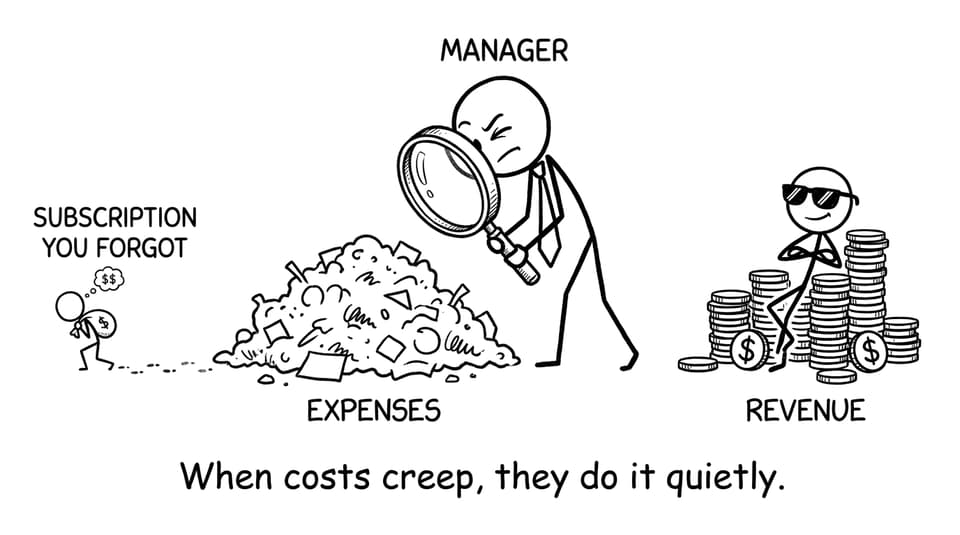
Costs are where many businesses quietly win or lose. Wages, rent, utilities, marketing spend, and materials all show up here, translating operational choices into financial outcomes. When you compare costs to revenue, you can comment on efficiency, economies of scale, and cost control.
A classic exam skill is distinguishing revenue expenditure (day-to-day costs in the income statement) from capital expenditure. RevisionDojo’s explanation is clear: Role of finance notes (capex vs revenue expenditure).
Profit or loss: the bottom line that drives decisions
Profit is what remains after costs are deducted from revenue. It is not just a “result”; it is a decision trigger. Falling profit might push a firm to adjust pricing, renegotiate suppliers, reduce variable costs, or rethink expansion.
In IB Business Management, profit becomes even more powerful when you connect it to ratio analysis. A profit figure alone is hard to compare across businesses of different sizes, but margins make performance comparable. Practice exam-style interpretation here: Final accounts Questionbank and extend it into performance metrics with Profitability and liquidity ratio analysis Questionbank.
Trend analysis: performance is a pattern, not a moment
One month can lie. A single year can be distorted by a one-off cost. Income statements become most useful when compared over time. Trends help managers spot rising expense lines, improving gross profit, or weakening net profit before the problem becomes structural.
This is also where your exam evaluation improves: you can say not only what happened, but whether it looks temporary or long-term.
Communicating performance to outsiders (and why they care)
Investors and lenders use income statements to judge whether a business model is working. They look for stability, margins, and the ability to sustain profits. But in IB Business Management, you should also mention the limitation: profit does not equal cash. A profitable business can still struggle if cash inflows are poorly timed.
That is why cash flow is the companion document: 3.7 Cash flow Questionbank.

Where RevisionDojo fits into your IB Business Management prep
When income statements show up in data response questions, the hardest part is not the math; it is the commentary. RevisionDojo helps you build that skill through Study Notes, Flashcards, and the Questionbank, plus AI Chat for quick explanations, Grading tools for feedback on written analysis, Predicted Papers and Mock Exams for timing, and a Coursework Library and Tutors when you need deeper support. Start from the hub: IB Business Management resources.
Conclusion: treat the income statement like a story with a verdict
In IB Business Management, an income statement is not just a table; it is a narrative about performance: revenue shows demand, costs show efficiency, and profit shows the outcome. Learn to read that story quickly, explain what changed, and suggest what management should do next.
If you want to turn that skill into consistent exam marks, use RevisionDojo’s Final accounts notes and drill the technique with the Questionbank until your analysis feels automatic.