

Introduction: the quiet pressure no one studies for
The strangest part about IB exam season isn’t always the studying. It’s the living room.
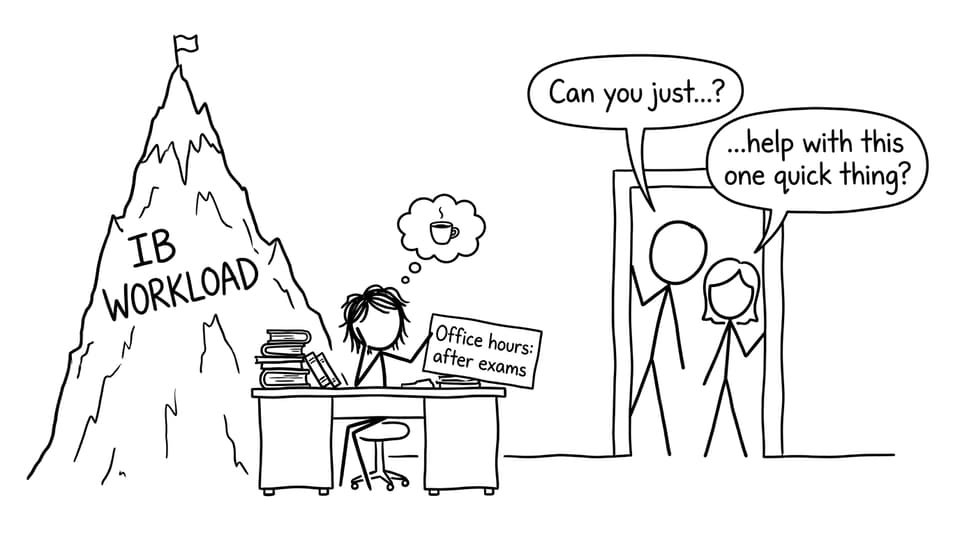
You’re trying to hold six subjects, deadlines, CAS, and maybe an Extended Essay plan in your head, and then someone asks, “Can you just watch your sibling for 20 minutes?” Or an aunt messages, “So what score do you need for medicine?” Suddenly the IB isn’t just a programme you’re doing. It becomes a family story people keep narrating over you.
When only one child is in IB, family expectations can skew. Not because anyone is bad, but because attention follows whatever feels urgent. This guide is about pulling that attention back into balance, without guilt, drama, or burning out right before exams.
Quick checklist: manage expectations in one afternoon
-
Name the reality: IB is time-heavy, especially near exams.
-
Make the invisible visible: show your weekly plan and crunch weeks.
-
Create one “family default” script for relatives.
-
Protect one daily anchor (dinner, walk, tea) so siblings still feel you.
-
Celebrate effort across the whole house, not just grades.
-
Use a system for revision so your time is predictable (and defendable).
If your revision system is messy, family negotiation becomes harder. A clean loop (notes → practice → feedback) gives you calmer boundaries. RevisionDojo is built around that loop: Study Notes, Flashcards, Questionbank, AI Chat, Grading tools, Predicted Papers, Mock Exams, a Coursework Library, and Tutors when you need a human to raise the bar.
Why family expectations get sharper when only one child is in IB
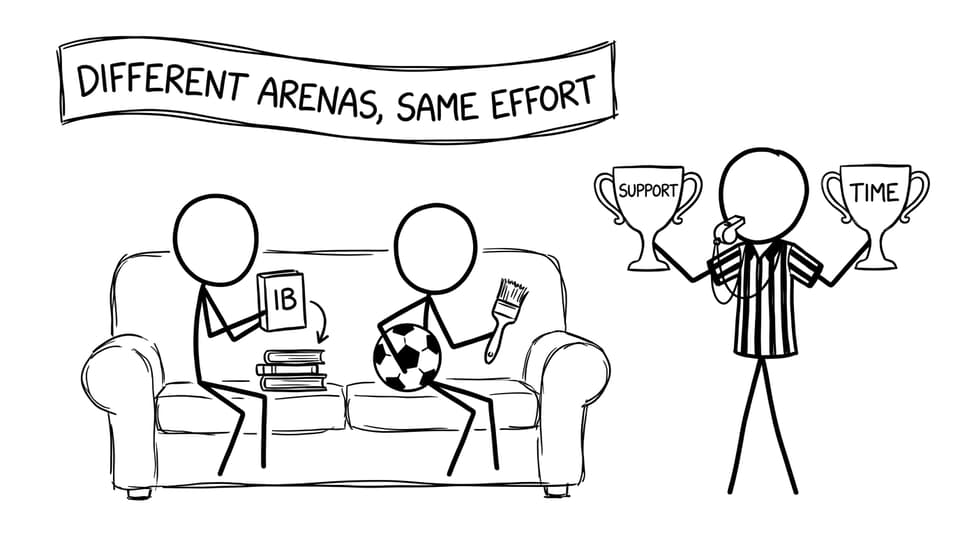
In most families, fairness is measured in minutes. Who got driven where. Who got listened to. Who got the benefit of the doubt.
But IB makes time lopsided. You may need more quiet. More rides. More “don’t interrupt me” hours. Meanwhile, siblings still have their own big things: matches, art shows, friendship drama, life.
Then extended family adds a second layer: some relatives treat IB as a status symbol. Others treat it as a mysterious hobby you can pause whenever dinner is ready. Either way, you can end up managing other people’s emotions on top of your own revision.
The fix is not “convince everyone to understand.” The fix is to set expectations in advance and make your study time feel legitimate and scheduled.
For planning that actually sticks, borrow a structured approach from How to Study for IB Exams: Step-by-Step Guide and keep it visible at home.
How to talk to siblings without turning IB into a competition
The most useful sentence in a one-IB household is:
“This is a busy season for me, not a better season.”
That small reframe matters. It stops the IB from sounding like a crown and starts sounding like a calendar.
Try this three-part script with siblings:
-
Name what’s changing: “For the next three weeks, I’m doing longer study blocks for IB exams.”
-
Name what isn’t changing: “I still want to hear about your stuff. I’m not ignoring you.”
-
Offer a predictable connection: “Let’s do 15 minutes after dinner where you tell me everything, then I go back to work.”
Predictability is kindness. It also reduces random interruptions that destroy focus.
To make those study blocks more efficient, build a tight routine using RevisionDojo’s Questionbank feature and combine it with a weekly plan like the one in What’s the Best Way to Revise for IB Exams?.
How to manage parent expectations (without constant arguing)
Most parents aren’t trying to pressure you. They’re trying to reduce uncertainty. The IB feels high-stakes, so they look for control levers: hours studied, grades, “are you on track?”
Give them a better lever: your process.
A calm weekly update can sound like:
-
“This week I’m covering Topic X and doing two timed sets.”
-
“I’m using Study Notes for gaps and then drilling questions.”
-
“On Friday I’ll do a timed mini-paper and review mistakes.”
If you want a model for this kind of routine, borrow ideas from How 45-Point IB Students Prepare for Exams and keep the plan realistic.
When stress spikes, it also helps to have a neutral support tool. RevisionDojo’s AI Chat can answer the questions you feel embarrassed asking at home, and Grading tools can turn “I think I’m good at this” into actual feedback.
For parents who want to support without hovering, you can even point them to RevisionDojo for parents.
Setting boundaries with extended family (the “group chat policy”)
Extended family often means well, but their questions can land like performance reviews.
Create one boundary phrase and reuse it. Repetition is not rudeness. It’s policy.
Try:
-
“I’m focusing on my IB routine right now. I’ll share how it went after exams.”
-
“I’m not discussing grades until results day. Thanks for understanding.”
-
“Right now the goal is consistent practice, not predictions.”
If results day itself is a big source of family pressure, read How Parents Can Support Students on IB Results Day and decide in advance what you will and won’t share.

Make the IB visible, but keep it in its lane
Here’s the balance: don’t hide the IB workload, but don’t let it become the only identity in the house.
A simple way to do that is to protect two lanes:
-
Lane 1: Study time is sacred. Use timed Mock Exams or focused Questionbank sets so your family can see you’re not “just staring at notes.”
-
Lane 2: Family time is real. Keep one tradition that survives exam season, even if it shrinks. Ten minutes of tea still counts.
If you need a reset because you’re studying all day but nothing sticks, the strategy in IB: I Study All Day but Remember Nothing helps you rebuild efficiency fast.
Conclusion: make IB a season, not the family hierarchy
When only one child is in IB, the household can accidentally start orbiting that one schedule. The goal isn’t to pretend the programme is easy. It’s to make it predictable: clear study blocks, clear boundaries, and small moments that keep siblings and parents feeling seen.
If you want your revision to feel calm enough that family expectations stop shaking it, build a repeatable system inside RevisionDojo: learn with Study Notes, lock recall with Flashcards, train marks with the Questionbank, and sharpen timing with Mock Exams and Predicted Papers. Then use AI Chat, Grading tools, the Coursework Library, and Tutors when you need support that’s precise, not noisy.
The IB is demanding. But your home doesn’t have to be.