

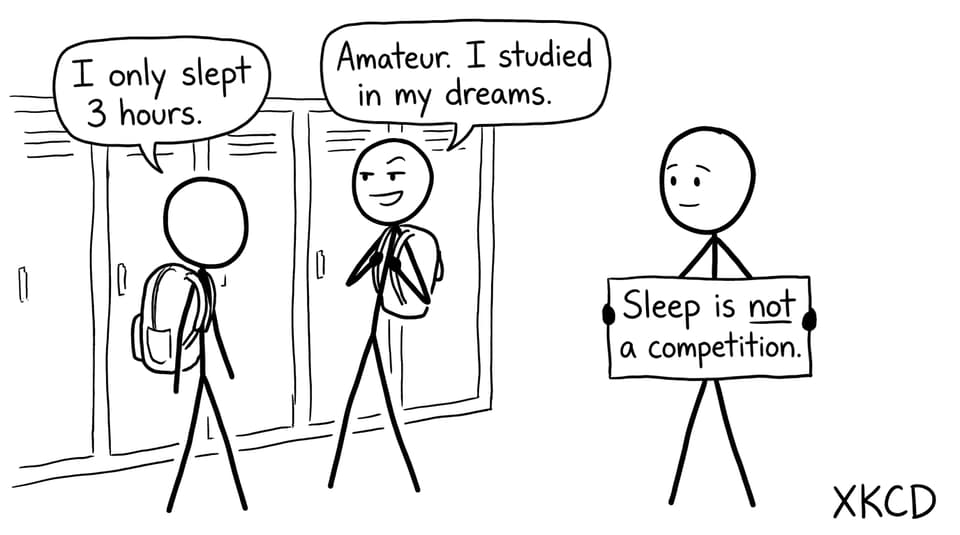
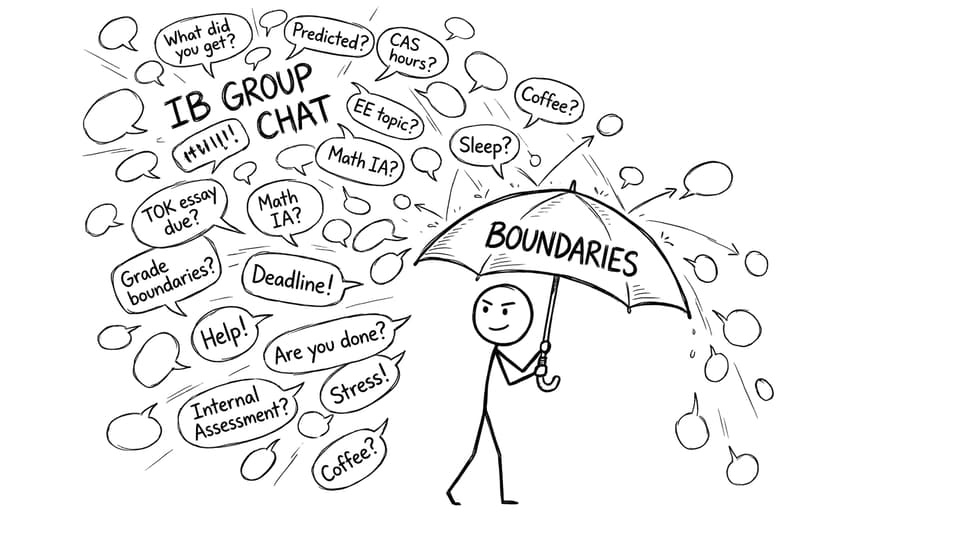
If you’ve ever watched your child close their laptop and stare at the wall after a group chat lights up with “What did you get?”, you’ve seen IB peer pressure in its natural habitat. It rarely looks like bullying. It looks like tiny comparisons, casual flexes, and the quiet fear of falling behind.
For IB students preparing for exams, that social pressure can be louder than the syllabus. The goal isn’t to eliminate peers or competition. It’s to help your child keep their identity and habits intact while still performing well.
A quick IB checklist for peer pressure
Use this as a simple reset when your child seems pulled into the “everyone else is doing more” spiral:
-
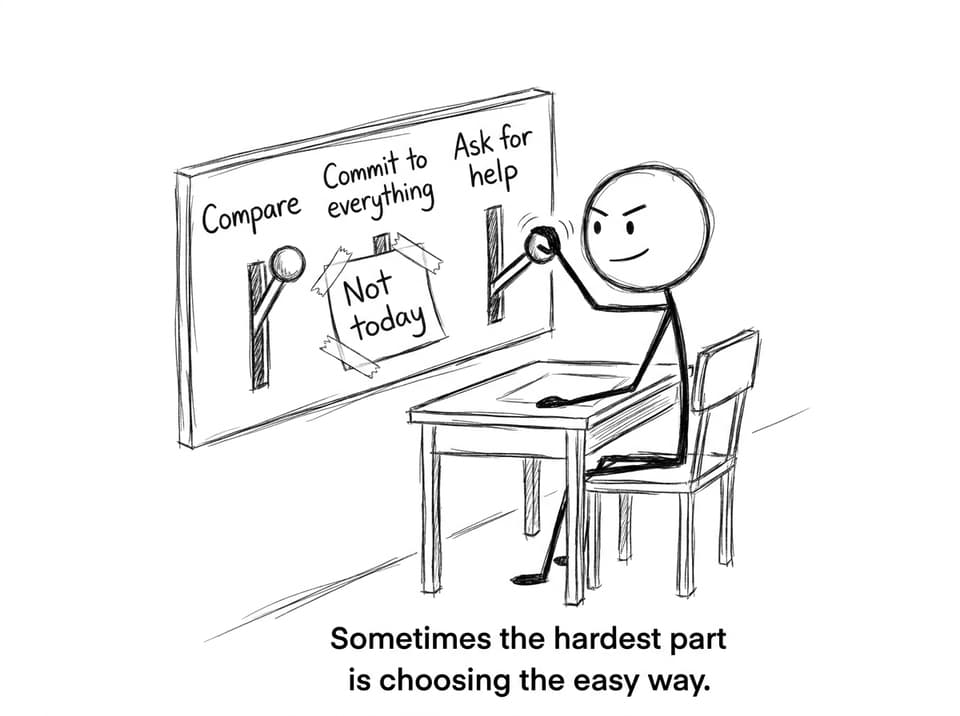
Name the pressure: “Is this motivating or draining?”
-
Set one boundary (grades talk, group chats, weekend plans)
-
Choose one controllable action: one topic, one study block, one rest block
-
Replace comparison with evidence: practice results, error patterns, progress tracking
-
Get support early: teacher, counselor, or a structured study system
If your child needs a steadier routine for IB exams, point them to a system-based approach like RevisionDojo’s IB exam prep workflow.
How IB peer pressure usually shows up
Peer pressure in IB is often disguised as “normal conversation.” Common patterns include:
-
Grade-checking as small talk
-
Competing over hours studied (as if exhaustion equals excellence)
-
Overcommitting to CAS because everyone else is “stacking leadership”
-
Predicted-score anxiety and university gossip
-
Feeling pushed into group study that becomes unstructured panic
If this sounds familiar, your child isn’t fragile. They’re responding logically to a high-achieving environment. The next step is teaching them which signals to take seriously and which to ignore.
What to say (and what not to say) when IB pressure hits
The most helpful moment is usually the first 60 seconds after they vent.
Try:
-
“That makes sense. The IB environment can turn everything into a comparison.”
-
“Do you want comfort, strategy, or both?”
-
“Let’s separate what’s real (deadlines) from what’s noise (score gossip).”
Avoid:
-
“Just ignore them.” (They can’t, not overnight.)
-
“Who’s getting higher?” (This makes home another leaderboard.)
-
“You’ll regret it if you don’t…” (Fear is gasoline for peer pressure.)
For students who feel constantly behind, this article can also help reframe perspective: IB predicted grades don’t define you.
Turn peer pressure into a healthier IB study loop
Here’s the quiet truth: IB students don’t need more willpower. They need a plan that produces proof.
A strong loop looks like:
-
Study Notes for clarity (short, syllabus-aligned)
-
Questionbank practice for realism and pattern recognition
-
Flashcards for daily recall
-
AI Chat for fast “unstuck” explanations
-
Mock Exams and Predicted Papers for timing and pressure training
-
Grading tools and a Coursework Library to reduce IA/EE/TOK anxiety
-
Tutors when a human diagnostic is the fastest route
That’s why many students use RevisionDojo’s Questionbank to replace vague comparison with measurable progress.
If your child is studying long hours but not retaining, this is a common pressure side-effect: IB: I study all day but remember nothing.
Use the IB community without letting it use you
Not all peer influence is bad. Some IB pressure becomes positive when it creates structure: a scheduled group mock, a shared revision plan, a friend who keeps things calm.
A simple rule for students: “Study with people who make you more honest, not more frantic.”
If your child does like studying socially, steer them toward structure: Collaborative IB mock exams.
And if the IB bubble is making them feel isolated from everyone else, this guide can help: Supporting IB students who feel isolated from non-IB friends.
Conclusion: help them stay themselves in the IB noise
Peer pressure inside the IB community is real, but it’s not a life sentence. The antidote is steady: validation, boundaries, and a study system that turns fear into proof.
If your child is preparing for IB exams, help them build a routine that makes progress visible. RevisionDojo brings that routine into one place with Study Notes, Flashcards, AI Chat, Grading tools, a Coursework Library, Tutors, Mock Exams, Predicted Papers, and a powerful Questionbank that rewards consistency instead of comparison. Start with one small loop today, and let it compound.