


The moment before they speak
There’s a particular kind of silence right before an IB oral assessment. Your teen has done the reading, made the outline, maybe even memorised a few transitions. But then the room goes quiet, the teacher looks up, and suddenly it feels like every thought has to arrive on time.
That’s not a content problem. It’s an emotional one.
IB oral assessments ask students to think in motion: organise ideas while speaking, recover from small slips, and stay calm long enough to show what they know. If your teen tends to spiral under pressure, emotional preparation is not “extra”; it’s part of the grade.
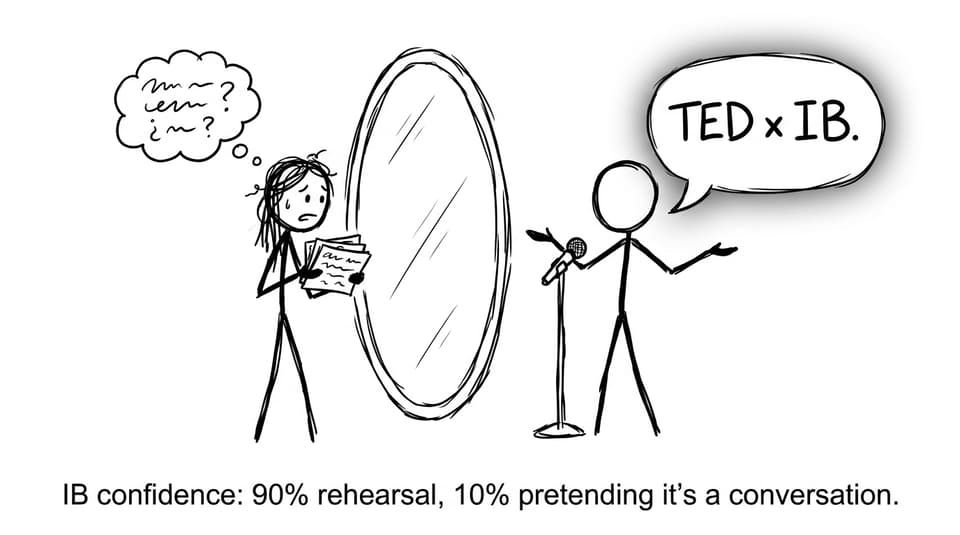
Quick emotional prep checklist for IB orals
Use this short checklist the week before any IB oral:
-
Name the nerves out loud (normalise them).
-
Do short, frequent practice runs (not marathon sessions).
-
Build a 2-minute calming routine (breathing, posture, cue phrase).
-
Reframe the oral as a guided conversation, not a performance.
-
Practice recovery: pausing, restarting, and continuing.
-
Celebrate effort and process, not just the final mark.
If your teen is doing the English A IO, start by understanding the format and expectations in the Comprehensive guide to the IB Individual Oral (IO).
Why IB oral assessments feel so intense
Most teens aren’t afraid of speaking; they’re afraid of being watched while thinking.
IB oral assessments combine a few stress triggers at once:
-
Real-time pressure: there’s no “edit button.”
-
High stakes: these orals contribute to final results.
-
Uncertainty: follow-up questions can’t be perfectly scripted.
-
Identity threat: many teens hear “oral” and think, This proves whether I’m smart.
A useful parent mindset is this: the goal isn’t to remove anxiety. The goal is to teach your teen that anxiety is information, not danger.
Emotional strategies that actually help (without taking over)
Normalize nerves, then give them a job
Tell your teen something like: “Nervous makes sense. Your body is preparing to do something hard.” That sentence alone can lower shame.
Then add a job: “Let’s use that energy to sharpen your opening.” A focused task turns vague fear into action.
To make expectations concrete, it helps to look at criteria. For English A, you can review the rubric and self-check using the IB Language A: Individual Oral Grader.
Practice in low-pressure settings (and keep it short)
Emotional confidence often comes from repetition that feels safe.
Try this:
-
Day 1: 2-minute introduction only.
-
Day 2: one body paragraph aloud.
-
Day 3: full run, but with permission to pause.
If your teen needs structure, follow a routine like the IB oral practice schedule and keep sessions predictable.
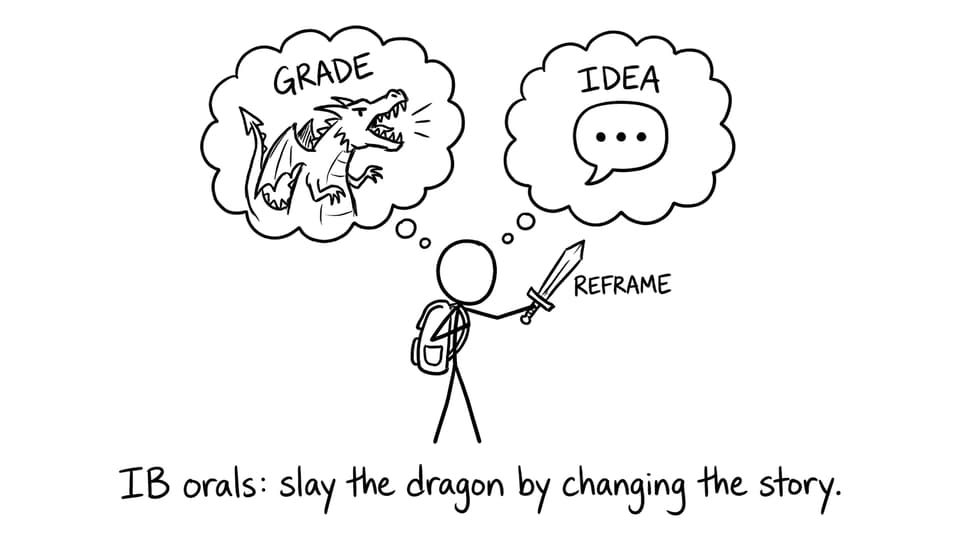
Reframe: “conversation” beats “performance”
A performance mindset creates perfectionism: every stumble feels fatal.
A conversation mindset creates resilience: you can clarify, re-state, and move forward.
If your teen is prepping for the IO specifically, the framing helps: it’s a line of inquiry, not a dramatic monologue. The Master the IB Individual Oral guide is useful for building that calm structure.
Teach recovery skills (the secret confidence weapon)
Most students don’t freeze because they lack knowledge. They freeze because they don’t know what to do after a wobble.
Practice three recovery moves:
-
Pause, inhale, continue.
-
Repeat the last sentence slowly.
-
Say, “What’s important here is…” and return to the main point.
This is where RevisionDojo becomes more than study materials. Students can practise with feedback loops using tools like the Free IB oral grader beta and iterate until recovery becomes automatic.
Use tools that reduce uncertainty
Anxiety thrives on mystery. Clear feedback shrinks it.
RevisionDojo supports IB oral prep with an ecosystem that makes practice feel measurable: Study Notes to clarify ideas, Flashcards to lock key terms, a Questionbank to strengthen analysis patterns, AI Chat to troubleshoot confusion quickly, and Grading tools to check rubric alignment. When it’s time to simulate pressure, students can use Mock Exams and Predicted Papers for timed discipline, while the Coursework Library and Tutors provide examples and human guidance.
If you want the broader workflow for exam confidence, see the RevisionDojo app guide for IB exam prep.
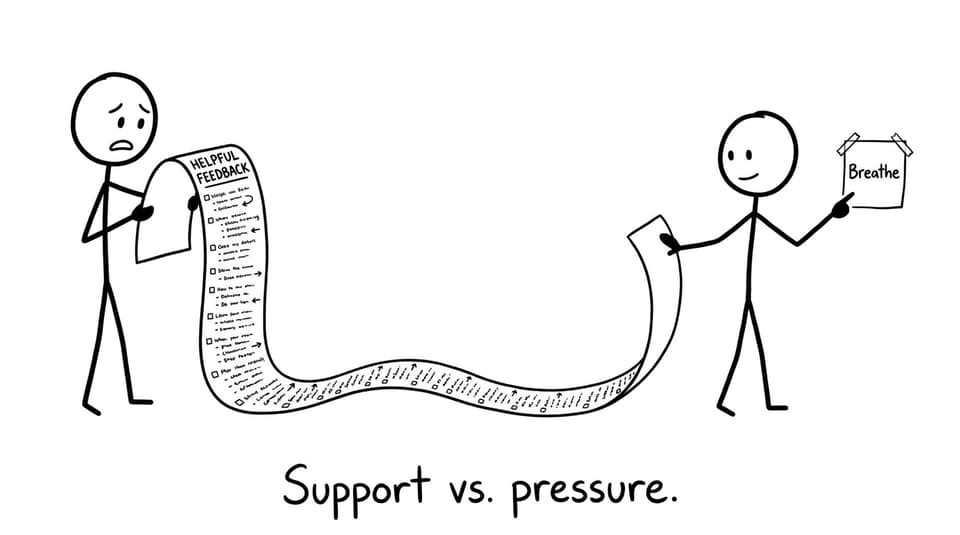
What parents should avoid (even with good intentions)
-
Turning practice into interrogation: rapid-fire critique teaches your teen to fear rehearsal.
-
Comparing them to confident speakers: comparison triggers shame, which blocks fluency.
-
Over-fixing wording: an IB oral needs flexible thinking, not perfect scripting.
-
Minimising feelings: “You’ll be fine” can sound like “Stop being difficult.”
Aim for steady presence. Calm is contagious.
Closing: confidence is built, not gifted
Your teen doesn’t need to feel fearless to succeed in an IB oral assessment. They need a plan for what to do while feeling nervous.
If you want practice to feel less like guesswork and more like progress, build a routine with RevisionDojo: practise with structured guidance, get rubric-aware feedback, and use tools like Flashcards, AI Chat, Grading tools, and oral practice resources to turn anxiety into repetition that pays off. The IB oral becomes manageable when your teen realises they don’t have to be perfect; they just have to be prepared, present, and able to recover.